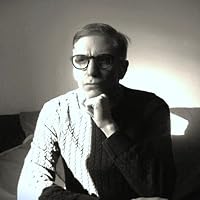
Eugenio Montale was born on October 12, 1896 in Genoa, Italy. He was the youngest son of Domenico Montale and Giuseppina (Ricci) Montale. They were brought up in a business atmosphere, as their father was a trader in chemicals. Ill health cut short his formal education and he was therefore a self-taught man free from conditioning except that of his own will and person. He spent his summers at the family villa in a village. This small village was near the Ligurian Riviera, an area which has had a profound influence on his poetry and other works. Originally Montale aspired to be an opera singer and trained under the famous baritone Ernesto Sivori. Surprisingly he changed his profession and went on to become a poet who can be considered the greatest of the twentieth century’s Italian poets and one who won the prestigious Nobel Prize in Literature in 1975 "for his distinctive poetry which, with great artistic sensitivity, has interpreted human values under the sign of an outlook on life with no illusions."
It seems impossible, my divine one, my all, that what remains of you is less than the red-green spark of a firefly out of season. The truth is that not even the immaterial can approximate your heaven and only the misprints of the cosmos talking nonsense say something that concerns you.
— — —
Let's go down the road that slopes among tangles of brambles; we'll know the way from the flight of a butterfly against the horizon broken by streams.
Let's lock behind us like a door these hours of hesitations and lumps in the throat. Unspoken nostalgias—what do they matter anymore? Even the air around us is flying away!
And see at a turn how suddenly the silver stripe of the sea appears; our yearning lives lift anchor once again. I hear the splash—Pathway, farewell. And now I feel I'm sprouting wings all over, or are they sails? . . .
— — —
Not incorrectly they had advised me to use the long spoon if I went to dine with the devil. Unfortunately on these rare occasions the only one available was short.
— — —
I don't have much faith in meeting you in eternity. It was hard enough talking to you on earth. The trouble lies in the system of communications. Many have been discovered but not the one that would make all the others ridiculous as well as useless.
"No one," says the translator of this volume, Jonathan Galassi, "should mistake these last words for Montale at his greatest" (xiii). Published in Italian as Altre versi e poesie disperse in the last year of Montale's life, this odd book collects Montale's last small volume of new poems (in the first half) and a group of uncollected work from the 1920s (contemporary with Ossi di Seppia) and the 1960s-70s (contemporary with Satura).
Galassi refers to this work as "diaristic" and "fragmentary," and indeed, certain poems or sets of poems get titles like "Themes" and "Notes"; one poem is a note on another poem. Poems come complete with question marks in parentheses inserted in front of words ("Even the famous [?] de Lollis, connoisseur of prose-poetry ...") (45). A rather typical example of the kind of poetry you can expect would be the poem "Obiezioni," translated as "Objections" by Galassi:
Was the creator uncreated? This may be but it's difficult to think so trapped as we are in time and space. And if not uncreated, he becomes belatedly our work, and then everything's confused. Are we God, in the billions, even the poor and crazy and only now discovering it? And if so, how happily? (133)
In short, a poetic elaboration of a philosophical idea, an interesting if not especially original one: but not an "elaboration" in the usual Montalean sense. Galassi says it well: "As with many creators in old age, the mere statement of a theme seems to suffice; its elaboration becomes superfluous" (x). There are also, here and there, passages of syntactical obscurity that does not serve any obvious purpose or be intended to create poetic "difficulty"; my Italian is not sufficient to tell whether the blame for this is Montale's or Galassi's. For example, from "Succulents":
I don't know the sense of the ridiculous in the all-or-nothing we live in, but it must have one and maybe not the worst. (47)
The lines are not incomprehensible, but the antecedents to the pronouns are not at all clear here. I suppose "the all or nothing" "must have" "a sense of the ridiculous," but the expression is still remarkably clunky in English.
It strikes me that the adjectival form "diaristic" overstates the case—most of this volume simply feels like a poet's notebook, like lines designated to be ironed out, used in part, or used as springboards for future thought. Now, since the poet is Montale, that's not a bad thing, and some of the poems in this "notebook" exceed the polished work of mere mortals, no doubt. Montale surely knew he was near death when writing much of this verse and he naturally appears to have prioritized bringing the work to light over polishing it.
The uncollected early work, again quite different from the late work or the well-known major collections, is of particular interest if you enjoy juvenilia. I found "Levantine Letter" particularly excellent. Still, nearly everything in this volume is very little like the Montale of the three great early collections, Ossi di Seppia, Le Ocassioni, and La Bufera e Altro, and I wouldn't recommend starting here. Approach if you've been won over to Montale already and want a fuller picture of his oeuvre.