When local musical prodigy, Gilbert Swann, is selected to play the violoncello with the visiting London orchestra during the musical festival in the five towns, his mother is convinced that he will be the cornerstone of the entire event.
When local dignitary Mrs. Clayton-Vernon invites Gilbert to dinner before the concert with her cousin, the famous conductor from London, she sees this as recognition of his musical genius. A sudden cold snap on the day, however, makes Mrs. Swann fearful that Gilbert's hands will get cold on the journey from Mrs. Clayton-Vernon's house to the concert.
She resolves to deploy a remedy from her childhood, and sets off to Mrs. Clayton-Vernon's mansion with two steaming hot baked potatoes hidden in her muff, for Gilbert to warm his hands upon before the concert. It does not occur to Mrs. Swann initially that smuggling hot potatoes into Mrs. Clayton-Vernon's grand house may be considered a social faux-pas. Her efforts to conceal the potatoes and hand them over discretely to her son are deliciously farcical...and the adventure turns out rather differently than intended.
Enoch Arnold Bennett was an English author, best known as a novelist, who wrote prolifically. Between the 1890s and the 1930s he completed 34 novels, seven volumes of short stories, 13 plays (some in collaboration with other writers), and a daily journal totalling more than a million words. He wrote articles and stories for more than 100 newspapers and periodicals, worked in and briefly ran the Ministry of Information during the First World War, and wrote for the cinema in the 1920s. Sales of his books were substantial, and he was the most financially successful British author of his day. Born into a modest but upwardly mobile family in Hanley, in the Staffordshire Potteries, Bennett was intended by his father, a solicitor, to follow him into the legal profession. Bennett worked for his father before moving to another law firm in London as a clerk at the age of 21. He became assistant editor and then editor of a women's magazine before becoming a full-time author in 1900. Always a devotee of French culture in general and French literature in particular, he moved to Paris in 1903; there the relaxed milieu helped him overcome his intense shyness, particularly with women. He spent ten years in France, marrying a Frenchwoman in 1907. In 1912 he moved back to England. He and his wife separated in 1921, and he spent the last years of his life with a new partner, an English actress. He died in 1931 of typhoid fever, having unwisely drunk tap-water in France. Many of Bennett's novels and short stories are set in a fictionalised version of the Staffordshire Potteries, which he called The Five Towns. He strongly believed that literature should be accessible to ordinary people and he deplored literary cliques and élites. His books appealed to a wide public and sold in large numbers. For this reason, and for his adherence to realism, writers and supporters of the modernist school, notably Virginia Woolf, belittled him, and his fiction became neglected after his death. During his lifetime his journalistic "self-help" books sold in substantial numbers, and he was also a playwright; he did less well in the theatre than with novels but achieved two considerable successes with Milestones (1912) and The Great Adventure (1913). Studies by Margaret Drabble (1974), John Carey (1992), and others have led to a re-evaluation of Bennett's work. The finest of his novels, including Anna of the Five Towns (1902), The Old Wives' Tale (1908), Clayhanger (1910) and Riceyman Steps (1923), are now widely recognised as major works.
Who would have guessed that two hot potatoes could make such an amusing little tale! Thanks to my friend Fran for the link. Here’s the link if you want to read it. https://americanliterature.com/author...
A delightful social comedy, set in a small Edwardian industrial town, over a single evening.
The title is both literal and metaphorical (but the muff that plays a pivotal role is utilitarian and nothing to snigger about).
“He was wearing evening dress, a form of raiment that had not hitherto happened to him.” Don't you love the use of "happened"? Middle class Mrs Swann is as aspirational for her 19-year old cellist son as the Five Towns are for their “dramatic moment in the history of musical enterprise” (a modest music festival).
The text is replete with the hyperbole of a proud mother, though it’s told from her point of view, not by her.
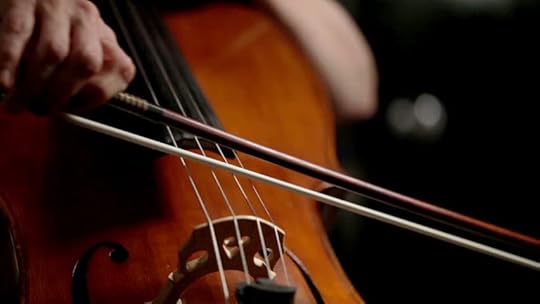
Image: “His violoncello, fragile as a pretty woman, ungainly as a navvy, and precious as honour.” (Source)
We’ve all seen, or maybe been, a well-intentioned but embarrassing parent. Mrs Swann’s overprotectiveness takes her from “the genius of common sense” to an encounter with an influential upper-class woman. And that’s where the story and comedy builds.
One tiny error of etiquette leads, gradually and inexorably, to another and another, each more absurd than the last. Anticipating each step is like watching a crash in slow-motion, but with the confidence that no lives will be lost. The fact that the grander Mrs Clayton Vernon is utterly unflustered and wouldn’t dream of showing she’s noticed anything untoward adds to the humour and vicarious relief of observing avoidable embarrassment.
This and more
You can read the seven pages free, along with other short stories by Arnold Bennett HERE.
I've reviewed several of his novels and other works on GR, HERE. All recommended.
Another humorous use of hot potatoes is in my second-favourite episode of Blackadder, “Sense and Senility”. When the superstitious actors hear the name of “the Scottish play”, they do the hot potato ritual. You can see the scene HERE. (The words are disputed, but all start with “Hot potato”.)
How does a musical prodigy keep his hands warm? Slight chilliness will interfere with Gilbert Swann's cello performance at the Five Town's First Musical Festival. "It was an idea of pure genius...the genius of common sense." Bake two medium-sized potatoes. "...if a potato is too large one cannot get one's fingers well around it, and if it is too small, it cools somewhat rapidly." A humorous mishap occurs in this lovely, feel good short story.
A short story that begins innocently, but soon takes an unexpected direction.
It’s a big day at the Swann household. Young Gilbert Swann is dressed up to the nines to participate with his violoncello in the first ever Music Festival in Five Towns. His mother is absolutely sure that the success of the festival lies in her son’s talented hands. When her husband returns home from work, he remarks that it is freezing outside. Now this is a big problem because Gilbert has already left for the festival, and Mrs. Swann is sure that Gilbert’s hands will be chilled by the cold. After all, he is holding his huge violoncello and hence cannot keep his hands safely in his pockets. Hot potatoes to the rescue! How Mrs. Swann thinks of this unique solution and whether the solution will be effective or not – read the story to find out.
Arnold Bennett was an English author, best known as a novelist. He wrote prolifically: between the 1890s and the 1930s he completed 34 novels, seven volumes of short stories, 13 plays (some in collaboration with other writers), and a daily journal totalling more than a million words. He also wrote articles and stories for more than 100 newspapers and periodicals. The sales of his books were substantial, and he was the most financially successful British author of his day. This is one of his short stories, but I couldn't find out which year it was originally written in.
This is a quick and simple gem. Within just a couple of pages, we get a great glimpse of motherly pride going a bit too far. The build-up is slow but once the potatoes come into the picture, you will have fun. It is predictable but the situational comic elements make it an enjoyable read.
Recommended to lovers of humorous classic short fiction.
3.75 stars.
As this story is in the public domain, you can read it for free on various sites online. I read it from the below link: https://americanliterature.com/author...
Mrs. Swann is very proud of her 19-year-old son, Gilbert, who is playing the violocello at the town’s first ever Musical Festival. Gilbert is a musical prodigy.
’It was indubitable to Mrs. Swann that all the Festival rested on her son’s shoulders.’
Of course, Gilbert must look his best. She had him togged out ‘in evening dress, a form of raiment that had not hitherto happened to him.’ But it is a cold November evening and Mrs. Swann worries about Gilbert’s hands getting too cold to play at the concert, which she thinks the whole town will be attending. What can keep Gilbert’s hands warm?
I felt tenderly toward Mrs. Swann for her eagerness to ensure that nothing stands in the way of her son’s debut performance. Maternal pride and solicitude for her child unfortunately land her in a social situation that is awkward and embarrassing. Juxtaposed against the pomposity of Mrs. Clayton Vernon, the town’s wealthy social leader who has invited her son to dinner before the concert, Mrs. Swann’s plan of deliverance for Gilbert risks looking foolish. But did it really?
A mother's pride, a common sense solution, and a bursting hot potato all lead to a humorous situation. A quick read that's bound to leave a smile on your face.
منذ طفولته المبكرة، كان جيلبرت سوان ذو التسعة عشر عامًا معجزة موسيقية، وكانت دائرة شهرته تتسع باستمرار.... وفي شهر نوڤمبر البارد تم اختياره للعزف مع أوركسترا لندن الزائرة خلال المهرجان الموسيقي في المدن الخمس، والسيدة سوان، والدته، مؤمنة جدًا بموهبة إبنها، ومؤمنة بأنه سيكون نجم الحفل الرائع، وفي ليلة الحفل بينما كان جيلبرت مدعوًا لتناول العشاء مع قائد أوركسترا لندن في قصر السيدة كلايتون فيرنون ابنة عمه، وهو من وجهة نظر والدته يعد اعترافًا بعبقرية جيلبرت الموسيقية، ضربت البلدة موجة صقيع شديدة، جعلت قلب السيدة سوان والدته يرتجف خوفًا من أن تبرد يد ابنها الحبيب، فلا يتمكن من العزف جيدًا في الحفل، ففكرت بقلب وفطرة الأمهات العبقرية، في طريقة من طفولتها لتدفئة يدي ابنها قبل الحفل، فوجدت أن تسخين وشوي حبتين من البطاطا في نار الفرن، يمكن أن يكون الحل في هذا الصقيع، وخبأت حبتين البطاطا الساخنتين في فستانها وذهبت إلى قصر السيدة فيرنون لتسليمهما إلى ابنها في سرية تامة، لتدفئة يديه الموهوبتين، فيعزف جيدًا، وينجح الحفل الموسيقي،
إنها قلوب الأمهات الدافئة، هي التي تحكي عنها هذه القصة القصيرة الدافئة، والحقيقة أن البطاطا الساخنة تستخدم باستمرار في الشتاء من قبل طلبة الكلية الملكية للموسيقى، وحتى من قبل الأساتذة لتدفئة الأيدي قبل العزف، فيبدو فعلاً أن قلوب الأمهات الدافئة تعرف كل شيء 🧡🧡
I read this very short story in my lunch at work. What a delightful tale!! I live in Stoke on Trent and so love Arnold Bennett and his stories of my home town(s). I had, however, not heard of this short story and saw a review on my home page so just downloaded it and read it. Glad I did!
Thank you Lisa for sending me the link to this book. Appx. a five minute read. Never be embarrassed to share an idea. Chances are, someone has thought about it.