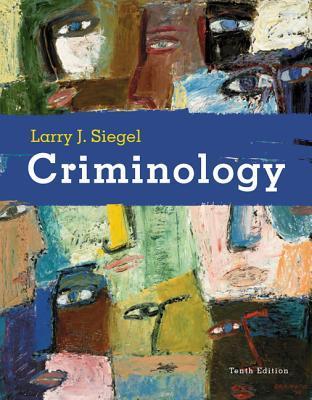
With an in-depth analysis of all areas of criminological theory and crime typologies, this best-selling text provides you with the tools you need to succeed in your criminology course. Studying is made easy with chapter objectives, end-of-chapter reviews, key concepts, concepts summary tables, and newsworthy examples that help you see how what you are learning applies in the real world.
Larry J. Siegel was born in the Bronx in 1947. While living on Jerome Avenue and attending City College of New York (CCNY) in the 1960s, he was swept up in the social and political currents of the time. He became intrigued with the influence contemporary culture had on individual behavior: Did people shape society or did society shape people? He applied his interest in social forces and human behavior to the study of crime and justice. After graduating from CCNY, he attended the newly opened program in criminal justice at the State University of New York at Albany, earning both his M.A. and Ph.D. degrees there. After completing his graduate work, Dr. Siegel began his teaching career at Northeastern University, where he was a faculty member for nine years. After leaving Northeastern, he held teaching positions at the University of Nebraska-Omaha and Saint Anselm College in New Hampshire. He then taught in the School of Criminology and Justice Studies at the University of Massachusetts-Lowell for more than 26 years. Now a Professor Emeritus, he continues to teach online courses. Dr. Siegel has written extensively in the area of crime and justice, including books on juvenile law, delinquency, criminology, criminal justice, and criminal procedure. He is a court certified expert on police conduct and has testified in numerous legal cases.
One of my best resources in criminology science. I study it during my academic career in the security. And I consider it as a richest text in Criminology and Justice.
Can't write more in review herein. My review is the text I highlighted in this book which is too much!
This textbook was used in my Criminology class at CWU-Des Moines. Overall this text allowed us to understand how and why crime happens in a society, and if they is anyway that we as citizens can stop it or at least curve its influence. I would recommend this textbook to other Sociology or Social Services scholars and/or Major or Minor college students.