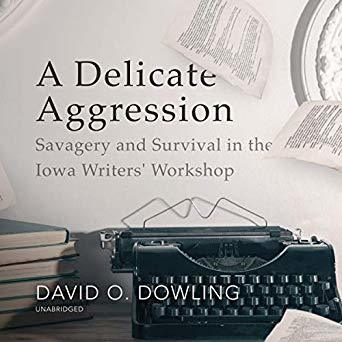
A Delicate Aggression is a general history of the Iowa Writers' Workshop told through the experiences of some of its better-known students and faculty. The actual Workshop we know was established in 1941 by a poet and wayward clergyman named Paul Engle, who stumbled into teaching and was heavily influenced by Iowa English professor Wilbur Schramm's teaching method. Today it's arguably considered the world's finest institution teaching creative writing.
The title of the book gives a long way toward explaining the highly competitive environment of IWW. The teaching philosophy, as preached by Engle, was to dissect and offer criticism in open classroom forums the ongoing work of students, all of them enrolled and all embroiled in the contentious free for all. The criticism was expected to be unsparingly honest and humiliating if necessary, the classroom atmosphere intended to prepare writers for the intense pressures of the publishing world. This feisty analysis and discussion was meant to drive out bad writing habits rather than allowing time for developing good ones. The overall method was a competitiveness and harsh criticism which set students against each other rather than fostering cooperation and mutual support. One characteristic of the program is that it's always been less interested in intellectual insight than in competitiveness. Dominance is more important than technical development and ideas. It's a Darwinian system. Not all survive, but some thrive.
One who thrived is T. C. Boyle, one of the program's most successful students and a kind of poster boy for the IWW because of it. Like Robert Lowell, who used Iowa to stabilize his mental condition, Boyle used it to help rid himself of his heroin and quaalude addiction and unleash his creativity. His is only one of the stories here. Dowling's history of the school is told through chronological chapters which are each centered around a well-known writer or faculty member who passed through the IWW, nun-like Flannery O'Connor being the 1st and perhaps the most famous. But the stories of Sandra Cisneros and Joy Harjo are also here in a chapter focused on describing the sexual exploitation of female students common there, as well as some racial discrimination. Jane Smiley and Rita Dove each get a chapter. Kurt Vonnegut, John Irving, and John Berryman are examples of distinguished faculty. So is Marilynne Robinson whose late chapter and mystical sensitivities kind of link with the chapter on O'Connor to form a frame. These are all successful writers, of course, and have in common their association with the IWW. But each experience Dowling relates is different, meant to reveal the many sides of the Workshop.
What's apparent in this parade of writers we admire is that IWW's program is enormously successful. Whether or not we agree that the discipline of hypercriticism is the best method, the Workshop does produce quality writers. This 79-year history Dowling tells makes interesting reading.