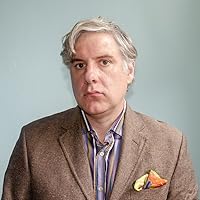
The early poems of an American master"I have loved the air outside Shop-Rite Liquoron summer eveningsbetter than the Marin hills at dusklavender and goldstretching miles to the sea.At the junction, up from the synagoguea weeknight, necessarilyand with my father--a sale on German beer.Air full of living bus exhaust, air-borne grains of pizza crustwounded crystalsappearing, disappearingamong streetlights and unsuccessful neon."--"Poetics"August Kleinzahler's first collections won him a cult following but have long been out of print and hard to find. Here Kleinzahler--acclaimed by The Times (London) for the "vision and confident skill to make American poetry new"--has selected the best of the poems collected in Storm over Hackensack (1985) and Earthquake Weather (1989) and added an autobiographical Preface.
August Kleinzahler was born in Jersey City in 1949. He is the author of eleven books of poems and a memoir, "Cutty, One Rock." His collection "The Strange Hours Travelers Keep" was awarded the 2004 Griffin Poetry Prize, and "Sleeping It Off in Rapid City" won the 2008 National Book Critics Circle Award. That same year he received a Lannan Literary Award. His new collection, "The Hotel Oneira," will be published by FSG October 1st, 2013. He lives in San Francisco.
Sketches that outline something lyrical - but then his hand slips on something "low." A slightly idle eye, but he's just connected enough with the world to to have a story to crash on when he shows up late in a new zip code. The poems with characters are the most memorable, especially "Boxing on Europe's Most Beautiful Beach."
In the opening essay (one can tell he is an entertaining essayist), the author talks about setting the type while printing his first collection in British Columbia. You feel that craft in these poems but also the smallness. This book only came out because of the later work that he wrote: I want to read that something else.
In the opening introduction of this collection of poems selected by August Kleinzahler’s first two publications, he writes, “Much of what’s gathered in this collection now feels remote to me.”
Much of it felt remote to me as well. That’s because most of these read like journal entries and contain the proper names of people and places I’ll probably never know and have no reference. I’m sure if you were there or you knew Kleinzahler during this time, you might have a deeper connection with the beauty of his language. His language is often beautiful.
And while most of these poems offer a peak into Kleinzahler’s mind, they don’t have that universal appeal. I won’t quote the poems I didn’t enjoy. There were several I liked, and I believe these prophesy his later work and success as a poet.
Below was my favorite poem. A Miles Davis quote is used as an epigraph to open the collection, so perhaps this is a tribute to the trumpeter:
BLUE AT 4 P.M.
The burnish of late afternoons As winter ends– This sadness coming on in waves is not round And sweet As the doleful cello
But jagged, intent Finding out places to get through the way wind Tries seams And cracks of the old house, making The furnace kick on
Or the way his trumpet Sharks Through could and paradise shoal, nosing Out the dark fillet To tear apart and drink his own