Jump to ratings and reviews
Rate this book

Приховане диво. Вся правда про анатомію жінки

Rate this book
Книга розповість без незрозумілих термінів, без осуду, без міфів і забобонів, натомість з гумором і величезною повагою до жінки книга «Приховане диво» розкаже всю правду про складний і дивовижний механізм жіночих органів. Про піхву, клітор, матку та яєчники, про гормони, які керують їх роботою, про жіночий оргазм та репродуктивну функцію, про гігієну та контрацепцію. Ця книжка має бути на полиці у кожної дівчини. Незалежно від віку!

350 pages, Hardcover

First published January 18, 2017

623 people are currently reading
6608 people want to read

About the author

Nina Brochmann

4 books22 followers

Ratings & Reviews

What do you think?
Rate this book

Friends & Following

Create a free account to discover what your friends think of this book!

Community Reviews

5 stars
2,093 (40%)
4 stars
2,178 (41%)
3 stars
748 (14%)
2 stars
153 (2%)
1 star
24 (<1%)
Displaying 1 - 30 of 589 reviews
Profile Image for Nataliya.
985 reviews16.1k followers
October 16, 2021
It’s strange how many myths and misconceptions exist about female reproductive system, even among women themselves. These range from ignorance (no, you don’t urinate out of your vagina, there is such a thing as cervix, women’s genitalia are supposed to have some odor and discharge, everyone’s vulvas are *not* the same, etc) to stunning reverence and assumption that everything about a woman is due to “magical” female hormones to unsubstantiated distrust of hormonal contraception. Not to mention that godawful veneration of the hymen that has cost women lives.
“A lot of people use the term ‘pop her cherry’ to suggest that a woman who hasn’t had sex before can be popped like a bottle of champagne. It’s as if her vagina is as different before and after her sexual debut as a bottle of Moët and Chandon is with and without its cork.”
————
“Don’t waste energy worrying about your hymen, it isn’t worth losing sleep over. Spend time worrying about serious things instead, like global warming, the refugee situation and deficient sex education in schools.”

It’s obvious that just having female reproductive system doesn’t magically equip you with a master knowledge of it, and friends/family/Google are not always very reliable sources. And so a couple of Norwegian medical students decided to publish this “user guide” — and apparently it was quite a success, despite the coy English translation title that made me think for a second that it was an Australian tourist booklet.
Seriously, drop the euphemisms, translators and publishers. We are adults, not shrinking violets, not small children. “Down under”, “vajayjay”, “lady parts”, “privates” — stop it! Google translate tells me that the Norwegian title “Gleden med skjeden” translates into “The Joy of the Vagina”, and that’s the title that should have been published. There’s nothing shameful about genitalia.

This is a book brimming with earnest enthusiasm. It’s written in a colloquial manner, doing its best to be accessible, easy to understand and avoid the patronizing manner many still associate with medical establishment. The authors are straightforward, often blunt, frequently a bit irreverent, full of sex positivity, nonjudgmental, at times reaching for examples from popular shows, trying to break the awkwardness with cute cartoons (which are themselves a bit awkward, but in a good humorous way). And the topics covered are pretty comprehensive while still very much accessible.


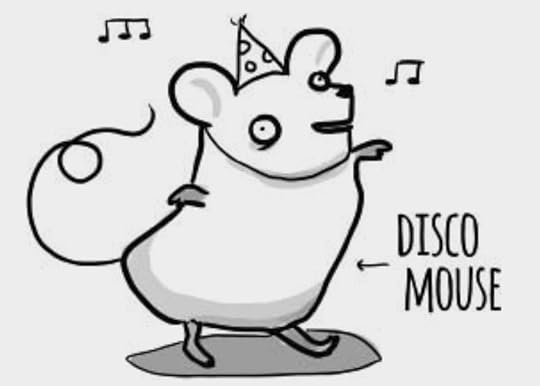
“The combination of an entire day’s worth of discharge and sweat, together with a dash of residual urine creates a characteristic odour. In our circle of female friends, we use the Norwegian term ‘discomus’, meaning ‘disco mouse’. This describes the distinctive smell your genitals – your mouse – gives off after a long night on the dance floor, or a trip to the gym for that matter. It doesn’t exactly smell bad, but it certainly can smell pretty intense.”

I think it’s a pretty decent primer on female reproductive system especially for young women (and those men interested to learn facts instead of myths) between ages 15 and 25, although older women may still find valuable knowledge there. Like dispelling the myths about female sexual desire, assuming that female libido is exactly like male libido — the issues that pop up for women regardless of age.
“It’s also important to remember that porn actors should be viewed as extreme athletes. They’ve done it all before, so to say. The American skier Lindsey Vonn makes downhill look easy, but you’d probably break your neck if you tried to be her the first time you put on a pair of skis.”

It seems that quite a few readers who had issues with this book disagreed with the positive attitude of the authors about hormonal contraception. I on the contrary agree with dispelling myths about it that stop many women from using methods that help with a wide variety of gynecological issues, not just pregnancy prevention. But if you do not approve of hormonal contraception, you will find yourself annoyed at quite a few points here, so consider yourself warned.

4 stars.
“Just remember that the Cardamom Law applies: you and your partner may be horny and keen to have sex NOW, but it may be best to have sex in a place and at a time that isn’t going to bother other people. For example, it isn’t cool to sit next to a couple having sex on a plane. Ellen can vouch for this, having experienced it on a flight to New York. The fact that these lovebirds pretended to speak neither English nor Norwegian when they were clearly from Kristiansand (a town in southern Norway) was the last straw. Have some respect.”
Profile Image for María.
144 reviews3,108 followers
February 4, 2018
Excelente trabajo de investigación de la mano de estas dos estudiantes de medicina (posiblemente ya médicas). ¿Hacía falta? Eso mismo se preguntaron ellas, y al empezar a escribir un blog sobre el tema y observar la repercusión obtuvieron la respuesta: SÍ. Hacía muchísima falta. En este libro encontraréis todo lo relacionado con la vagina. Tengáis una o no, yo os lo recomiendo. Se habla de la vulva, el clítoris, los orgasmos, el flujo, la menstruación, copas menstruales, hormonas, sexo, anticonceptivos, patología e incluso mutilación genital.

Algunas personas dicen que está destinado a un público adolescente por el lenguaje empleado. La verdad, ni lo sé ni me importa. Yo se lo recomendaría a cualquiera, tanto adulta como adolescente. Como digo, es un trabajo brillante y creo que habría que leerlo al menos una vez en la vida. Vivimos en la era de la información, por desgracia, no se nos cuenta mucho de las vaginas. Así que gracias a las autoras por este maravilloso libro y todo el tiempo que han empleado en él.
Profile Image for Jo .
930 reviews
April 8, 2021
This book makes for mediocre reading, as it felt like somebody was reading straight from a textbook, with a distinct lack of enthusiasm. I love reading about the vagina, and admittedly, it was the title that originally attracted me to this. Unfortunately, apart from a few interesting snippets of information, I felt like this book fell way below my expectations.

This book talks about the female anatomy, sexual behaviour, and very little about that tremendous wonder, that is the female orgasm, but does go into immense detail about contraception, telling us which could work for us and why, and any unwanted side effects that may occur.

Whoever wrote this book obviously has a passion for the birth control pill, as to me, the impression I got while reading, is apart from preventing unwanted pregnancies, it is seemingly the answer to everything, Heavy bleeding? Take the pill. Endometriosis? Just take the pill. I am unable to take any kind of birth control pill, and obviously, the pill is a personal preference to each individual, but I just felt like in this book, it was kind of smothered on to me, like a greasy lump of lard, and even if one doesn't want to take the pill, YOU SHOULD STILL TAKE THE PILL!

I also felt that this book was pretty biased when it comes to having sex. I mean, just because I have a vulva, that doesn't immediately mean I'd like a penis lodged in my vagina. Life doesn't work like that, and to me, this suggestion seemed somewhat ignorant.

Which leads me on to the issue that this book spent much time talking about contraception, but not enough time discussing PMDD, which stands for premenstrual dysphoric disorder. This is is a health problem that I have had for five years, that is similar to premenstrual syndrome (PMS) but is much more serious. PMDD causes severe irritability, depression, or anxiety in the week or two before your period starts, and also causes many physical symptoms, too. Symptoms usually go away two to three days after your period start. This book didn't touch the sides about this condition, and that felt very demeaning and incredibly disappointing. I wanted more ground covered, but then I forgot;

I CAN TAKE THE PILL!

The Wonder Down Under: A User's Guide to the Vagina is advertised as a feminist text, and apparently, according to other readers, is groundbreaking. I couldn't refer to this text as either of those, as ignorance completely seeps through, and ruined any enjoyment I could have had reading this. I already like to think that I speak pretty openly about the female anatomy, and doing so doesn't create misconceptions to people about what is, and what isn't right for them. In the wrong hands, this book could act as a rather unhelpful resource, offloading it's blatant narrow-mindedness to innocent minds.
Profile Image for Rebecca.
4,182 reviews3,447 followers
June 8, 2018
I wish this book had been around about 15 years ago so I could have educated myself, then an ignorant college student, about my body. This is a clearly written, engaging and reassuring guide to all things genitals-related: anatomy, hygiene, sex, contraception, and things that can go wrong (everything from yeast infections to hemorrhoids). It’s all extremely helpful. The authors are Norwegian medical students who have worked as sexual health advisors and run a female sexual health blog. For this English edition some UK-specific information has been added, but the advice is pretty universal. My favorite little detail is that in Norway they use the term “disco mouse” for the funky smell your crotch has after a long, sweaty day. (“Mouse” being Norwegian slang for female genitals.)
Profile Image for Maria Clara.
1,238 reviews715 followers
February 16, 2019
3.5/Sin duda es un muy buen libro, pero me ha resultado más interesante la primera parte que a partir de la mitad.
Profile Image for Zuzana.
427 reviews
September 9, 2019
V prvom rade, je to super knižka a som veľmi rada, že vyšla po slovensky. Dozvedela som sa aj niečo nové, ale väčšinu som už vedela - bohužiaľ len vďaka samoštúdiu na youtube alebo (dôveryhodných) zahraničných weboch. Čiže veľmi oceňujem, že sa aj baby, ktoré napr. nevedia po anglicky alebo nevedia hľadať overené a vedecky podložené informácie na nete dozvedia niečo zaujímavé o vlastných vagínach, čo predtým možno vôbec netušili.

Kniha ponúka fakt komplexný pohľad nielen na ženské sexuálne orgány, ale aj na sexualitu, najčastejšie vážne i menej vážne choroby sužujúce ženy či fakt premakaný prehľad rôznych druhov antikoncepcie. Všimla som si, že veľa reviews tuná na goodreads kritizovala túto knihu za propagáciu hormonálnej antikoncepcie... ale autorky starostlivo všetci svoje tvrdenia podložili a navyše nikoho do ničoho nenútia. Poskytujú len informácie, na ktorých základe potom ženy môžu robiť informované rozhodnutia o svojom tele (čo normálne často nemusí byť pravda).

Autorky si na knihe dali záležať a každé ich tvrdenie je podložené výskumami a odkazy na použitú literatúru (resp. vedecké štúdie) zaberajú minimálne 30 strán na konci knihy. Neskĺzávajú však do nezrozumiteľného vedeckého jazyka a kniha je písaná veľmi jasne. Navyše je text popretkávaný popkultúrnymi referenciami od True Blood cez severské rozprávky až po Y: The Last Man. A ešte je aj miestami vtipný a dopĺňajú ho zábavné ilustrácie. Tých bolo ale pomerne málo, takže by som uvítala viac.

Čiže za obsah by to odo mňa bolo za plných 5 hviezdičiek. Ale.

To "ale" sa bohužiaľ týka slovenského vydania. V prvom rade, kniha bola do slovenčiny preložená z anglického prekladu a nie nórskeho originálu. Predpokladám, že to bolo kvôli tomu, že knihu prekladal lekár a asi bude nedostatok lekárov-prekladateľov so špecializáciou v nórštine. To by ale nemala byť prekážka v tom, aby knihu preložil prekladateľ a lekár len konzultoval. Takto bohužiaľ preklad pôsobil dosť strnulo, miestami aj veľmi mätúco. Tiež bolo z textu cítiť diskomfort prekladateľa - muža. Maximálne rušivo na mňa pôsobila aj slovná zásoba, ktorú prekladateľ zvolil ako napr. "nežnejšie pohlavie" (som presvedčená, že autorky nevolili toto slovné spojenie) alebo všetky variácie slova "ťarchavosť" (čo sme v poviedke Terézie Vansovej?!).

Veľmi oceňujem aktualizáciu textu o slovenské reálie (napr. dostupnosť istých typov alebo značiek antikoncepcie na Slovensku alebo výskyt pohlavne prenosných chorôb v našej populácii). (V texte sa okrem nórskych, príp. iných nordických štatistík vyskytovali aj britské dáta, čo predpokladám, že pochádza z anglického prekladu.) Pôvodný text bol aktualizovaný aj o zmienku o dvoch typoch cytologických vyšetrení, ktoré sa robia na Slovensku v rámci preventívnej prehliadky u gynekológa - čo bolo veľmi fajn, lebo som netušila, že sa dá vybrať z dvoch typov alebo aká je frekvencia týchto testov na Slovensku; menej fajn už bolo, že zdroj tento informácie bol článok na zena.pravda.sk, čo mi teda nepríde ako fajn primárny zdroj, ale čo už.

Každopádne, som rada, že toto u nás vyšlo, ale som maximálne sklamaná z prístupu vydavateľa. Hlavne, keď si spomeniem na masívnu kampaň, ktorú k tomu mali (a ktorá bola mierne eyeroll-inducing - ružový event, propagácia pre "odvážnych mužov a pod.).
Profile Image for Left Coast Justin.
612 reviews199 followers
October 16, 2021
Okay. A couple of things to straighten out right up front:
1) There is a difference between a User's Guide and an Owner's Manual. I would be a good candidate for a User's Guide (every time permission is granted, basically). But this book was very much written for people with a vagina to call their very own, and was mostly concerned with the nuts and bolts of proper inflation, proper lubrication, warning lights and when to go see the dealer.
2) This was about the entire female reproductive system, including the brain. The vagina is but one small part of what was covered.
3) Reading this book does not make me a pervert. The first third is full of interesting sciencey stuff that many of my female GR friends, despite their impressive worldliness, do not know. Hey, you know what makes somebody a pervert?

But enough about me. This book, according to the preface, was inspired by the runaway success of a book about the intestines called Gut; a book that I thoroughly enjoyed. But this book, unfortunately, was not blessed with the magic that made Gut so enjoyable. This was largely due to its us-vs-them mentality with regard to males. I'm the first to admit that many males are beneath contempt; but many heterosexual women enjoy positive relationships with a man, and this should be encouraged. I didn't see a lot of that here.

Some goodies from the early chapters, though: It was news to me that each cycle does not involve one egg, or maybe a couple, or in extreme cases something like Octomom. Oh no -- each month or so, several hundred eggs are involved in the female reproductive cycle. But eggs, like sperm, must show themselves to be the best of the best in order to prove worthy of participating in fertilization.

There was an intriguing but maddeningly short section on evolution, and why humans (along with a remarkably short list of other animals) actually have periods. Although it raised far more questions than it answered, at least it gave me an interesting set of facts to go look into further.

One reviewer noted that the book seemed awfully heteronormative; that sex is generally described as male/female/vaginal sex. From my perspective, the authors spent a lot of time describing the full gamut of sexual behavior. For example, in a discussion of virginity, they point out quite reasonably that it's ridiculous to consider lesbians who've been married for twenty years 'virgins' just because they've never had male/female/vaginal sex. (And not to mention: Virginity is a personal choice and not an important marker of somebody's worth.)

In short, if you're a 14-to-24 year old female, you'll probably get a whole heck of a lot more out of this than I did. Enjoy.

(Buddy read with Nataliya, who proves, once again, that she's a really good sport.)
Profile Image for Brona's Books.
515 reviews97 followers
February 25, 2018
If this book included a section on peri-menopause and menopause I'd give this book 6 out of 5 stars!!

But perhaps they're writing the to-be-continued part as I type :-)

Fun, informative and fascinating.
Perfect for 16 - 46.

Full review here - http://bronasbooks.blogspot.com.au/20...
Profile Image for Pandora.
418 reviews38 followers
April 7, 2018
WAY too pro-hormonal birth control. Their argument about the ghastly side effects some women experience is basically, 'well, at least it's not as bad as being pregnant'. *EYE ROLL*
Profile Image for Missy's Book Obsession.
184 reviews125 followers
March 6, 2018
The wonder down under goes over a lot of facts and information about the vagina. The book I think was written really well also, the way it was written made it a lot easier to read it was not like a boring medical textbook.
Profile Image for Skeptic Hecate.
359 reviews15 followers
January 18, 2018
Una manera muy divertida, pero en especial informativa de aprender de una misma, la sexualidad, el embarazo y los bajos. No sólo desmiente creencias falsas, si no que es muy liviano y Divo de leer. Lo recomendaría sin pensarlo a mis amigos independientemente de su sexo. Aprendí tantas cosas de mi misma que por estigma parecían malas, y además transmití ese conocimiento a mi pareja quien lo tomó con mucho interés.
Libros como este tendrían que escribirse cada año y por montones
Profile Image for Melanie.
31 reviews1 follower
February 8, 2020
Oh weh.

Als Leserin mit medizinischem Hintergrund musste ich an der ein oder anderen Stelle die Stirn runzeln. Die Idee, ein gynäkologisches Buch für Laien zu schreiben, ist großartig. Aber an der Umsetzung hapert’s, und an der medizinischen Richtigkeit manchmal auch.

Ein Beispiel aus dem Kapitel über die Anti-Baby-Pille, in der ernsthafte Nebenwirkungen zwar angeschnitten, aber - genau wie alle anderen Nebenwirkungen auch - gefühlt seeehr einseitig beleuchtet wurden:
„Man spricht hier von einer Lungenembolie. Das kann zwar ernst sein, aber lebensbedrohlich ist es nur selten.“
BITTE WAS?! Eine Lungenembolie fordert allein in Deutschland bis zu 100.000 Tote pro Jahr. Natürlich betrifft das vorwiegend ältere Patienten und solche, die im Krankenhaus liegen - weshalb die Lungenembolie in den seltensten Fällen Folge der Pillen-Einnahme ist - aber solche pauschalen Aussagen, die zusammenhangslos im Buch präsentiert werden, musste ich leider zuhauf lesen. Beide Autorinnen sind Medizinstudentinnen, etwas mehr Tiefe hätte sein dürfen. Auch die Quellenangaben sind etwas undurchsichtig. Manche Aussagen sind mit Fußnoten versehen, andere nicht...

Auch werden die meisten Themen nur kurz und oberflächlich angeschnitten. Das gibt zwar einen guten Überblick über die Frauenheilkunde, aber wer (auch als Laie) mehr zu einem einzelnen Thema erfahren will, ist mit anderen Büchern oder Wissensquellen besser bedient. Für Teenager, die einen ersten Einblick in den weiblichen Körper und Sexualität erhalten möchten, ist das Buch besser geeignet. Jede Frau hingegen, bei der die Pubertät schon ein paar Jahre zurückliegt, kennt - hoffentlich? - schon das viele Basiswissen, das in diesem Buch geschildert wird.

Dann ist da noch der Tonfall: Der ist zwanghaft lustig, und das gefiel mir überhaupt nicht. Genau wie in „Darm mit Charm“ (das ich primär wegen seines pseudo-witzigen Tons nicht mochte) werden Fachwörter nicht einfach sachlich übersetzt, stattdessen werden sich „lustige“ Alternativwörter ausgedacht und auch die Formulierungen erwecken den Eindruck, das Buch möchte zwanghaft die neue Beste Freundin werden. Das klappt nicht. In Zukunft werde ich also wieder auf sachlich-informative Bücher zurückgreifen.

Was man dem Buch zugute halten muss (und weshalb es 2 und nicht 1 Stern von mir bekommt) ist seine Message: Frauen sollten sich für Körper und Sexualität nicht schämen; die Tabuisierung rund ums Thema gehört aufgesprengt; aller Regelschmerzen zum Trotz ist eine Periode (und wie wir sie in unseren Breitengraden „meistern“ können) ein Privileg: Denn nicht alle Frauen auf dieser Welt haben Zugang zu Ibuprofen, Tampons und Kirschkernkissen.
Profile Image for Victoria.
204 reviews492 followers
May 24, 2018
Instructif, décomplexant, bienveillant et drôle: à mettre entre toutes les mains !
Profile Image for Innastholiel.
466 reviews56 followers
September 14, 2018
Don’t get me wrong, this book has a lot of good(-ish) information, so if you’re looking for a basic overview of human female physiology and anatomy as it retains to sexual behaviour, this is an okay summary. It has a heavy focus on contraception, listing different methods as well as their advantages and disadvantages, as judged by Brochmann and Støkken Dahl.

Overall, I don’t take issue with the contents of the book, except for one thing: It reads a lot like an advertisement for hormonal contraception.

Would you like to not get pregnant? Well, the pill is great for that, but the pill is also great for lots of other things!
Heavy bleeding? Take the pill!
Irregular cycle? Take the pill!
Underlying illness like PCOS or endometriosis? Take the pill!
Just general menstrual pain? Take the pill!
Depressed? Take the pill!*

*
Disclaimer: There are some reasons researchers think the pill might actually increase your risk of depression, but those are all faulty studies because of this and this and this; of course, there is that one really thorough, really good empirical study that indicates that yes, hormonal contraception does increase your risk of depression, but whatever, man, as long as we don’t know more: TAKE THE PILL!!!!!


That’s what reading the section on contraception felt like to me: A long, meandering indoctrination to the Holy Order of the Birth-Control Pill. Don’t misunderstand me, if you want to take the pill, then, by all means, do it and see for yourself whether or not it works for you. But the way this section is written makes me uncomfortable because it seems to dismiss any reason, rational or not, why people choose not to take hormonal contraception. It also seems to assume that everyone with a vulva wants to have sex, and penetrative sex with someone with a penis, no less.

This leads me to the greater problem I have with The Wonder Down Under: Its overall tone and demeanour, if books can have such a thing, are extremely narrow-minded and, imo, very clearly reflect a cis-gendered and predominantly heterosexual perspective. People with vulvas are constantly and consistently referred to as “women” (and people with penises, so far as they are mentioned, are “men”). As someone who doesn’t identify with these terms of “man” and “woman”, let me tell you that it is a strange and disconcerting feeling to see them thrown around unconditionally and unrestrainedly. To me, “man” and “woman” are societal constructs associated with certain attributes and behaviours, and have little to do with biology. So having this idea that vulva = woman drilled into my head every page was hurtful, not only because I, despite my female anatomy, don’t like being called a “woman”, but also because not all people who do identify as women are born with vulvas or choose to have their genitals altered to more closely resemble those of a biological female.

This type of ignorance applies not only to the the issue of biological sex and gender, but also to sexuality.

1. The authors assume that sex is awesome for everyone and that everyone must want to have it. As someone who is without a doubt on the asexual spectrum, I feel obligated to inform you that that simply is not true. There is nothing abnormal about not wanting sex or having had it and not seeing what all the fuss is about. People often assume that being sexless is a detriment, but the truth is that the only thing that is detrimental is to have to pretend to be something you’re not. Being uninterested in sex is my natural state of being. It always was. It does not cause me distress because I didn’t lose anything, it’s just that nothing was ever there.*

* .

2. Like I said, The Wonder Down Under strikes me as a predominantly heterosexual perspective. I say predominantly because there are instances in which the authors seem to remember that there are people with vulvas who don’t desire (penetrative) sex with someone with a penis, but those instances often feel like an afterthought. Overall, even though this book tries to be inclusive, it comes back to heteronormative standards fairly quickly.

This is how it is, although it can also be like that, of course, but let’s talk about how it really should be (*wink, wink, nudge, nudge*), and not how it maybe could be.

I understand that privilege is a hard thing to see when it is you who is privileged (), but it creates an environment in which it is hard to be or feel differently, and people won’t understand that unless we speak up. Society has a very narrow view of what is “good” and “right” and “natural”, even though nothing in nature is certain except its variety. But Homo sapiens is a cruel animal, so anything that differs must be defective. I don’t mean to accuse Brochmann and Støkken Dahl of deliberate malice, but just because someone isn’t aware that they are causing you pain doesn’t mean you don’t feel hurt.

I am also aware that this might at least in part be a translation or language issue, but the overall tone makes me think that it’s more than that. When I came across this book, people called it “groundbreaking” and “feminist”, but I don’t perceive it to be either. It is much too narrow-minded to be called ground-breaking, and much too caught up in “should”s to be interesting as a feminist text. In the end, it left me mourning, because reading this book reminded me of all the times I tried and failed to pretend to be something I’m not. Calling myself “woman” and “sexual” is like trying to put on a sweater that won’t fit. No matter the size, no matter the colour, the cut just isn’t right for me. I understand that not everyone will feel the same as me, but as I said before, if we want people to learn to be sceptical and not take everything for granted, we need to speak up.
Profile Image for Lori.
197 reviews33 followers
November 15, 2019
Hodnotím jako slabší 3,5*. Informace jsou podány celkem přijatelným stylem, ale občas to na mě působilo jako z blogísku rozjuchané tínejdžerky. Taky mi celkem vadilo protežování hormonální antikoncepce. Už to vypadalo, že autorky podávají pouze informace, ale pak to zabily veletočem, že snad všecko je přece lepší než oťarchavieť. Protože když jste ťarchavé, tak se zvyšuje riziko trombózy. Neplánovaná ťarchavosť spoustu věcí komplikuje. Nepadlo zde ani slovo o odmítání HA kvůli environmentální zátěži (kdy rezidua vyčůráváme do vody, kterou potom všichni zase pijeme), odbylo se to až výsměšným textíkem o ženách, které do sebe nechtějí dostávat nepřirozené látky. Autorky uvedly, že když ženy na nějakou dobu vysadí HA, protože jsou déle bez partnera, tak následně 1 ze 4 takových žen neplánovaně otěhotní. Tady bych uvítala důraz na osobní zodpovědnost a spíš než HA bych doporučovala kondomy. Protože jedna věc je neotěhotnět, ale pohlavně přenosné choroby druhá. A taky to docela podporuje představu, že ochrana proti početí je čistě ženská záležitost.
U kapitoly o potratech (umělých i přirozených) se trochu divně řešilo pití alkoholu, respektive se celá problematika omezila na alkohol jako příčina potratu s výsledkem, že během ťarchavosti se může něco málo vypít, ale zároveň úplně chyběla zmínka o fetálním alkoholovém syndromu.
A mám i jisté výtky vůči slovenskému překladu. Uznávám, že když mi vyskakovaly pupínky ze všech těch odvozenin od slova ťarcha, je to čistě můj problém. Ale třeba o spermiích jsme se dočetli něco o tom, že to jsou "chlapíci" nebo jsem napadla na stránku, kde se třikrát po sobě zopakovala formulace o príslušníčkach nežnejšieho pohlavia. Proč, proboha.

Ale jinak fajn.
Profile Image for Christopher.
526 reviews21 followers
September 6, 2018
I am not the intended audience for this book.

That said, I'm now the father of a 12 1/2 year old and I have no experience in what she's going to be facing in the near future of her life. So my wife bought this book for my daughter to read and I thought I ought to as well.

On behalf of my gender I apologize for stupid/ignorant statements and assumptions we have made. I thought I had a good grounding in anatomy and reproductive sciences/birth control; I did not have an accurate picture of the nuance and complexity of birth control options.

I really appreciated the authors' risk-based approach to sex, birth control, and STIs. It was very different from my in-school sex-ed which focused on the "nothing is ever safe safe so don't do it at all" themes. Side-effects happen, but less often than you may think. STIs suck, but many can be treated and many can be lived with. Not having sex ever is not only unlikely, but denying an important part of the human experience.

Some of the translations from the original Norwegian were a bit clunky. This applied to both language (disco mouse as a euphemism) and culture (TV shows I've never heard of, more focus on Middle Eastern or African cultural expectations than say Catholic or Evangelical expectations). That said, I don't see how this book could have been written in the US without it causing a concerted campaign to string up the authors as witches - because people suck.

I know my daughter has now started in on this book and I hope it really helps her to feel more confident in her choices and options.

Profile Image for Basmaish.
672 reviews2 followers
August 16, 2018
A highly insightful book about everything that goes down under” in a female’s body. It’s scientific, straightforward, easy to understand and has side comments and references that I found very quirky. It’s one of those books that from the very start urges you to be open to learn something new that you might not like hearing or reading about, as well as breaking the myths and cultural traditions that aren’t based on anything scientific.

This book talks about a lot of things that happen in our bodies that we might not know about it, haven’t been taught, are scared to ask about or are shushed when we try to ask, are shamed for being curious or wanting to ask questions. Especially for people growing up in a country where all of this is taboo, shameful, disgusting and ‘3eeb’ or for those of us growing up in a highly religious country, this book makes you feel like it’s a safe space that offering you easy tools to learn and understand.

I wish there’s a book like this in Arabic and I can see how this can be seen as such a revolutionary and obscene act in some way. And of course it will be banned. The authors, translators and publisher will definitely be shunned. I don’t doubt that there are some Arabic reference to very few information that is mentioned in this book, but to have it as a whole translated with the same meanings, understanding and references would be a game changer.
Profile Image for J Jahir.
1,034 reviews90 followers
January 15, 2018
Pues sí, es un libro bastante interesante. escrito por dos alumnas noruegas que apenas están estudiando la carrera de medicina en la universidad de Oslo, está abordado de una manera bastante coloquial y sin tantas complicaciones, con sus respectivas fuentes de investigación. lo leí para el grupo de "hijas de Mary Wollstonecraft" (fue una odisea conseguirlo y compartirlo recuerdo bien jaja), pero finalmente aquí cumplimos con su lectura. Sí hay cosas que aprendí, pero fueron mínimas, es aquí cuando agradezco haber contado con una excelente y adecuada educación sexual en mi pubertad, porque sí, tuve la fortuna de tener discos sobre educación sexual, recibido la charla de mis padres (en especial de mamá), haber hasta buscado en internet ciertas cosas, la misma escuela secundaria y lo que se leía en los libros de Biología y Naturales... y sobre todo, mi afán por leer del tema no con morbo, sino porque realmente me gusta conocer y saber de esto.
El libro de la vagina nos habla desde la anatomía de los genitales femeninos, pasando por cuestiones como la actividad sexual, la menstruación y sus cambios, los métodos anticonceptivos (realmente es la parte más teórica y quizá aburrida para muchos), pero es de vital importancia estar enterados de todo esto. Es recomendable su lectura, creo que se lo recomendaría a las chicas adolescentes de entre 14 a 19 años que están viviendo por estas etapas, pero también quién dice que no pueden hacerlo los varones?
Profile Image for Denisa Ballová.
429 reviews323 followers
September 25, 2019
Kiežby som túto knihu čítala pred pár rokmi, toľkým ťažkostiam by som sa vyhla. Napríklad by som počas tehotenstva pila kávu, na ktorú som mala toľkokrát veľkú chuť alebo by som sa krotila v používaní intímok.

Chápem, že pre niekoho sú tam popísané známe fakty, autorky však v mojom prípade vyvrátili veľa mýtov, až som sa občas naozaj zahanbila. Navyše, knihu napísali zrozumiteľným (a často aj vtipným) spôsobom. Odporúčam všetkým dievčatám a chlapcom. Aj tí sa isto mnohému priučia.

[Viac som napísala tu -https://dennikn.sk/1592515/co-vsetko-...]
Profile Image for Buchdoktor.
2,363 reviews188 followers
February 20, 2018
Nina Brochmann und‎ Ellen Støkken Dahl widmen ihr Buch allen Frauen, die sich fragen, ob sie richtig funktionieren oder ob ihr Körper von der Norm abweicht. Als erfolgreiche Bloggerinnen stellten sie überrascht fest, dass ihre Follower aus allen Altersgruppen stammen und, anders als erwartet, nicht hauptsächlich Jugendliche sind. Im lockeren Stil von Giulia Enders‘ „Darm mit Charme“ trauen sie sich, Fragen zu stellen, die andere für dumm halten könnten. Ihr Ziel: mit hartnäckigen Mythen zum weiblichen Körper aufräumen, z. B. dem vom vaginalen Orgasmus, und die Risiken der Pille neu und aus der Sicht von Statistikern bewerten. Trotz zunehmender Sexualisierung von Jugendlichen in den Industrieländern stellten sie bei jungen Erwachsenen recht beschränkte Anatomiekenntnisse fest und fanden aus Pornografiekonsum resultierende Fehlinformationen vor, die offenbar schwer auszurotten sind. Wenn Menschen nicht miteinander reden, können sich Mythen ausbreiten und halten, so die Autorinnen; beim Thema Sexualität und Sexualorgane sei es Zeit für ein neues Wirklichkeitsverständnis. Aus Unwissenheit entstehe Unsicherheit, ob man selbst normal sei. Als Reaktion auf diese konstatierte anatomische Unwissenheit beschreiben die beiden Medizinerinnen sehr ausführlich den weiblichen Körper. Sie liefern z. B. Grundwissen, was eine Schleimhaut von anderen Hautregionen unterscheidet, was sie uns nützt und wie eine Schleimhaut gern behandelt werden möchte. Mythen und Fakten zur Intimhygiene werden durchleuchtet, sowie das wichtige Thema Cisgender und Entstehung unserer Genitalien im Embryostadium. Dass Mädchen in armen Ländern häufig nach Einsetzen der Menstruation die Schule abbrechen, weil dort keine Menstruationshygiene möglich ist, sei besonders Anhängern von Entwicklungshilfe in Form repräsentativer Baumaßnahmen ins Stammbuch geschrieben. Warum Sex und Lust „popkulturell“ meist durch die Brille männlicher Normen dargestellt wird, auch das können Leser und Leserinnen hier erfahren.

Rund 1/4 des Buches befasst sich mit Verhütungsmethoden; die Informationen dazu sind umfangreich und auch hier mit Statistikwissen aufbereitet. Die Bewertung von Risiken der Pille fällt zweifellos anders aus, wenn man als Anwenderin zwischen absoluten und relativen Risiken unterscheiden kann und selbst beurteilen lernt, wie wissenschaftliche Studien mit dem Zufallsfaktor umgehen. Die Entscheidungshilfe, was einem selbst in der Verhütung wichtig ist, fand ich sehr hilfreich, aber optisch unattraktiv vermittelt. Leider besteht der Verhütungsteil fast nur aus recht einförmigem Text und wenigen Abbildungen. Dass an anderer Stelle eine Übersichtstabelle und eine Vertiefung zum Pearl-Index folgt, könnte für Häppchenleser durch Verweise deutlicher vermittelt werden.

Im letzten großen Kapitel geht es in gewohnt lockerem Ton um Beschwerden wie Infektionen, Inkontinenz, Hämorrhoiden, HP-Viren, auch um die biologische Uhr, Schönheitsideale und Intimchirurgie.

40 Seiten Anmerkungen und Literaturhinweise vermitteln, dass die Autorinnen heute keine „ahnungslosen Medizinstudentinnen“ mehr sind, als die sie ursprünglich in ihr Thema eingestiegen sind.

Fazit
Das Buch ermutigt Frauen in lockerem Ton, sich von Schönheitsidealen und Normen Außenstehender frei zu machen. Um zu entscheiden, welchen LeserInnen das Buch nützen wird, kann man sich tatsächlich am Stil Giulia Enders‘ orientieren. Wer von Enders direkten und bildhaften Beschreibungen profitiert und die Fakten bis heute im Gedächtnis behalten hat, liegt mit „Viva la Vagina!“ nicht falsch. Brochmann und Støkken Dahl formulieren ihre durchweg vernünftigen Ansichten gelassen, achtsam und mit feministischem Hintergrund. “Wir lernen nie aus“, ist ihr Fazit.

Anfangs kann die pure Textmenge überwältigen, aber in der Ausführlichkeit des Texts zeigt sich hier m. A. nach die Wertschätzung des weiblichen Körpers. Da nicht alle Menschen Wissen gern allein aus umfangreichen Texten beziehen, könnten einige Illustrationen mehr, Seitenüberschriften und Verweise innerhalb des Textes die Attraktivität des Buches sicherlich steigern.
Profile Image for Inga Grencberga.
Author 6 books582 followers
June 29, 2019
“Sieviešu ģenitālijas ir fantastiskas. Mēs patiesi ceram, ka tu ar tām lepojies.” (c) autores

Ja nu jums šķiet, ka zināt visu par vagīnām, es tomēr iesaku izlasīt šo grāmatu, lai atklātu sev daudz jauna un pārsteidzoša, kliedētu mītus un puspatiesības!
Profile Image for Irene.
457 reviews112 followers
October 23, 2017
Jeg har været meget i tvivl om, om jeg skulle give bogen tre eller fire stjerner. Jeg endte med fire, fordi jeg trods alt synes, det er en vigtig bog.

Bogen er inddelt i kapitler, der omhandler forskellige dele, f.eks. anatomi og prævention.
de to forfattere er gode til at formidle stoffet, det er let at stole på dem. Man bliver præsenteret for en masse fakta, og vil man gerne selv tjekke det efter, så er der en liste med kilder bagerst i bogen. Her er der desuden også en lang liste med yderligere litteratur.
Der, hvor bogen faldt igennem for mig, var i afsnittet om prævention. Det var så utrolig langt og meget uddybende. Der bliver i starten af kapitlet også advaret om, at det nok er et lidt tørt og kedeligt afsnit, og det må jeg desværre give dem ret i. Jeg kan godt forstå, hvorfor det er vigtigt at komme omkring emnet, men jeg er ikke sikker på, det behøvede have været helt så detaljeret i denne bog.

Der var masser af humor i bogen, som også blev støttet op af TegneHannes illustrationer, og det gjorde faktisk, at det føltes som at tale med to veninder. Det var på intet tidspunkt ubehageligt og med følelsen af, at man blev set ned på, hvis der var noget, man ikke vidste e.l. Derfor tror jeg også, at bogen - eller dele heraf - vil være særdeles interessant for mange piger i puberteten. Jeg tror dog, at de fleste kan få noget ud af bogen (også mænd!), selvom jeg generelt vil tro, at det er kvinder mellem 15 og 30 år, der vil få mest ud af bogen.

Alt i alt en rigtig vigtig bog, der fortæller dig alt hvad der er at vide om dit underliv; the good, the bad, the ugly beautiful. Den punkterer en masse myter og præsenterer dig i stedet for fakta, og dét er vigtigt.
Profile Image for Laura Dimová.
52 reviews6 followers
November 24, 2021
Pri čítaní tejto knihy som sa pristihla, že sa hanbím rovno za viaceré veci:
1. Za to, že naša spoločnosť stále nezmenila vnímanie sexuálnych tém ako (ne)tabu. Hanbila som sa čítať ju vo vlaku, či pred rodičmi, prečo? Veď sa volá bez hanby o ohanbí.
2. Za to, že v našom školstve stále nie je zaradená vhodná sexuálna výchova pokrývajúca široký záber tém, týkajúcich sa dievčat i chlapcov. Táto kniha tie ženské opisuje všetky.
3. Za to, že som túto knihu nečítala skôr a mnoho vecí, ktoré som už mala vedieť, viem až teraz. Zn. Ženy (ale aj muži), ak ste túto knihu ešte nečítali, už včera bolo neskoro.

Priznám sa, že by som túto knihu naozaj dala prečítať aj mužom. Jazyk písania adresuje síce na ženy, ale kniha rozoberá informácie dôležité pre obe pohlavia. Čítala sa dlho a ťažšie, ale to len preto, lebo ide naozaj o odbornú literatúru nabitú dôležitými informáciámi.

5/5. Čítať by ju mala každá násťročná a nachádzať by sa mala v každej školskej knižnici.
Profile Image for Jolis.
377 reviews29 followers
November 9, 2020
Ja katra sieviete izlasītu šo grāmatu, ticu, ka daudzas problēmas guļamistabās un mūsu galvās ātri vien sakārtotos.

Skaidri, godīgi un nedaudz ar humoru par visu mums, sievietēm, svarīgāko.
Profile Image for Weronika Zimna.
321 reviews249 followers
January 23, 2018
To nie jest książka niesamowicie szczegółowa, przytłaczająca naukowymi faktami. To książka lekka, zabawna i sensownie opisująca podstawy, które trzeba znać. To również książka normalizująca to, co powinno być normalizowane i wyjaśniająca to, co powinno być wyjaśniane. Do wciskania każdej nastolatce, zwłaszcza w naszym pięknym kraju stroniącym od edukacji seksualnej i zdrowotnej w ogóle.
Nie jest to raczej pozycja dla zaawansowanych i obeznanych z tematem - te osoby niczego nowego się tu nie dowiedzą. Uważam jednak, że jest to książka bardzo potrzebna. Mogłaby być szkolną lekturą, nikt by źle na tym nie wyszedł.
Profile Image for Táňa Sedláková.
82 reviews56 followers
November 3, 2019
Výborný počin. Ešte preložiť Come as you are a šup do poličiek domácností hneď vedľa Dejin umenia I-IX a Slovníka cudzích slov.
Profile Image for Synne Sylibris.
252 reviews23 followers
October 7, 2025
Informativt og lettlest om syklus, graviditet, sex, kjønnssykdommer, prevensjon og mye annet knyttet til kvinners underliv.
Mye jeg visste fra før, men lærte absolutt noen nye ting! En fin grunnbok:)
Profile Image for Jolanta.
94 reviews13 followers
January 29, 2023
Šī grāmata būtu jāizlasa jau pirms pirmajām mēnešreizēm. Vispār cilvēkam ir jāpazīst savs organisms, viss organisms, gan tas par kuru kauns, gan tas kurš šķiet pašsaprotams. Un ar cilvēku es domāju visus cilvēkus, neatkarīgi nopiederības dzimumam,jo, manuprāt, sievietei ir jāpārzina sievietes organisms un vīrietim sievieties, un visas citas variācijas.

Kopumā no šīs grāmatas daudz kas bija zināms, bet tik un tā interesanti un izglītojoši.
Profile Image for Tracey Allen at Carpe Librum.
1,154 reviews125 followers
April 26, 2018
The Wonder Down Under - A User's Guide to the Vagina by medical students Nina Brochmann and Ellen Stokken Dahl sets out to educate and inform women about sexual health and dispel any misconceptions readers may have. With a clever cover design, The Wonder Down Under achieves this in a relaxed and informative manner although I did have a few concerns with it.

Primarily, I have a major issue with the title. Very early on in the book (page 8 to be precise) the authors point out that the majority of people refer to female genitalia as the vagina, when in fact, it should be referred to as the vulva; as the vagina is only one part of the genitalia. However, the authors then perpetuate the misnomer in the very title of this book. Sorry ladies, but you can't have it both ways!

The medical students are based in Oslo in Norway, and this book is a response to the success of their blog and is translated from Norwegian. The translation was very good, but it's worth noting that many of the stats they refer to are for Norway or the region.

The authors provide many reassuring notions and take a lot of care to point out every woman is different but normal and sexual health shouldn't be embarrassing but they undo all of their goodwill with the section title of: Discharge, Periods and Other Gore. Gore? What the hell? This might have been a translation error or just an extremely poor choice of words, but it definitely bothered me. This offensive section title grouped six chapters together, and therefore featured at the top of the page for 28 pages. Not good.

The book includes chapters on a multitude of topics - including a comprehensive section on contraception - however there is nothing on menopause. I'm not sure why this was left out when there was time for a few pages on genital mutilation and intimate surgery, but I'm hopeful this information will be added in a future re-printing of the book.

An informative read for young women (and men).

* Copy courtesy of Hachette Australia *
Displaying 1 - 30 of 589 reviews

Can't find what you're looking for?

Get help and learn more about the design.