

What do you think?

Shapinsky's Karma, Boggs's Bill, and Other True-Life Tales
Lawrence Weschler has created six remarkable stories of people who suddenly seem to catch fire, becoming utterly obsessed and ending up somewhere entirely different from where they thought they were headed.
- GenresNonfiction
272 pages, Paperback
Published May 1, 1990
About the author
Lawrence Weschler
77 books127 followersLawrence Weschler, a graduate of Cowell College of the University of California at Santa Cruz (1974), was for over twenty years (1981-2002) a staff writer at The New Yorker, where his work shuttled between political tragedies and cultural comedies. He is a two-time winner of the George Polk Award (for Cultural Reporting in 1988 and Magazine Reporting in 1992) and was also a recipient of Lannan Literary Award (1998).
His books of political reportage include The Passion of Poland (1984); A Miracle, A Universe: Settling Accounts with Torturers (1990); and Calamities of Exile: Three Nonfiction Novellas (1998).
His “Passions and Wonders” series currently comprises Seeing is Forgetting the Name of the Thing One Sees: A Life of Contemporary Artist Robert Irwin (1982); David Hockney’s Cameraworks (1984); Mr. Wilson’s Cabinet of Wonder (1995); A Wanderer in the Perfect City: Selected Passion Pieces (1998) Boggs: A Comedy of Values (1999); Robert Irwin: Getty Garden (2002); Vermeer in Bosnia (2004); and Everything that Rises: A Book of Convergences (February 2006). Mr. Wilson was shortlisted for both the Pulitzer Prize and the National Book Critics Circle Award; and Everything that Rises received the 2007 National Book Critics Circle Award for Criticism.
Recent books include a considerably expanded edition of Seeing is Forgetting the Name of the Thing One Sees, comprising thirty years of conversations with Robert Irwin; a companion volume, True to Life: Twenty Five Years of Conversation with David Hockney; Liza Lou (a monograph out of Rizzoli); Tara Donovan, the catalog for the artist’s recent exhibition at Boston’s Institute for Contemporary Art, and Deborah Butterfield, the catalog for a survey of the artist’s work at the LA Louver Gallery. His latest addition to “Passions and Wonders,” the collection Uncanny Valley: Adventures in the Narrative, came out from Counterpoint in October 2011.
Weschler has taught, variously, at Princeton, Columbia, UCSC, Bard, Vassar, Sarah Lawrence, and NYU, where he is now distinguished writer in residence at the Carter Journalism Institute.
He recently graduated to director emeritus of the New York Institute for the Humanities at NYU, where he has been a fellow since 1991 and was director from 2001-2013, and from which base he had tried to start his own semiannual journal of writing and visual culture, Omnivore. He is also the artistic director emeritus, still actively engaged, with the Chicago Humanities Festival, and curator for New York Live Ideas, an annual body-based humanities collaboration with Bill T. Jones and his NY Live Arts. He is a contributing editor to McSweeney’s, the Threepeeny Review, and The Virginia Quarterly Review; curator at large of the DVD quarterly Wholphin; (recently retired) chair of the Sundance (formerly Soros) Documentary Film Fund; and director of the Ernst Toch Society, dedicated to the promulgation of the music of his grandfather, the noted Weimar emigre composer. He recently launched “Pillow of Air,” a monthly “Amble through the worlds of the visual” column in The Believer.
(from www.lawrenceweschler.com)
His books of political reportage include The Passion of Poland (1984); A Miracle, A Universe: Settling Accounts with Torturers (1990); and Calamities of Exile: Three Nonfiction Novellas (1998).
His “Passions and Wonders” series currently comprises Seeing is Forgetting the Name of the Thing One Sees: A Life of Contemporary Artist Robert Irwin (1982); David Hockney’s Cameraworks (1984); Mr. Wilson’s Cabinet of Wonder (1995); A Wanderer in the Perfect City: Selected Passion Pieces (1998) Boggs: A Comedy of Values (1999); Robert Irwin: Getty Garden (2002); Vermeer in Bosnia (2004); and Everything that Rises: A Book of Convergences (February 2006). Mr. Wilson was shortlisted for both the Pulitzer Prize and the National Book Critics Circle Award; and Everything that Rises received the 2007 National Book Critics Circle Award for Criticism.
Recent books include a considerably expanded edition of Seeing is Forgetting the Name of the Thing One Sees, comprising thirty years of conversations with Robert Irwin; a companion volume, True to Life: Twenty Five Years of Conversation with David Hockney; Liza Lou (a monograph out of Rizzoli); Tara Donovan, the catalog for the artist’s recent exhibition at Boston’s Institute for Contemporary Art, and Deborah Butterfield, the catalog for a survey of the artist’s work at the LA Louver Gallery. His latest addition to “Passions and Wonders,” the collection Uncanny Valley: Adventures in the Narrative, came out from Counterpoint in October 2011.
Weschler has taught, variously, at Princeton, Columbia, UCSC, Bard, Vassar, Sarah Lawrence, and NYU, where he is now distinguished writer in residence at the Carter Journalism Institute.
He recently graduated to director emeritus of the New York Institute for the Humanities at NYU, where he has been a fellow since 1991 and was director from 2001-2013, and from which base he had tried to start his own semiannual journal of writing and visual culture, Omnivore. He is also the artistic director emeritus, still actively engaged, with the Chicago Humanities Festival, and curator for New York Live Ideas, an annual body-based humanities collaboration with Bill T. Jones and his NY Live Arts. He is a contributing editor to McSweeney’s, the Threepeeny Review, and The Virginia Quarterly Review; curator at large of the DVD quarterly Wholphin; (recently retired) chair of the Sundance (formerly Soros) Documentary Film Fund; and director of the Ernst Toch Society, dedicated to the promulgation of the music of his grandfather, the noted Weimar emigre composer. He recently launched “Pillow of Air,” a monthly “Amble through the worlds of the visual” column in The Believer.
(from www.lawrenceweschler.com)
Ratings & Reviews
Friends & Following
Create a free account to discover what your friends think of this book!
Community Reviews
Displaying 1 - 7 of 7 reviews

July 21, 2010
This was the most tedious book I've read in a long time.
The author is wordy to the point of being boring.
Too bad, some of the stories could be interesting
The author is wordy to the point of being boring.
Too bad, some of the stories could be interesting

September 18, 2008
He is one of my faves. His writing sparkles and leads you to places you never thought you wanted to find! Love him.

December 23, 2009
Everything Weschler writes is amazing.

February 28, 2023
I agree with another reader. The writing was indeed plodding and what could have been riveting stories were, instead, just wordy and boring.
November 15, 2022
[4.5 stars] Mind-blowing, wildly entertaining, and intellectually rigorous culture criticism. This was published in the 80s, I finished the last chapter on Boggs and his currency bill drawings - which is also an extended essay on the relationship between money and art - right around the time when crypto exchange FTX went bust, and the questions posed by Weschler and Boggs on the nature of value read like live commentaries to SBF's unraveling. Just goes to show how good art and good art writing both can have enduring relevance.
May 15, 2009
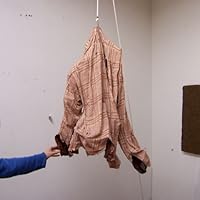
This book had pretty much the worst cover of a book I have ever laid eyes on, and because of that it was incredibly cheap, but it was filled with great writing.

October 9, 2016
I know I read it. That's literally all I remember about it.
Displaying 1 - 7 of 7 reviews