
What do you think?
Rate this book


284 pages, Hardcover
First published January 1, 1989
In Mazo de la Roche: The Hidden Life author Joan Givner writes about the author through a feminist lens, offering a new, or “hidden” perspective behind the author’s fiction, especially her fictional autobiography Ringing the Changes. The Hidden Life was published in 1989, so it predates the two other de la Roche biographies I have read (Thirty-Two Short Views of Mazo de la Roche from 1996 and Mazo de la Roche: Rich and Famous Writer from 2006) and thus its revelations unfortunately did not seem to be so dramatic since both of those subsequent works dealt with Givner’s arguments. The result for me, the reader, was that the other biographers stole Givner’s thunder by citing her in their own works. Nevertheless what I didn’t read in either later work and had never even known was that de la Roche probably didn’t win the Atlantic Monthly prize for Jalna strictly on her novel’s own merit:
“Although he [Atlantic Monthly editor Ellery Sedgewick] liked Jalna very much on its own merits, there seems little doubt that it was above all his longstanding sympathy for the struggling author that influenced the outcome of the competition. Alfred McIntyre of Little, Brown (which had a co-publishing arrangement with the Atlantic Monthly) thought the prize should go to a novel called Matts but nevertheless agreed that Jalna should be published; he suggested offering the same contract that was being proposed to another competitor, Mary Ellen Chase, for An Upland Romance.”
The two books that I read which were published after this one seemed, in retrospect, like condensed versions of Givner’s. Givner offered more detail about the life of Mazo de la Roche and her lifetime companion Caroline Clement and probed the neuroses and snobbery that the other authors merely glanced at. She also gave the reasons for each and every change of house, as these women were on the run so often you’d half expected them to be career criminals. De la Roche could never feel settled and always complained about the weather wherever she was. I found it incredible that in all the times that she and Clement crossed the Atlantic, the longest time they ever spent living in any particular house was for a mere two-year stretch. How could anyone in her household find the security of a home life when they were upping sticks every five minutes? Eventually she would feel the need to return to Canada, where she soon felt confined yet could not leave due to World War II:
“For Mazo, the greatest deprivation of the war was that she could not return to England as she had planned to do after a year’s visit to Canada. Her letters are studded with cries of ‘homesickness’ for England, as undoubtedly they would have been for Canada if she had been confined to England–for her homesickness was really for a place that never existed.”
Givner reproduced correspondence between de la Roche and her editor and publishers who were not always enthusiastic about the author’s diversions from the Jalna oeuvre. They wanted her to stick with the guaranteed moneymaker Jalna sequels (and prequels) yet de la Roche always threatened to defect to another publisher if they didn’t accept her diverse submissions.
De la Roche wanted to win the Governor General’s Award for fiction, yet most of her best work was published before the award was inaugurated in 1937. Perhaps she felt miffed at being overlooked for this annual award, so she focussed her sights on the Nobel Prize for Literature instead. Givner cited passages from de la Roche’s letters to her editor and publisher, where she asks excitedly about what they should be doing to submit her as a possible contender. Her efforts, however, got on their nerves:
“He [Edward Weeks, her editor] may have suggested casually that, because of her great popularity in Europe, she had an outside chance of winning the Nobel. At any rate, Mazo later consoled herself with his reported comment that if she had been an American she would have won. However Weeks himself may have felt about the subject, he certainly lived to regret that she ever got wind of it, because she nagged him endlessly.”
When analyzing de la Roche’s legacy in 1989 when the book was published, Givner felt that the author was forgotten and out of favour with contemporary readers. After her death in 1961, de la Roche suffered the sexist sting of reviewers who looked at her work as unimportant and merely “reading for pleasure”. It is now thirty-three years since the book’s publication and I believe that de la Roche’s reputation has been rehabilitated, especially in the area where I live, near the source of the Jalna novels. Regional, provincial and national recognition has awarded her with historic sites, plaques, street names and a school.
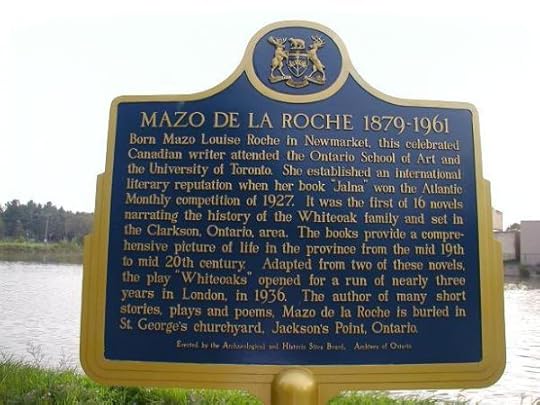
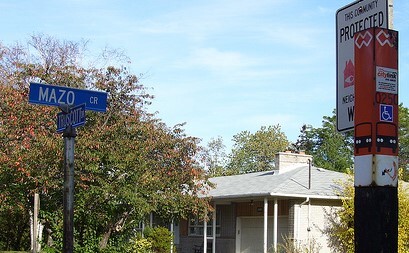
The Hidden Life was a brief book of only 243 pages supplemented with 26 pages of endnotes. It was nonetheless a slow read that took me thirteen days to finish, but that is not an unfavorable remark about the writing. Givner packed each page with citations yet I saved reading all the endnotes till the end of each chapter. The solid blocks of text were rich in information and dripping with revelations that a new de la Roche admirer such as myself found irresistible. In spite of its brevity and the length of time it took me to read, I still felt that I raced through it.
