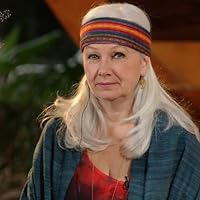
Vow to Poetry is a trumpet call from our most iconoclastic poet that tears down the walls of prescribed creative processes. This stimulating mix of autobiography, interviews, and essays reveals a life possessed by the muse. You've seen the "safe" versions, now comes this unconventional, irreverent, transgressive volume. Anne Waldman ran the St. Mark's Poetry Project in New York for over a decade. She is the co-founder with Allen Ginsberg of the Jack Kerouac School of Disembodied Poetics at The Naropa Institute in Boulder, Colorado, where she teaches and directs the Master of Fine Arts program in Writing and Poetics. Contents>/B> Author's Note, 13 "My Long & Only Afterlife", 15 Feminafesto, 19 My Life a List, 23 Oppositional Poetics, 48 That Light Is Sandino, 49 Managua Sketches, 51 Seeing What Happens (Interview with Joyce Jenkins) , 54 Kali Yuga A Manifesto, 60 "Take Me to Your Poets!", 74 Loom Down the Thorough Narrow, 81 Hermeneutical (Light to Read By), 91 Vow to Poetry (Conversation with Randy Roark), 96 Sikelianos's Delphic Site & Poetic Legacy, 123 Hags, Nuns, & Magpie Scholars, 135 The Outrider Legacy (Interview with Mark DuCharme), 142 Poetry as Siddhi, 155 Noösphere & the Six Realms, 167 I Is Dissipative Structures, 173 The Talisman Interview (Interview with Edward Foster), 192 Warring God Charnel Ground, 205 Deviant Identities, 213 Minstrel Bard, 228 Last Days, Hours, 230 Hurry Up. It's Time, 235 Go-Between Between, 238 Grasping the Broom More Tightly Now (Interview with Eric Lorberer), 247 Creative Writing Life [Reading/Writing/Performance] Experiments, 247 Alphabetic Tesserae, 262 Epic & Performance, 266 "Surprise Each Other": The Art of Collaboration (Interview with Lisa Birman), 272 Spare Us Your Epiphanies, 280 Marriage A Sentence Sentence, 283 Muse, 286 My Life a Book, 289 Acknowledgements, 292 Selected Bibliography, 295 Oppositional Poetics "wozu Dichter in dürftiger Zeit?" -Hölderlin from "Bread & Wine" How do we
Anne Waldman was part of the late Sixties poetry scene in the East Village. She ran the St. Mark's Church Poetry Project, and gave exuberant, highly physical readings of her own work.
She became a Buddhist, worshipping with the Tibetan Chogyam Trungpa Rinpoche, who would also become Allen Ginsberg's guru. She and Ginsberg worked together to create a poetry school, the Jack Kerouac School of Disembodied Poetics, at Trungpa's Naropa Institute in Boulder, Colorado.
Anne Waldman is one of the most interesting, vibrant and unpredictable members of the post-Beat poetry community. Her confluence of Buddhist concerns and thought-paths with sources of physicality and anger is particularly impressive (did you get all that?).
She was featured in Bob Dylan's experimental film 'Renaldo and Clara.'
Anne Waldman has dedicated her life to the art. No false careerism here! The art is too important. Here's a little thing I wrote about this book quite a while ago:
Poet is almost too limiting a term to describe Anne Waldman: she seems to be a force of nature! She came from a family steeped in bohemian culture and moved quite easily into the artistic ferment of New York City in the mid-1960s. For many years she organized the Poetry Project at St. Mark's Church in the Bowery, a series of readings and workshops that brought the influential Beat writers of the earlier decade together with younger writers experimenting with language, with modes of perception, and with new styles of presentation. With Allen Ginsberg, she founded the Jack Kerouac School of Disembodied Poetics at the Naropa Institute in Boulder, Colorado, and she was one of the central figures in the movement stressing the dramatic performance of poetry.
When Waldman presents her own poetry in public, her voice becomes an instrument that can move from whisper to scream to spine-tingling howl in the space of a very few syllables. Through it all, she has kept publishing — somewhere over forty books now, and still counting.
She has never written an autobiography, and she has never needed to. In Waldman's passionately intellectual world there are no divisions between the life and the imagination. Still, her recent Vow to Poetry, which gathers together essays, interviews, and poetic manifestos, provides a lot of detail about the life behind this extraordinary body of work.
Waldman tells us in one of her interviews, "I took a vow early on to never give up on poetry or on the poetic community — to serve as a votary to this high and rebellious art." She continues to believe in the quasi-religious role of poetry and articulates it at every moment, as several of the manifestos included here show. She continues to be rebellious, constantly questioning political attitudes. One interviewer tells her that he thinks her "shrillness and inability to draw political distinctions" makes her "marginal and ineffectual." Waldman replies with humor, "How provocative of you! I disagree. I find the government — and most governments, not just ours — demonic."
Though her rants are fun and often funny, Waldman is best when sticking close to her artistic home: when writing about the poets she has known and about their work. There is a short piece in this book describing her last visit with the dying Allen Ginsberg, about the tears they shared when he told her about his impending death. She ends the piece with a poem she composed beside Ginsberg's body, while several Buddhist monks chanted around her. This piece will certainly become part of the mosaic of American literary history. It alone is worth the price of Vow to Poetry.
I am only about half-way through this book, but I love it. I often choose to take this book with me on trips so I can enjoy an essay or interview on the plane or by the pool. The reading is a bit heavy, but it is a pleasure to read. Anne Waldman's love and dedication for poetry leaps off the page.
I did really enjoy this book and liked a lot of the passages. I really enjoyed the Muse passage. But i also don’t know if i understood all of it, might have to read again.
If you’re a poet, only the first half is worth reading through. And the only chapter that matters—for a poet—is the “Creative Writing Life” on page 297 (until 305).