Viele Geschichten hat Marcel Kruegers Großmutter ihrem Enkel erzählt, als er klein war. Verstanden hat er sie damals nicht so recht, denn es waren Geschichten aus Ostpreußen und Russland, Geschichten von Kartoffelernten und Gefangenenlagern. War das, was die Oma im friedlichen Solingen der 1980er Jahre erzählte, wirklich geschehen? Nach dem Tod seiner Großmutter sucht Marcel Krueger nach Antwort und begibt sich auf ihre Spuren. Eine Reise voller bewegender, komischer und trauriger Momente beginnt. In Gesprächen zwischen Kuchen, Makrelen, Wodka und Bier erkundet Krueger die weißen Flecken in Oma Cillys Biographie. Er findet die wahre Geschichte einer bewundernswerten Frau, die sich nie unterkriegen lässt, die die Zwangsarbeit im sowjetischen Arbeitslager überlebt und sich ein neues Leben mit Familie in Deutschland aufbaut.
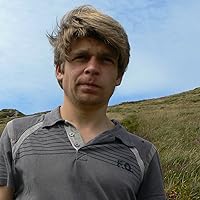
Marcel Krueger is a German non-fiction writer and translator living in Dundalk. Through the prism of family history and his own existence as emigrant he explores the tragedies and violence of European 20th century history and what these mean for memory, identity and migration today, in the tradition of writers like W.G. Sebald, Dubravka Ugrešić and Martin Pollack. His often melancholic writing is always deeply rooted in arts, pop culture, and place. His articles and essays have been published in The Guardian, Süddeutsche Zeitung, the Irish Times, the Calvert Journal, and CNN Travel, amongst others, and Marcel also works as the books editor of Berlin-based 'Elsewhere - A Journal of Place'. He was a participant of the 'X-Borders' Project of the Irish Writers Centre in 2018, and together with Anne Mager explores borders and their political, social and cultural consequences in the interdisciplinary arts project `the corridor´. He has translated Wolfgang Borchert, Jörg Fauser and John Höxter into English and Gerður Kristný, Louis MacNeice and W.H. Auden into German.
Marcel Kreuger writes with delicacy and concision in this family memoir of his Grandmother Cilly, whose life story is one rarely told: the torture, abduction, rape and slavery of tens of thousands of ethnically German women at the end of the second world war.
Cilly and her family lived in East Prussia, a German enclave in Poland artificially created by the Treaty of Versailles and contested territory ever since until it became the causus belli for Hitler’s army to roll into Poland. Cilly and her family may have been German, comfortably wealthy, landed, successful farmers, but they also felt Polish and one of her brothers died fighting with the Polish resistance against the Nazi invaders. Perhaps this sense of Polishness may have given them a false sense of security as the conquering Red Army finally poured out of Russia in 1945 and swamped the lands between Russia and Berlin.
Kreuger skilfully guides the reader backwards and forwards in time, comparing and contrasting Cilly’s life during and after the war, with his own comfortable and cossetted existence in a Germany at the heart of the European Union. Despite every opportunity, the writer does not indulge in graphic descriptions or attempt to shock or disgust; I would suggest that any reader wants more detailed descriptions of the barbarity Cilly and her friends faced is lacking in imagination.
The book is pervaded by a sense of regret that the author did not seek these answers and these stories while his grandmother was still alive to tell them… in the characteristic behaviour of the world war two generation of many nationalities, it was a topic she rarely elaborated on. Perhaps we should all take note; if we do not ask the people we love to share their stories, who will? Highly recommended.
Full disclosure: I met the author before he set off on his journey to trace his grandmother’s footsteps. She was just 21 when the Red Army took her as a prisoner of war from the family farm in East Prussia. The soldiers took her to work in labor camps in Russia, at the foot of the Ural Mountains, where Europe meets Asia. Marcel told me this and didn’t have to try at all to convince me this was a story that needed to be told. But I didn’t realize he’d be taking me on the journey with him, which he does in ‘Babushka’s Journey’ as he shares what he encounters in a highly readable way. Marcel tells Cilly’s tale in unflinching detail, detailing the horrors of her involuntary incarceration and forced labor, but with more inquisitiveness than anger, perhaps coming from the gratitude that she survived and that he was able to trace her path. How many other books were never written, stories never told? Reading Babushka’s Journey prompts deep questions and highlights history’s fickle ways; the fragility of living with ever-changing borders and constant upheaval; the imperceptible lines between life and death, hope and despair, kindness and cruelty. We can read the story because we know it will end well. It couldn’t have been told otherwise.
The blurb from what I remember captured my attention to read the book based on the journey of Cilly however the book more so revolves around the travels of the author.