

What do you think?
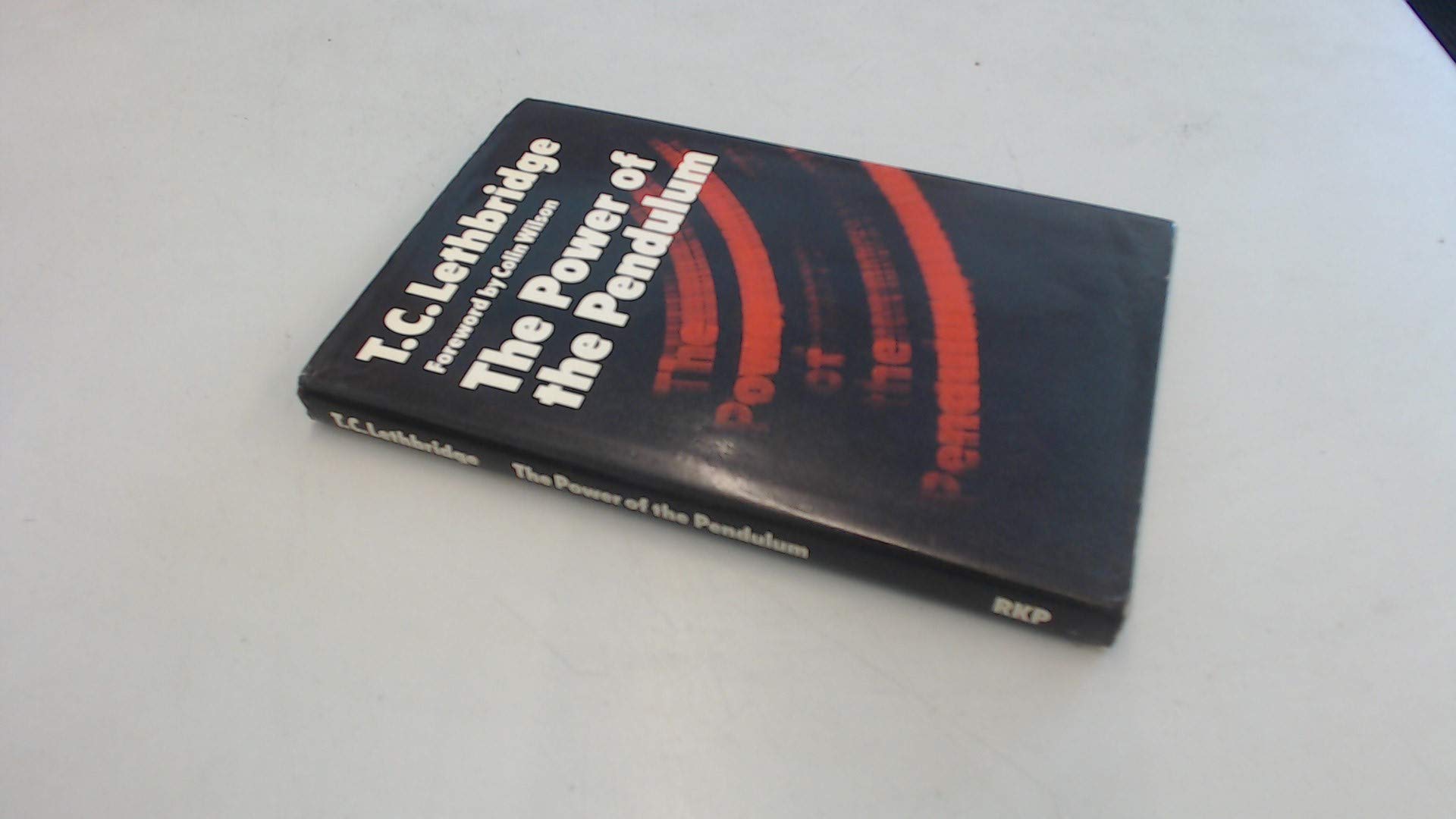
The Power of the Pendulum
This is a conclusion to the author's lifelong study of the worlds of the unexplained. Through his experience with the pendulum and his work with dreams, Lethbridge concluded that there are other realms of reality beyond this one and that the soul is probably immortal.
- GenresNonfiction
138 pages, Hardcover
First published January 2, 1991
About the author
Thomas Charles Lethbridge
24 books10 followersThomas Charles Lethbridge (23 March 1901 – 30 September 1971), better known as T. C. Lethbridge, was an English archaeologist, parapsychologist, and explorer. A specialist in Anglo-Saxon archaeology, he served as honorary Keeper of Anglo-Saxon Antiquities at the Cambridge University Museum of Archaeology and Ethnology from 1923 to 1957, and over the course of his lifetime wrote twenty-four books on various subjects, becoming particularly well known for his advocacy of dowsing.
Source: Wikipedia
Source: Wikipedia
Ratings & Reviews
Friends & Following
Create a free account to discover what your friends think of this book!
Community Reviews
Displaying 1 - 4 of 4 reviews
May 19, 2019
This book caught my eye at a supermarket that had a ‘for charity’ used book section. Initially, I had it in mind for someone else - until I started reading it, that is. If you have an interest in pendulums and such in the ‘whoo whoo’ sense this book may disappoint - written as it is by an archaeologist, psychic researcher, dowser and explorer. That said, it is not scientifically ‘stuffy’ or incomprehensible, but it is written in the most engaging prose that is not trying to convince you one way or the other; in fact the tone is 'this is what I have discovered, take-it or leave-it'.
My favourite quote from this book is:
Actually it is quite devastating to realise how few people ever think at all. They mostly take their ideas from what they are told on the wireless, television, or in the newspapers, from people who are prepared to take a reasonable fee. To suggest anything different makes you tread on many corns of vested interest. No professional pathfinder likes you for doing it.
My favourite quote from this book is:
Actually it is quite devastating to realise how few people ever think at all. They mostly take their ideas from what they are told on the wireless, television, or in the newspapers, from people who are prepared to take a reasonable fee. To suggest anything different makes you tread on many corns of vested interest. No professional pathfinder likes you for doing it.

December 22, 2013
This book proposes that the brain is an engine or aspect of the mind but it is not totality of THE mind.
This book is a fascinating investigation of some enduting imponderables; what is the mind? What is it doing when we see a ghost or when a prospector uses a pendulum to locate hidden objects, as with dowsing with rods ('water witching') or to access other kinds of information not known to the conscious mind?
If there is consciousness after death, how might it be housed, without a physical body?
The Universe, planned or the creation of chance?
On the way, read about natural history. Read about the cunning of bluebottles, and how to order a wasp out of the room.
Tom Lethbridge, an Cambridge educated archaeologist who died in 1971, and who became intensely interested in parapsychology, sets forth findings and invites you to draw your own conclusions.
You are not asked to take anyone's word for anything. Maybe, in the interests of personal enquiry you might decide to try pendulum divination for yourself. All you need is an empty bobbin and a thread, or a ring on a string.
I occasionally dowse with a pendulum myself. I couldn't 'buy' all the ideas, some I could, this book is a brave attempt to say something that is either very new about the mind and the nature of man, or something so ancient, we've almost forgotten it.
Informative, entertaining, this writer's mind is a trained mind, but something so intuitive as to be off the radar for some, so far was he ahead or behind his times, or both.
This book is a fascinating investigation of some enduting imponderables; what is the mind? What is it doing when we see a ghost or when a prospector uses a pendulum to locate hidden objects, as with dowsing with rods ('water witching') or to access other kinds of information not known to the conscious mind?
If there is consciousness after death, how might it be housed, without a physical body?
The Universe, planned or the creation of chance?
On the way, read about natural history. Read about the cunning of bluebottles, and how to order a wasp out of the room.
Tom Lethbridge, an Cambridge educated archaeologist who died in 1971, and who became intensely interested in parapsychology, sets forth findings and invites you to draw your own conclusions.
You are not asked to take anyone's word for anything. Maybe, in the interests of personal enquiry you might decide to try pendulum divination for yourself. All you need is an empty bobbin and a thread, or a ring on a string.
I occasionally dowse with a pendulum myself. I couldn't 'buy' all the ideas, some I could, this book is a brave attempt to say something that is either very new about the mind and the nature of man, or something so ancient, we've almost forgotten it.
Informative, entertaining, this writer's mind is a trained mind, but something so intuitive as to be off the radar for some, so far was he ahead or behind his times, or both.
September 9, 2025
It seemed funky so i picked it up at a second hand bookstore.
Just a very strange work of pseudoscientific prose that poses speculations as facts.
Just a very strange work of pseudoscientific prose that poses speculations as facts.

February 28, 2012
The true meaning of parapsychology .. Lethbridge was evidently devoted to this field ..
Displaying 1 - 4 of 4 reviews