Jump to ratings and reviews
Rate this book

Unguarded hours

Rate this book
comic fiction

210 pages, Hardcover

First published April 17, 1978

Loading...
Loading...

About the author

A.N. Wilson

138 books251 followers
Andrew Norman Wilson is an English writer and newspaper columnist, known for his critical biographies, novels, works of popular history and religious views. He is an occasional columnist for the Daily Mail and former columnist for the London Evening Standard, and has been an occasional contributor to the Times Literary Supplement, New Statesman, The Spectator and The Observer.

Ratings & Reviews

What do you think?
Rate this book

Friends & Following

Create a free account to discover what your friends think of this book!

Community Reviews

5 stars
15 (28%)
4 stars
19 (35%)
3 stars
12 (22%)
2 stars
6 (11%)
1 star
1 (1%)
Displaying 1 - 4 of 4 reviews
Profile Image for Kyle C.
743 reviews145 followers
Read
May 22, 2025
Had the Dean's daughter worn a bra that afternoon, Norman Shotover might never have found out about the Church of England; still less about how to fly. And when he went to Burlington House, he had no idea that was to cost him his job.

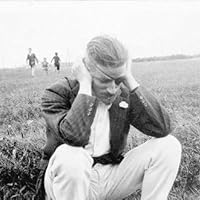
This is the bewitching opening of A.N. Wilson's madcap novel Unguarded Hours. The protagonist is Norman Shotover (the comic symbolism of his name becomes delightfully apparent in the final chapter). After a simple secretarial mishap, he loses his job as a solicitor in London, moves to the rural village of Silchester, begins an affair with the daughter of the Dean of the cathedral, and driven by quixotic impulses, is ordained a priest by a traveling bishop, a crackpot convert with the unflattering name of Skegg, a religious charlatan who has somehow managed to receive valid orders from the Roman Catholic Church and the Church of England, dabbling in different breakaway sects, accruing the various titles of archimandrite, protopriest and patriarch along the way—and eventually becoming an imam. After witnessing a solemn Mass, Norman suddenly thinks he might have a genuine vocation as a parson and decides to enroll in a theological school. He is soon cavorting with catty seminarians (who all refer to each other with feminine names) and is having an affair with the cathedral Dean's second daughter. It's a picaresque comedy that features a plumber bishop who drinks and chain-smokes, a homoerotic magic ritual involving two ordinands, an absurdly nonchalant conversation about soap during cunnilingus, and a bizarre spectacle of solidarity for the striking unions—a very high-church walk-out, one might say.

A lot of the humor is dated. The jokes about African priests visiting the Dean are not really witty repartee, and the depiction of lascivious seductresses reads like the glib wish-fulfillment of a male fantasist. I enjoyed the caricature of high-church seminarians as vicious queens but it lost its charm after a chapter or so. It's a novel that sparkles with wit at times but has aged (and even when first published in 1978, despite its salacious plot, the novel must already been a bit antiquated—its parody of wizened graduates of Pusey House, still clinging to their laced vestments, belongs more to the 1930s than the 1970s). The comedy is much more spritely than Barbara Pym's but it's still the same clerical humor about village cranks and wayward priests.
59 reviews
December 20, 2025
Enjoyable romp, but despite the high camp High Church storyline it's a rip off of Evelyn Waugh's Decline and Fall. Fun to read and reread and imagine how offended the current generation would be and why it would never make it to either the small or large screen. The demise of the CofE via its political leadership is almost prophetic.
This entire review has been hidden because of spoilers.
74 reviews
August 6, 2025
A hilarious and ultra-camp ecclesiastical romp.
Profile Image for Joseph.
16 reviews1 follower
October 18, 2026
Decently entertaining but derivative. Our main character is a bit too doless even for the tradition of English novels about doless young men. The comic potential of the seminary seemed underutilized.
Displaying 1 - 4 of 4 reviews