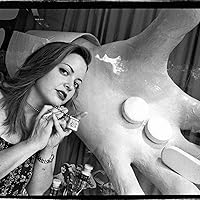
(from Wikipedia) Huston lived in Calgary until age fifteen, at which time her family moved to Wilton, New Hampshire, USA. She studied at Sarah Lawrence College in New York, where she was given the opportunity to spend a year of her studies in Paris. Arriving in Paris in 1973, Huston obtained a Master's Degree from the École des Hautes Études en Sciences Sociales, writing a thesis on swear words under the supervision of Roland Barthes.
(Actes Sud) Née à Calgary (Canada), Nancy Huston, qui vit à Paris, a publié de nombreux romans et essais chez Actes Sud et chez Leméac, parmi lesquels Instruments des ténèbres (1996, prix Goncourt des lycéens et prix du livre Inter), L'empreinte de l'ange (1998, grand prix des lectrices de ElleJ et Lignes de faille (2006, prix Femina).
Did it make me overlook all the things I’ve turned down while moving from country to country? Did it make me question if, indeed, expatriation was a form of self-hatred and not the pure curiosity or a flexibility of the heart as I’ve used to think? Did it utterly devastate me that my childhood friends will never aim to know my local friends in another country that I’m still trying to make my home out of (because, as it turns out, that’s how it should be)?
Yes to all of that.
This book is not about bilingualism, it’s not about growing up in a family of immigrants or about having a spouse from a different culture as it may seem from rare reviews here and on Amazon. This book is about the state of your mind and soul when you’re an expatriate, this book is about a moment of realization that each expatriate has sooner or later — a realization that you’ve stripped yourself of your identity with your own hands. The identity that your parents were helping you to form, the identity with all the cute childhood songs you used to listen to and all the puns you laughed at with your teenager friends. You took it away yourself and now you wonder what’s left of you after that, here, in this place, where you’ll never be the “one of us”. That’s what the book is about.
A good friend of mine advised it to me. Being a Russian girl herself who moved to USA and then to Germany, she wrote me “finally there’s someone who says it how it is!” And I couldn’t agree more. She also said that “this book is going to be a really hard one to read” while sending me a copy. And once again she was right.
No matter all the things stated above, I feel more wholesome after reading it. I feel saner for sure, knowing, that this fragmentation of me I have in my mind, is also a common thing for anyone who lives abroad. And weirdly, I feel even proud, for out of all the possible options of how to live my life, of all the possible versions of Viktoriya that there were in different countries and cultures, I’ve picked the one that I have here right now.
And for the rest “What is important can be translated”
Um, wow... This obviously doesn't 100% reflect my own experience, but has to be one of the first times I've ever seen someone talk frankly and meaningfully about this particular facet of my life (which happens to be a pretty big one). Kind of unfortunate that I'd had the idea to write something sort of like the last essay in the book literally a few days ago, and now I probably won't, lol. Or maybe, who knows. At least I know I'm not the only one who feels this way.
These essays struck a chord with me as I am in much the same situation as Nancy Huston, with two "first" languages. I can't tell you if I'm more comfortable in French or in English. It's always hard for me to answer the question "what is your mother tongue", because really, both languages are at the same level.
Accurate description of the paranoia experienced when using language while one is abroad/not using mother tongue/thinking about how one is not as comfortable as when speaking mother tongue, but isn't this also true when one speaks mother tongue?/etc./hehe