In Nod, her ninth book of fiction, American novelist and poet Fanny Howe explores sibling rivalry within a family that, in the wake of World War II, is both disintegrating and stumbling into the terrible, dark adulthood of the latter half of the Twentieth Century. Yet for all of the dark forces at work in Howe's novel, she presents also a world of wonder, of sexual awakenings interlinked with the Irish countryside and culture in which the girls grow up, the strange stories and myths they hear from the Norwegian north and retell through their own highly-wrought imaginations. The central figures of this fiction, Irene and Cloda, interact with one another and the man who has encamped in their ghost-, now guest-room, as if playing out the lives of the Brontes to a packed theater audience. At the core of this tale, however, is a deep emptiness, a loneliness created from cultural events and both their mother's and father's refusal to accept the fates that overwhelm the sisters in their small Irish encampment. Both seek desperately to escape, Irene to her imaginary world of art and adulthood, Cloda to some dark magic corner where she can learn to become something of worth.
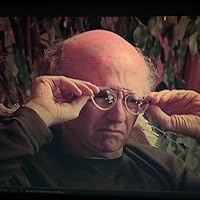
Fanny Quincy Howe was an American poet, novelist and short story writer. She was raised in Cambridge, Massachusetts. Howe wrote more than 20 books of poetry and prose. Her major works include poetry such as One Crossed Out, Gone, and Second Childhood; the novels Nod, The Deep North, and Indivisible; and collected essays such as The Wedding Dress: Meditations on Word and Life and The Winter Sun: Notes on a Vocation. Howe received praise and official recognition: she was awarded the 2009 Ruth Lilly Poetry Prize by the Poetry Foundation. She also received the Gold Medal for Poetry from the Commonwealth Club of California. In addition, her Selected Poems received the 2001 Lenore Marshall Poetry Prize from the Academy of American Poets for the most outstanding book of poetry published in 2000. She was a finalist for the 2015 International Booker Prize. She also received awards from the National Endowment for the Arts, the National Poetry Foundation, the California Arts Council, and the Village Voice. She was professor of writing and literature at the University of California, San Diego and lived in Cambridge, Massachusetts.
God, I am such a sucker for coming of age stories.
Fanny Howe is very quickly becoming my favourite author of all time. The way she writes is so poetic. Like every sentence has a meter, flowing off the tongue with such a fervorous rhythm. It’s such a pleasure to read, and such a difference to the combination of poetry/prose/nonsense of Holy Smoke.
Everything here is pretty devastating. Generations of trauma and not understanding how to deal with it. Having said trauma exploited for the sexual satisfaction of another. Thinking that this is normal and what is deserved. Irene and Cloda are such wonderfully written characters. Hal is the most evil groomer who has ever lived and will be taken out back and catapulted into the Celtic Sea.
There’s nothing neat to say about a book like this. It’s like the message in a bottle that turns salt white (to imply, in an easy declarative, that words come from salt is so indicative of what it’s like to read this book). If there is anything summative to say, I think it is that the mystery has the power to save you, though it also has the power to destroy you, especially if you try too hard to find it, or to make it anything other than what it is.
They are the last heretics against a work addicted world. In a post industrial modern society, these mad women lounging about hospitals are the true defenders of a time on earth where work did not prove worth.