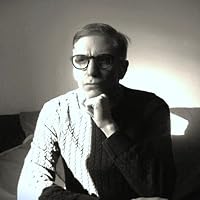
Elytis is a poet capable of seeing the Beautiful even in the face of enormous tragedy. He is a poet of complete engagement, one who sees the "other side" beyond the surface of things. Rather than speaking of answers to mysterious riddles, Elytis reveals the Mystery itself. Odysseas Elytis's first book was published at the outset of World War II (1940). It showed the influence of French surrealist technique,but transformed surrealism into a distinctly personal voice and offered a vital personal mythology. Elytis, immersed in Greek historyand mythology, prefers the mechanism of mythology to the figures -moral awareness influenced by the Modernists Kavafis and Seferis,and like them, Elytis makes use of the old "pure" katharevousa anddemotic Greek, also evoking a powerful sense of place through carefuluse of regional dialect. He is among the most musical of contemporarypoets. Olga Broumas has addressed her translations to that music as well, achieving such sonority that she often reads the poems in both languages, one after another, alternating lines, without interrupting thesteady movement of the music.
It's so lovely when the mind clouds — there heroes kill make-believe like in the movies you get your fill of blood; at the hour when the real thing gurgles down the stairs you touch a finger and wake the curse the Queen with spiders her eyes unbeaten and full of dark shorn and ugly I pasture swine eons now outside the walls I wait for the message — the first cock in Hell something like the saxophone with a heavenly gloss like young girls running riding dragons of rubber Earth only now revealed how great in reality. Zeus thunders blackness Zeus thunders neither defeat nor victory this.
This is a good sampling of the Nobel Laureate's work in Greek and English. One of my favourite poems, Sun The First, starts the book. Written in 1943 during the Nazi Occupation, the beauty and hope rings true during a bleak time. It is followed by the beautiful The Hyacinth Symphony and covers an Ode to Picasso and Villa Natasha, which was published in 1973 with illustrations by Picasso and Matisse. The final poem is one of his last, Maria Nefele, written in exile during the military junta. There is a tidy essay on his work at the back of his collection and helps to clarify his "surrealist" style.
As noted in the essay, he was immensely popular in Greece but when it was pointed out that poetry doesn't sell in America, he responded, " It doesn't matter. A realmpoet needs an audience of three. And since any poet worth his salt has two intelligent friends, he spends his whole life searching for the third reader."