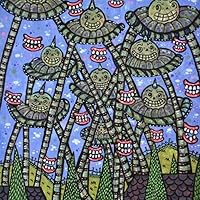
The hugely enjoyable prequel to Mimi's Ghost, this book which first introduced readers to the criminally discontented antihero Morris Duckworth is once again available, to be published simultaneously with the hardcover edition of Mimi's Ghost.
Born in Manchester in 1954, Tim Parks grew up in London and studied at Cambridge and Harvard. In 1981 he moved to Italy where he has lived ever since, raising a family of three children. He has written fourteen novels including Europa (shortlisted for the Booker prize), Destiny, Cleaver, and most recently In Extremis. During the nineties he wrote two, personal and highly popular accounts of his life in northern Italy, Italian Neighbours and An Italian Education. These were complemented in 2002 by A Season with Verona, a grand overview of Italian life as seen through the passion of football. Other non-fiction works include a history of the Medici bank in 15th century Florence, Medici Money and a memoir on health, illness and meditation, Teach Us to Sit Still. In 2013 Tim published his most recent non-fiction work on Italy, Italian Ways, on and off the rails from Milan to Palermo. Aside from his own writing, Tim has translated works by Moravia, Calvino, Calasso, Machiavelli and Leopardi; his critical book, Translating Style is considered a classic in its field. He is presently working on a translation of Cesare Pavese's masterpiece, The Moon and the Bonfires. A regular contributor to the New York Review of Books and the London Review of Books, his many essays are collected in Hell and Back, The Fighter, A Literary Tour of Italy, and Life and Work. Over the last five years he has been publishing a series of blogs on writing, reading, translation and the like in the New York Review online. These have recently been collected in Where I am Reading From and Pen in Hand.
I guess it’s no coincidence that I am about to recommend four books read in a row since they are all authors whose works I have determined to read in their entirety.
(1) Savage Night by Jim Thompson. It’s been a while since I’ve read a Jim Thompson and this one seemed more ambitious than I recall. The anti-hero is a tragic figure. The reader may not be able to go as far as empathy – none of us have lived anywhere near this place and these people. But Thompson himself lived the life. So his clever way with words is true. It makes such a difference to know that.
(2) Juggling the Stars by Tim Parks. Not a million miles from Savage Night, but this time the anti-hero is a failed Northern Brit who is doomed to a life on the edge of failure, teaching English in Italy. What could be more demeaning a life? And, of course, like Thompson, Parks is writing for real, having been a teacher of English in Italy for his life’s work. The subtitle says it all ‘A novel of menace’. He is super good at the unease which ensures the reader is gripped in the tale’s vice. Only finishing it gives release.
(3) Harlequin House by Margery Sharp. One could scarcely change the tempo more. A typical story marked by gentle social digs, a love of words and a hilarious motley collection of characters, lead by the protagonist Mr Partridge with his dapper style and overactive imagination. Delightful.
(4) To Siberia by Per Petterson. I did this the discourtesy of it being my reading on the bus book. It definitely deserved better than to be picked up and down half a dozen times a day. It has the trademark Norwegian glumness, but despite that being the basic beat of the book it nonetheless outdoes itself with the very saddest last two sentences. Your heart will sigh when you get there.
🤣 The protagonist of the book, Morris, is a loser. He's a whiny little prick who feels like he's got the rotten end of things. His idea is that the rich don't deserve what they have, and that they should share what they have with him. Every little inconvenience that he suffers, is only suffered by him; witness how he feels about a simple dog barking in the night. "the dog started barking at 2. Morris woke to a howl, long and bloodcurdling as a werewolf's. Then came repeated barks only a yard or two from his window. His Jaws, as always when he woke, were clamped together tight, his tongue sore down one side and swollen. He lay listening to the dog, brain pounding with the most profound black anger, anger that seemed to bulge out from between his tired eyes. It wasn't enough to have your mother die on you then, the only person who'd cared for you, hood and courage to you. It wasn't enough to have been born poor, to have a peasant of a beer-swilling, stinking, pork-scraping father, to have fought upstream every moment of your life, to have been kicked out of University and rejected for more jobs than appeared in the Guardian in a month – no, to add to it all you had to have a dog next door shatter your sleep in the middle of every night, so that you could lie there rigid and horribly awake, going over and over everything again, the sense of frustration, of failure, of being taken for a ride, of having made the wrong decisions, been ignored, of having nothing, but nothing to look forward to, ever, nothing to show for all that effort. The dog's tireless barking rang between courtyard walls and seemed to hack at his tired brain like a pick sinking into mud. Lying on his back, Morris began to cry, miserable tears of self-pity. His cheeks ran. He was damned, merely. Damned. Nothing less. What gave it away was that nobody else seem to worry about the animal. They were immune. The barking didn't wake them. But he was cursed with some terrible disease that brought these troubles to him. And he didn't deserve it. He really didn't deserve it."
MassiMina is an Italian girl from a rich family, who attends the school where Morris works, and who he tutors privately. She has decided that she loves Morris, and Morris has met her family, as a possible suitor. but because he's a small-time teacher in a language School, mamma wants nothing to do with him, and forbids him from seeing MassiMina again. His little scheme to marry into money has failed, So, he decides to kidnap her, and send a Ransom note to her family. But to avoid alarming MassiMina, he has agreed to call their little adventure "running away to elope" on her 18th birthday. But once MossiMina has spent some time with Morris, she finds out that the handsome-on-the-outside boy to whom she's attracted, is not who she thought he was. "As they went past the pantheon and into via semanario, she said, 'Morri?' Her voice was softer than before. 'Morri, you haven't been out with many other girls, have you?' it was precisely the kind of conversation to get right on his nerves and ruin a good day. He said nothing. Ignored it. 'I mean, when you, when we...' She tried to hug tight to him, but he hurried. 'when we, when we did it the other day, together, I got the feeling it was the first time for you too and...' 'and what?' He snapped. God damn. 'I felt so happy, Morri. I mean, don't be angry, I'm so happy if you've never been with anybody before, it makes it so pure and right and...' 'well it wasn't the first time,' he said sharply. And she began to cry. They sat in a bar then in Piazza QuirinAli and Morris drank two carafes of frascati almost entire entirely on his own. 'you're very cruel sometimes, Morees,' she said when they were undressing at last in the pensione. The room was freshly whitewashed with a huge old double bed, a few items of recently polished furniture, a crucifix over the bed, Madonna opposite, and the pleasure of a clean window complete with modern and operable blinds. A step up. 'you're not easy to be with sometimes,' she said. 'sacrifice yourself then,' he said. His first damn day in Rome and she had to ruin it like this. 'or go home to mamma if you like.' " Every little thing about MossiMina is annoying to him, but especially when she finds out that he, like herself, is a virgin.
Through a rich boy that Morris tutors privately, Roberto, he and Mossimina find a free place to stay at outside of Rome. But the boy is gay, and morris leads him on to believe that he is gay as well, so that he can get the use of his friend's family's Villa. After reading this part, this reader suspects that Morris is probably bisexual. "Morris had meant to be cold-shoulderish to him, lovey dovey to her. He had meant to demand that they be taken out to Gregorio's place immediately. But after the flare up with MassiMina he had no desire at all to be left alone with her or show her any affection whatsoever. And then he was immediately attracted to Roberto who was full of good humor and ready to make their acquaintance thoroughly and immediately. So he didn't object to the grappa, not at the first round nor the second, and he found after a while that he was having a good time, even going out of his way to shine for the boy, to show he could liven up a party as well as the next man. MassiMina was giggling already, holding her nose to down the grappa. Morris had never seen her so Lively, Nor so willing to drink. Reaction to their little argument perhaps. Roberto, meanwhile, was poking fun at her, mimicking her little pouts, her sudden righteous frowns and she had realized that she didn't mind it she had realized but didn't mind it seemed. Morris joined in and found himself feeling at the same time contented and protective. Was this what mellowing out was? Not that alarm Bells didn't ring from time to time to spoil things. When the Trevisans realized that they weren't going to get the girl back. When they told the police. What then? Would they be able to trace the two people who had had reservations in that compartment? Would they find the holdall on the platform? They'd know then he'd picked it up in Rome. Or if the elderly man actually managed a description of him, which meant another photofit that would correspond perfectly with the Rimini one, not to mention with inspector marangoni's knowledge of Morris. (Were all incoming calls to the police station automatically traced? Because if so, they'd know he'd called from Rome, from the station, and it would all add up. What a fool he'd been to call, an idiot.) And just from the routine point of view, wasn't it crazy to expose MassiMina to someone for such a long time like this, to let an imprint of her face sink into his memory.? Yes, Morris heard the alarm bells ringing, but he chose to ignore them. He chose to ignore them because he was weary of worry and alarms. And what was the use of 400 million if you couldn't sit back and enjoy it. Have a joke, a laugh, for God's sake. The boy was fun."
In my opinion, the ending is not realistic. The author let's Morris get away with his crime, when in real life a kidnapper/murderer making so many blunders, would be easily caught.
I bought this book at a used book store in Iowa City when I dropped off my oldest at college. They only admitted people by appointment only and there were several cats roaming around the old house. Probably my favorite part of this book. This one took a while to get going, then kinda reminded me of a poor man's "You" or a less exciting "Talented Mr Ripley". A bumbling, unlikable protagonist who is sure he'll be redeemed in the end. For just grabbing this book on a lark, it was fine. And actually the ending did pay off a little. 2.5 stars rounded up cuz the cringe factor made me feel something at least
I could not get more than 50 pages into it. The main character is so violent and the purpose seems nonexistent to the point that this book just creeps you out.
Shades of Patricia Highsmith’s Tom Ripley series. Morris Duckworth teaches English to recalcitrant Italians, most of them wealthy. He thinks he’s in love with a seventeen-year-old heiress, Massimina — if that’s possible; or at least she’s infatuated with him. Her parents see through his pretentious lies related to a fictitious job he pretends to have and forbid their daughter from seeing him. Massimina meets him one day and they decide to run off, Morris pretending to send her cards back to her parents so they won’t worry. He has a more subtle plan. He’s tired of being penurious, so he contrives a scheme to pretend to kidnap her. Morris’s previous attempts at petty larceny (stealing a bronze statue from the house of a boy he tutors) and a foray into blackmail (he steals a briefcase and finds a diary that refers to two young women — he assumes the owner is having an affair with the two so he threatens to reveal the information to the man’s wife) both are dismal failures (the bronze statue is a minor copy — he missed the really valuable piece-- and the two women turn out to be the man’s daughters. Morris has the amoral psyche of Ripley, without Tom’s skill — or luck. When Massimina makes friends with an English girl and her Italian boyfriend, Morris kills the boyfriend who has seen Massimina’s picture in the newspaper with a story about the kidnapping. He has to kill the English girl as well when she stumbles on the scene shortly afterwards. Like Tom, Morris seems devoid of sexual interest, the whole idea just simmering in the background. Gradually, events conspire to push him into a corner. There is a sequel that will be on my list.
A young Englishman living in Rome has everything going for him. He's handsome, smart, fluent in Italian, and because he's a tutor, he has entree into the city's finest homes and its truly aristocratic families. Yet, in Tim Parks's excellent novel, "Juggling the Stars," we soon learn that our hero is very unhappy and resentful of his lot. Parks' accomplishment in this extraordinarily entertaining novel is to make the reader care for a character who, in a short time, reveals himself to be an ill-tempered narcissist and dangerous sociopath. The novel flows smoothly with a clear picture of what is actually happening while nevertheless adhering closely to the protagonist's twisted mindset. This book is awe inspiring as a display of writerly skill negotiating the pitfalls of an unreliable narrator while keeping the reader deeply involved to the very end.