Jump to ratings and reviews
Rate this book

Only Prostitutes Marry in May: Four Plays

Rate this book
Four plays by Dacia Mariani, one of Italy's foremost writers, that present her unabashed views on the relations between women & power, women & men: Mary Stuart, Dialogue Between a Prostitute & Her Client, Dreams of Clytemnestra, Crime at the Tennis

378 pages, Paperback

First published July 1, 1994

Loading...
Loading...

About the author

Dacia Maraini

252 books265 followers
Dacia Maraini is an Italian writer. She is the daughter of Sicilian Princess Topazia Alliata di Salaparuta, an artist and art dealer, and of Fosco Maraini, a Florentine ethnologist and mountaineer of mixed Ticinese, English and Polish background who wrote in particular on Tibet and Japan. Maraini's work focuses on women’s issues, and she has written numerous plays and novels.

Alberto Moravia was her partner from 1962 until 1983.

Ratings & Reviews

What do you think?
Rate this book

Friends & Following

Create a free account to discover what your friends think of this book!

Community Reviews

5 stars
8 (15%)
4 stars
20 (37%)
3 stars
18 (33%)
2 stars
5 (9%)
1 star
2 (3%)
Displaying 1 - 8 of 8 reviews
Profile Image for Ilse.
560 reviews4,572 followers
January 26, 2019
Dialogue Between a Prostitute and Her Client

'Everything in human life is really about sex, except sex. Sex is about power.' Whether this was - probably not - said by although often attributed to Oscar Wilde and this might not always be true (sometimes sex is just about sex, dixit Robert Michels), it certainly could be said of the situation depicted in Dacia Maraini’s 1978 play Dialogue Between a Prostitute and Her Client, as one of the central questions this chamber drama raises, is who is in power here, the twentysomething, nameless client ridden with the common Madonna-whore complex or the feisty and dominant prostitute he visits, Manila.

While I was reading Natalia Ginzburg’s All Our Yesterdays: A Novel in the local library, I was reminded of Elsa Morante’s novel History, and so, looking for a biography on Alberto Moravia because hoping to find out more about his spouse Elsa Morante, skimming the shelf dedicated to Italian writers a little red booklet caught my eye: this play from Dacia Maraini, Italian novelist, playwright, essayist, and social activist. As Maraini happened to be the companion of Alberto Moravia for twenty years after he separated from Elsa Morante – such to me was a Sign - I had to read this, instantly, which I did without taking the time to sit down – it is a very short play.

First I read the play in Dutch, however pondering about it at home read it another time in an English translation (in Only Prostitutes Marry in May, collecting four of Maraini’s thirty plays). The English version turned out pretty dramatically different (forgive me for being inclined to stick to the boudoir sphere with this reference to skin care idiom): the English version reveals that Manila directly addresses the audience, inviting it explicitly to participate in the play and enter into discussion (’Which part do you prefer? Breasts? Thighs? Are you an expert on prostitutes? Have you ever been to one?’ - with some stage instructions how to respond on the audience). This dimension of interactive theatre was missing in the Dutch edition, as was the (pretty sore) ending (maybe a page was missing in the library copy)?

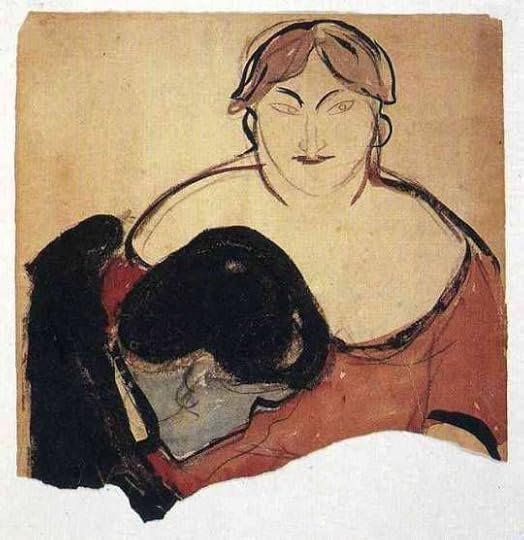
1ca0e3d6ce2051640aaee6d653bedefb
(Edvard Munch)

The Dialogue is an interesting, bittersweet play, still performed in quite some countries at present, and, like much of Maraini’s work, focusses on desire, sensuality and the erotic as important and legitimate dimensions in a woman’s life. Affirming the importance of the body and women’s natural closeness to their bodies, connecting this bodily understanding to the roles of women in society, Maraini aspired to raise awareness about the anti-sensual institutional repression of women and of their bodies (for instance by indoctrination of Catholic education and how women come to internalise its repressive ideas on motherhood and womankind). In this play, it is not the enslaving of women’s bodies that is at stake, but the deliberate use of the female body by women to dominate men (whether in Manila’s case such is an effective strategy or not is up to the reader), as Manila emphasizes her free choice and agency in her working as a prostitute regardless of the university degrees she holds (which opens the discussion if the choice to prostitute oneself is ever a truly free choice).

Manila, young, sharp-tongued, intelligent, more educated than her client, doesn’t mince words and in an energetic, rebellious denial of the potentially exploitative nature of the encounter, seeks the confrontation with her insecure still boyish and inexperienced client, inquisitive on what he is pursuing in her body, why he comes to her, wondering what he could possibly miss with his girlfriend. A dynamic of reversal of roles unfurls, mixing up and blurring the roles of client and prostitute, buyer and seller, of man and woman; feelings get involved into the transaction, which in the end means pleasure will come with a price.

Maraini plunges into the deep, dark undercurrents of the psyche by questioning the nature of this peculiar form of economic exchange. Can equality in this kind of transaction exist? Can it be an even game? And if not, who wins, and why, or is humiliation and degradation in some extent inescapable for both the client and the prostitute? What are the basic needs of men and women, and do they differ, and how do those needs relate to power?

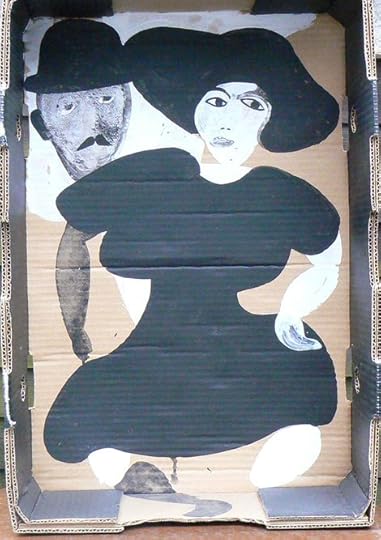
cd701491c578b1cd9e8491859cad8d87
(Ronald Rae)
Client Why are you never satisfied? You make it sound like a prostitute’s the only job a woman can do.

Manila You said it, snake-eyes. The only choice a woman’s got is whether she prostitutes herself in public or in private – on the street or at home. Right?


Maraini uses prostitution as a metaphor for how society – men as well as women - consider and treat the female body and sex as a commodity, to be used and abused by women as well as men for a variety of reasons, tactically or strategically – and by Manila’s sneer on the narrowness of a woman’s scope of choice in life, Maraini hints to some feminist voices which equate marriage to (legal) prostitution - for financial or personal gain, or, historically, for mere survival, or, in more cynic terms and times, for a new dress, services, a dish washer, security, whatever is wanted/needed a spouse thinks only a spouse can offer. Does the analogy between marriage and prostitution sound familiar? The outpouring of Maraini’s prostitute illustrates that what are perhaps considered current radical cultural feminist ideas like expressed in Sheila Jeffreys’s The Industrial Vagina: The Political Economy of the Global Sex Trade are maybe less new/extreme/crazy than one might think at first sight: such wry thoughts on the nature of exchanges between men and women echo far older predecessors in the context of matrimony ((Daniel Defoe (in Conjugal Ledwness, or Matrimonial Whoredom (1727)) wrote that ‘he or she who, with that slight and superficial affection, ventures into the matrimonial vow, are to me little more than legal prostitutes’ ( how refreshing he treats both sexes alike in this!). Also Mary Wollstonecraft argued that for women to ‘marry for a support’ was ‘legal prostitution’).

Raw, direct, interlarded with fragments of day-dreams and Freudian allusions, oscillating between coarseness and tenderness, this is a powerful, thought-provoking play that makes one think on human nature, (sexual) identity, gender and the complexity of human relationships - those between the sexes as well as the ones in the broader family, including critical stances on some cultural stereotypes of Italian society (tackling its notorious mammismo).

The play also offers a fascinating glance into some of the feminist concerns and issues in the Seventies on gender, oppression, mutual exploitation and objectification, the fierceness in tone and intense emotionality at display might appeal less to current taste but the topic of sex work and how it is presented here are as relevant and controversial as ever – think of the discussion if fallacy of free will is inherent to prostitution, or Amnesty International arguing that prostitution is a matter of free choice versus opinions like Prostitution is not a job. The inside of a woman’s body is not a workplace – or think about the never-ending discussions on how prostitution should be approached by law which so many countries wrestle with, the law varying widely from country to country, fitting into legislation models ranging from decriminalisation, regulatory legalisation, abolitionism, neo-abolitionism to prohibitionism. Attending or reading this play might offer great discussing material to perk up and enliven your long wintry evenings in case your company gets tired of playing game of goose.
Profile Image for Andrea.
470 reviews1 follower
May 21, 2024
Con un linguaggio estremamente scurrile , l'autrice descrive in maniera sublime l'essenza della femminilità con un'ampia critica al mondo patriarcale , attraverso tre opere teatrali tra di loro slegati.
Più che "Commedie" ,per me ,sono 3 Drammi belli e buoni , abbastanza tosti da leggere ma troppo profondi ed emotivamente potenti per liquidarli come mero esercizio di stile.
Ad esempio, l'ultimo testo teatrale dedicato alla rilettura, in chiave moderna, del mito di Clitemnestra è talmente eccessivo da scavare fino al midollo nella psiche dei vari personaggi della Tragedia greca e così comprendere davvero le motivazioni delle scelte di ognuno!
Insomma un testo non adatto a tutti ma che sorprende il lettore per la sua franchezza e sincerità, imprevedibili !
Profile Image for Sophia Bain.
25 reviews4 followers
December 20, 2019
only read the dreams of clytemnestra but i can’t log only the one play so.
interesting overall. some really beautiful and lyrical moments so props to Maraini and the translator. I think if you didn't have at least elementary knowledge of the oresteia this would be confusing, because, even with basic knowledge of the oresteia the dream sequences make it kind of confusing. but also like, kind of confusing in a good way? this is definitely very formal about Being A Commentary, which i don't mind, but definitely could bother some people. i liked it! this is so niche i'm never going to talk to someone who has read this shoutout to my dad for getting it for me via interlibrary loan!
Profile Image for july.
118 reviews1 follower
Read
January 26, 2026
➡ Mary Stuart - ★★★★★☆☆☆☆
➡ Dialogue Between a Prostitute and Her Client - ★☆☆☆☆
➡ Dreams of Clytemnestra - ★★★☆☆
(this might be the one case in which the translation is better than the original)
➡ Crime at the Tennis Club - ★★★★★☆☆☆☆
Profile Image for M..
3 reviews
June 20, 2021
only read “Dialogue Between a Prostitute and Her Client”
Profile Image for EIJANDOLUM.
310 reviews
Read
May 20, 2022
There is a deep melancholic pleasure in the observation of other people's pain.

What a woman!
6 reviews
April 27, 2024
This is one of those books that never leave your skin. you carry them forever. waited so long to read the book and it was worth it.
Profile Image for michele ✡︎.
253 reviews45 followers
Read
August 7, 2025
I first heard of Dacia Maraini the same place I heard about so many of the writers I'm fascinated by and obsessed with to this day, like Anne Carson, Richard Siken, Mary Oliver and Anaïs Nin: Tumblr. Three years ago, I came across a quote from one of the plays in this collection, Dreams of Clytemnestra, and began obsessively looking for a copy but it is quite literally impossible to find this book anywhere. Finally getting ahold of it was one of the most satisfying moments in my tiny little life and I had so much fun finally being able to read Dacia Maraini's works that I finished four plays in a single day and loved every second of it.
Displaying 1 - 8 of 8 reviews