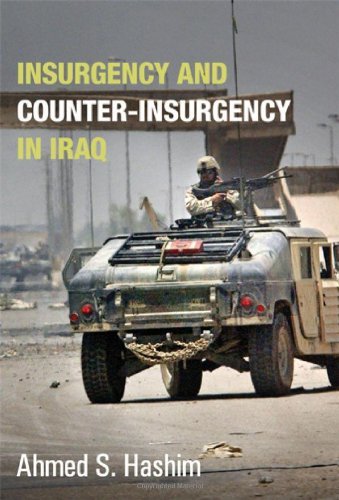
„Insurgency and Counter-Insurgency in Iraq” by Ahmed S. Hashim is an amazing study of the development of the insurgency in Iraq written at a time, when most of the information included had not been public knowledge and thus the study provides a well-structured analysis of the conflict in many facets.
Ahmed S. Hashim starts his study with a thorough description of the changing dynamics of warfare in Iraq from 2003 to 2005. Taking the deficiencies of the regular Iraqi military as a starting point, he describes the plans and preparations of the regime for unconventional warfare and how this could later be exploited by groups of the insurgency. Furthermore he delineates the evolution of the Sunni insurgency in Iraq with events and catalysts not least provided by the U.S. The second chapter of the book is completely devoted to the different motivations of insurgent groups, which not only shows a much more realistic appreciation for the differences in a state as heterogeneous as Iraq than most observers have, but also calls official U.S. brandings into question. Here the author already makes very interesting observations, which point to differences between insurgent groups, counterinsurgents could exploit.
In the following chapter Hashim describes different groups, with their operational areas, abilities, tactics and external support, which in fact is one of the best appreciations of the operational complexity of Iraq in 2005 publicly available. Here the reader is taken to the ground level of the insurgency as groups may be minuscule and crossing a highway may mean to be confronted by completely different forces and tactics. From this much differentiated view the reader is plunged back to the macro level, when the author discusses the general rift between Sunni, Shia and Kurds in Iraq as a major effect pulling the state apart on all levels. At last the author discusses the U.S. counterinsurgency effort, which justly and again very lonesome, has a focus on the political and administrative efforts of the CPA in basic services, building legitimacy and integrating the country. Nevertheless the activities of the security forces are also discussed and put in perspective to the insurgent’s tactics and motives. The author’s conclusions for the stability of Iraq at the end of 2005 are as realistic as they are grim and although the epilogue provide examples of successful counterinsurgency and the then ongoing constitutional debate, these parts are less analytical and more concerned with current activities.
In general this book was written for the orientation and support of readers interested in and concerned with the insurgency in Iraq at the time in 2005. In that regard it is a very thoroughly researched and well-balanced study and therefore still provides material to study counterinsurgency in the future for everybody interested in the topic as the complexities of motivation and fragmentation of effort have seldom been so well described by contemporary scholars. The average reader might find it too detailed in its academic endeavor and too voluminous though.