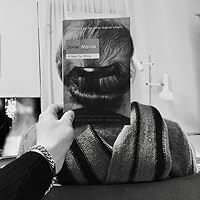
In poems of haunting lyricism, and in a voice wholly unlike any other American poet, Christine Garren's second book of poetry explores common themes such as love, loss, and family with an uncommon sensibility. Among the Monarchs is filled with unforgettable metaphors, unconventional and unpredictable juxtapositions, turns and angles of perception, and seductive free verse rhythms. Through all of this, Garren captivates readers in a unique exploration of the nature of desire, the raptures and burdens of love and loss, the peculiarities of family life and, perhaps most compelling, the power of poetic imagination to shape what we see and feel. At once engaging and disquieting, Among the Monarchs attests to the inexhaustible possibilities of lyric poetry.
Christine Garren is the author of three collections of poetry, Afterworld (University of Chicago, 1993), Among the Monarchs (University of Chicago, 2000). most recently The Piercing (Louisiana State University Press, 2006). Her chapbook, The Difficult Here, is available at 42 Miles Press. A Los Angeles Times Book Award finalist and NEA Fellowship recipient, she was born in Philadelphia and has lived in Greensboro, North Carolina, since 1979.
A sense of a hard won peace animates Christine Garren’s collection of poems, Among the Monarchs. Essentially these are poems of survival -- of looking back and assessing -- not with bitterness, but not without a sense of damage either.
On the surface, Garren’s poems are short and prosey. However, she is a poet of delicate, dark strokes, painting an emotional dusk through the use of understated language and deceptively simple (bur pregnant) images. Throughout the collection, a consistent voice speaks at a remove, disembodied, puzzled at times over her own history: a history that suggests incest.
Each poem in the collection is a symbolic tableau, at once real and unreal. In “The Bride,” the speaker, after a considerable stretch of time, walks out to see the corpse of an unnamed animal, which may represent a number of things, such as a past life and/or misplaced guilt. The imagery is biblical, recalling Ezekiel 37 (“can these bones live?”) - with its grass and wind and lowered spine. The mysterious “you” could be the speaker herself, her mother, perhaps even God. Whoever it is, an invitation is offered by a voice growing confident in its new peace, though not yet whole in its understanding:
I waited for a long time, long enough that the field trees blossomed. And the animal, pastured for years, lowered its spine into the grass and died. The pond turned into a sheet of pollen. I waited through the spring, and before that I had waited. And when I walked through the steep grass to see the animal’s corpse, there were no maggots. Just grass and the wind. A purity you can’t imagine. And still, you won’t come here with me? When I keep smoothing out a place beside me on the granite bench?
God’s presence - through absence - is touched upon throughout the collection. There is none of MacDuff’s bitter resentment here (“Did heaven look on and not take their part?”), but more a sadness for God’s creation and, perhaps, also over what God allows: a paradox that must be endured. In “First Time” the speaker recounts her rape by her father. The day -- Sunday -- stamps the act with a special kind of blasphemy:
On Sunday I was in an upstairs bedroom on the bed, being forced. I saw us on the mirror, the dune of our white flesh. Afterward, I looked out through the window where it was summer. The sky was cloudless, and under it vines twisted around the birdbath.
After this trauma, the speaker concludes that, because beauty exists, God must exist - a bruised but beautiful observation considering what has just occurred:
I thought of the world unfolding itself in another country, of another girl’s story not here, because I knew that God was in the yard, because the yard was beautiful, and he had stayed mute among the monarchs.
Such resignation in the face of abuse is hardly satisfying though. In a later poem (“Figure and Ground”), the speaker, on firmer emotional ground now, is able to assert herself before God. It’s the one poem in the collection that comes closest to anger:
But it was God I was talking to now, not because the flowers had a stricken beauty, but because for the first time I commanded him, ordered him, to notice me.
A less successful rendering of the incest theme can be found in the poem “Janus.” In the poem, the speaker is seesawing with a friend. At the window, the father of her friend watches. The speaker, looking back, now knows the father was fondling himself. There is something Oprah-like in how Garren draws the scene. (And, of course, her friend’s eyes are “haunted.”) It seems to me that this sisterhood of the abused was unnecessary and cut against the intimate (and by now well-established) tone of the collection. For a brief moment, honesty is lost for the sensational talk-show point. Fortunately, Garren’s slips are few.
Incest is only part of the story, however. The speaker begins an odyssey that involves abortion (“An Account”), a foray into strip dancing (“Fortunes”), and her own difficulties learning how to love (“First Love,” “Cedar,” “Warehouse,” and others). In the first of a sequence of “Picnic” poems, the speaker, apparently spurred into memory by the act of unzipping her backpack, finds herself confronting her aborted child. A peace between the two has been effected, though the speaker is resigned to what will, like so many of the speaker’s memories, be a lifelong haunting:
There was a clearing of yellow grass where a deer ran. The air was still, and I remember the loudness of my pack’s zipper when I opened it for cloth and bread and a knife. A blind of leaves hung from the apple tree. And then, when I looked up to the other side of the meadow I saw my dead one, my unborn, wearing her dark swamp hair wave to me from a place on the grass. I did not know she had gone there with me - and that she would be beside me forever, as she is now, like an animal, wanting back inside the house.
In the later poem, “Underpass,” the speaker offers more, and brutal, details of her life and what she’s been through -- all by the age of fourteen:
A black wind paced at my shoulders. The moon had risen, and an elm stood in its new pitch of light. In the underpass, this is what happened: I was raped, I lost part of my body, my family died, I killed three of my children. That the moon is here, that I’m able to see it is testament.
There is a wild, mythic grief on display here. And one senses in this poem, for the first time, a terrible cataloguing at last of all that has befallen the speaker. With the “three children” killed, one senses the desire of the speaker to hand the Medea tag on herself, but instead what is invoked is the pitiable handless and mute Lavinia from “Titus Andronicus.” Still, with such recognitions, a road toward recovery now seems possible.
Abuse victims attaching blame to themselves is nothing new, and the considerable distance the speaker will have to travel toward recovery is indicated in “The Analyst.” As the speaker walks with her doctor one evening, the two stop at a pond, where the potential Narcissus pool reflects back only black and impenetrable chaos. The odyssey of the speaker is as much inward as it is outward:
The tips of our shoes touched the black liquid. - He was showing me the truth, though there was nothing on the face of the water. I stared into the flat glaze and saw a few gnats, a slight current. And then I understood - my form covered the pool.
One difficulty the speaker has in recovering from her past is getting over her relationship with her mother. It’s clear the mother is aware of the incest but has looked the other way. In the collection’s opening poem, “Childhood,” we are shown a yard and a distracted mother concerned with the gathering of chestnuts. The speaker, looking back, watches in “disbelief.” Nearby, there is a newly hung swing, and a mallet resting against the fence. The father is unseen, but his presence palpable. Conflicting feelings of guilt and duty toward the mother weigh upon the speaker, carrying over into adulthood and the mother’s long sickness. In the poem “312" we see that the daughter’s duty carries with it, given the circumstances, an accusation. The speaker’s voice is not ironic, or bitter, only true:
When my mother was dying, I visited her room. I took in some photographs of when she was young, standing beside my father. She loved him more than most wives love their husbands.
Such mother-love is twisted, but the tie of child to parent is strong, hard to break. In “Sulfur,” while we get a whiff of the mother’s self-damnation, we also see the speaker’s own hopes beginning to gather around small things such as sounds in the parking lots, crickets, voices of couples. The speaker is beginning to sense a larger world beyond the oppressive gloom of what has been her life up to this point:
Especially on weekend nights, I’d hear the other tenants’ cars on the gravel drive. In between that sound were the crickets in the black air. Then I’d hear the voices of couples over their radios. It was summer when I’d lie beside the open window in the guest room, while my mother slept across the hall. Even then, I’d hear her cough, then cough again. Again, the cough. And then I’d hear her draw the match across the book.
Still, the difficulties of learning to love, given such a past, will be difficult. The giving of one’s self to another have, in the speaker’s case, high emotional costs. In “First Love,” the speaker’s first real affair (“For him. For myself.”) ends badly; the lover is more a force than a person, faceless:
But he, he was dense like a jetty with a silver east wall of air. Then, he was like a concussion that I woke from but woke up differently. Smaller. A little ruined. For years unable to speak.
As for the father - he too is faceless, which seems appropriate. But his presence remains, sometimes greater than others. The speaker doesn’t hate him, but the divisions he has created within her are real and enduring. In “Solitaire,” the speaker confronts her own feelings about her father. Is it love? Even lust? These are uncomfortable questions that prevent her from forgetting. The honesty of this particular poem is startling, troubling, psychologically complex:
My love for him? It was like a stone I saw the cashier wearing once. On a braided rope. And like the flight of monarchs over a dune of yellow grass. It was a fan in summer. And it was like a piece of gravel in my windpipe, that still did not stop me from kneeling down or breathing in enough air to beg for more. - Lifted as if from the sea, opened, under the sky’s hugeness, and thrown back.
It is with the recurring image of the monarchs one senses the ongoing healing and evolution of the speaker, who, though still the same person, is slowly dropping the chrysalis of the past and emerging into someone new.
One of the most striking things in these poems is the blessed past tense. I love the past tense and get so tired of hearing how it is inferior in poetry. It is not. There are a few poems in the present, too, but a minority, as the poet grapples with her youth, family and other hauntings.
I really enjoyed the form of these poems. Most of them appear like prose poems, but in fact there are line breaks in most – you can tell by the ragged edge. Perhaps I should think of these breaks more as pauses, separations of thoughts or even paragraphs. Whatever, I found the form very effective and each poem works like a short chapter or scene.
I found many of the poems beautiful and powerful and sad, though not depressing. My favorites were “312,” “Sulfur,” “Monarchs,” “The Cemetery,” “An Account,” and “In the Garden.” Although written in a simple style, the best poems are full and potent.
I didn’t know anything about Christine Garren herself when I got the book, so it wasn’t until I read another reader's review that I realized one of the key poems is about incest. In hindsight it makes sense, and the poem that addresses incest most directly – “First Time” – is on the page facing a poem about the mother when she is dying – “312,” one of my favorites - and how the mother loved her husband "more than most wives love their husbands." The poem “Monarchs,” another of my favorites, is also about the poet’s mother. I couldn’t find any of the poems in this collection online so here it is (in the present tense!):
Monarchs
We sit at the table and talk. It’s late and I know I need to leave soon. Deer will be in the meadows, beside the highway, ready to cross. I keep waiting for my mother to give me a sign, that it’s all right, I can go. This goes on like a rope back and forth. over a grassless piece of earth: I ask her with a glance, and she responds not yet. –When I do leave, she stands beside the railing of the back porch and waves. I blow the horn. We both know what we’re doing. It’s like the butterflies for a school project, years ago. While we pinned their wings to Styrofoam, we talked.
There were other poems that fell flat for me or took a wrong step, “The Biopsy,” for example, with its stress on “and then – and then,” a repeptition I found unnecessary, or “The Tenant,” with “its place of grief.” Still I’d definitely recommend this one for how deftly and honestly it handles the subject matter and also for the form, which I particularly liked.
‘Afterward, I looked out through the window where it was summer. The sky was cloudless, and under it vines twisted around the birdbath. And a bird threw down its image on the grass. I thought of the world unfolding itself in another country, of another girl’s story - not here, because I knew that God was in the yard, because the yard was beautiful, and he had stayed mute among the monarchs.’
‘The tips of our shoes touched the black liquid - He was showing me the truth, though there was nothing on the face of the water. I stared into the flat glaze and saw a few gnats, a slight current. And then I understood - my form covered the pool.’
‘The cedar is green again. The snow melted, on the black earth. The wind bends the tree back and forth - as though it were young - the wind coming with its blue cave of nothing. The cedar is the center of the world, arching with its spine in the hood of the wind bending, then straightening and bending again as if to suggest yearning, as if to express love’s horror and grief.’
‘… because if his mind had been less filled with the tree, if he’d seen my face in its wilderness, he would have understood what the year had done, and not have touched it.’
‘In the summer I walked a trail, trying to accept things as they are. Living among the small things. For six weeks there was no rain; I took in the bright fields, then the languid creek where two herons lifted over the water as if their carriage were itself the air. But it was God I was talking to now, not because the flowers had a stricken beauty, but because for the first time I commanded him, ordered him, to notice me.’
‘I have a sense of the horizon, of its humpbacked ridge that, too, leads to an abyss. The dark hums like a hive of bees. And the sky tilts its dim theater toward me. This is how the world is, then, alone. Better. Otherwise, I’d have to listen to your telling me that it is not dark.’
These tiny poems, like Cornell's boxes, contain something like nightmarish nostalgia. In most of these long-armed, eight- or nine-lined poems, Garren drags snippets of richly textured memory into the present tense. They emit tones of intense trauma, and grief.
A favorite:
In the Garden
I used to have desire, all the time, then I remember the exact placement of the sun when I stopped desiring. The blackbirds were in the vines. And I heard water running from an outdoor faucet. A neighbor beyond the fence was speaking in a kind and maternal voice to the flowers. There was a hammock. I remember the sun upon this, at its perfect, particular angle, like a blade across the yard. But I do not remember what happened inside me-- It was quieter than drowning--and like that it had no breath.
7/21/2024: ⭐️⭐️⭐️⭐️ Lovely, beautiful, slow-moving, haunting. The way she makes use of language reminds me of Letters to a Stranger, which is, of course, the highest compliment I could give.
I will read this book again tomorrow. Such intimate and piercing poems deserve a second and third chance to envelop you in their moods and moments. Lyrical times 100.