

What do you think?

Masterpieces in Colour
Van Dyck
Excerpt from Van Dyck
As an example of direct portraiture this picture would be hard to beat. It shows Van Dyck in one of his happiest moods dealing With a subject which peculiarly appealed to him.
About the Publisher
Forgotten Books publishes hundreds of thousands of rare and classic books. Find more at www.forgottenbooks.com
This book is a reproduction of an important historical work. Forgotten Books uses state-of-the-art technology to digitally reconstruct the work, preserving the original format whilst repairing imperfections present in the aged copy. In rare cases, an imperfection in the original, such as a blemish or missing page, may be replicated in our edition. We do, however, repair the vast majority of imperfections successfully; any imperfections that remain are intentionally left to preserve the state of such historical works.
As an example of direct portraiture this picture would be hard to beat. It shows Van Dyck in one of his happiest moods dealing With a subject which peculiarly appealed to him.
About the Publisher
Forgotten Books publishes hundreds of thousands of rare and classic books. Find more at www.forgottenbooks.com
This book is a reproduction of an important historical work. Forgotten Books uses state-of-the-art technology to digitally reconstruct the work, preserving the original format whilst repairing imperfections present in the aged copy. In rare cases, an imperfection in the original, such as a blemish or missing page, may be replicated in our edition. We do, however, repair the vast majority of imperfections successfully; any imperfections that remain are intentionally left to preserve the state of such historical works.
90 pages, Hardcover
First published August 26, 1907
About the author
Percy Moore Turner
9 books5 followersPercy Moore Turner (1877 - 1950) was a British art dealer who's successful career spanned the two world wars and periods of economic volatility.
His interest in art came from his father’s art collection, which had been inherited from his brother and included paintings after Peter Paul Reubens and Anthony van Dyck, and a William Hogarth.
From 1902, Turner was employed by French art dealers where he became a link between the London and Paris art worlds.
His interest in art came from his father’s art collection, which had been inherited from his brother and included paintings after Peter Paul Reubens and Anthony van Dyck, and a William Hogarth.
From 1902, Turner was employed by French art dealers where he became a link between the London and Paris art worlds.
Ratings & Reviews
Friends & Following
Create a free account to discover what your friends think of this book!
Community Reviews
Displaying 1 - 2 of 2 reviews

June 20, 2013
Free download available at Project Gutenberg.
Opening lines:
No painter has remained more consistently in favour with both artists and the public than Van Dyck. His art marks the highest achievement of Flanders of the seventeenth century. In making this statement the claims of Rubens have not been overlooked, although the latter has been, and probably will always be, considered the head of the Flemish school.
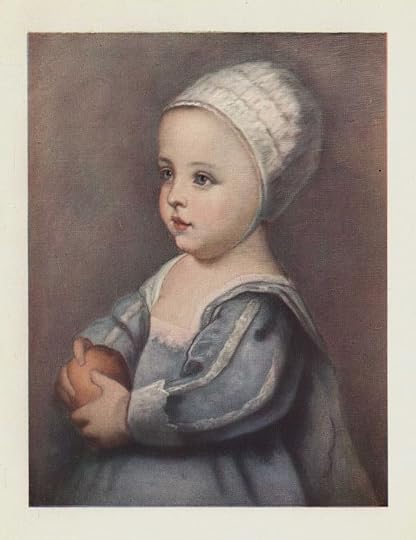
PLATE VI.—PORTRAIT OF ONE OF CHARLES I.'S CHILDREN
(In the Academy of Fine Arts, Rome)
Possibly the best known and one of the most deservedly popular of the master's child portraits. It will bear comparison for charm and delicacy of handling with any of the productions of our great English masters. In fact, it was largely after a study of Van Dyck's wonderful pictures of children that Gainsborough formed his last and greatest manner.
Opening lines:
No painter has remained more consistently in favour with both artists and the public than Van Dyck. His art marks the highest achievement of Flanders of the seventeenth century. In making this statement the claims of Rubens have not been overlooked, although the latter has been, and probably will always be, considered the head of the Flemish school.
PLATE VI.—PORTRAIT OF ONE OF CHARLES I.'S CHILDREN
(In the Academy of Fine Arts, Rome)
Possibly the best known and one of the most deservedly popular of the master's child portraits. It will bear comparison for charm and delicacy of handling with any of the productions of our great English masters. In fact, it was largely after a study of Van Dyck's wonderful pictures of children that Gainsborough formed his last and greatest manner.

January 8, 2019
An interesting overview of the life of Dutch painter Anthony van Dyck (1599-1641). He became a favored portrait painter among the aristocracy in England, Italy, and the southern Netherlands. It was intriguing to learn how the art students of that time became part of a studio under a Master Artist, actually painting parts of many of the paintings which the Master was working on for commissions. Also fascinating to see how the various countries he lived in influenced the ways he painted while living there. I listened to this as a free download from LibriVox.org.
Displaying 1 - 2 of 2 reviews