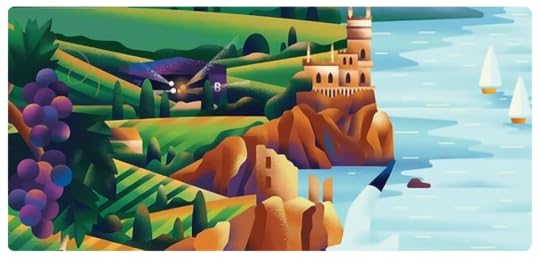
Die Ende Februar 2014 beginnende sog. Krim-Krise endete mit der Annexion der völkerrechtlich zur Ukraine gehörenden Halbinsel durch die Russländische Föderation. Dieses Ereignis machte nicht zuletzt der deutschsprachigen Öffentlichkeit deutlich, dass die Halbinsel Krim mehr oder weniger immer noch eine terra incognita für sie ist, über deren Vergangenheit selbst historisch Interessierte nur wenig wissen. Mit großem Erstaunen wird seitdem u.a. gefragt, warum die Krim für Russland eine so große Bedeutung hat, dass sie bereit ist, die Ächtung der Weltgemeinschaft und wirtschaftliche Sanktionen auf sich zunehmen. Tatsächlich ist die 1783 annektierte Krim für die überwiegende Zahl der Russen ein hoch emotionalisierter, unveräußerlicher Teil Russlands. Deren Geschichte ist aber sehr viel älter – und über die längste Zeit spielten Russen dort keine Rolle. Griechische Kolonisten, eurasische Reitervölker, Krimtataren und andere gestalteten vielmehr ihr Schicksal. In diesem Buch von Kerstin S. Jobst, die eine international anerkannte Expertin der Krim-Geschichte ist, wird diese in ihrer Komplexität erzählt.
The question of who the Crimea belongs to feels very relevant these days, but turns out the question of belonging is actually as old as the Crimea itself. An in-depth look of a misunderstood place.
A History of the Crimea: From Iphigenia to Putin is precisely that. The book takes a close look at the history of the peninsula in Eastern Europe from ancient times to the present, surveying particularly Russian's annexation, through which this study provides a deeper understanding of today's conflict.
This is packed to the brim with information, but not all of them are that relevant unless you want to become an expert on the topic. I picked this up because I realised that I knew very little about the Crimea as a place, though it's been spoken of so often in the news in recent days. I personally also realised that there's a limit to how much I care to know halfway through reading this. This is something I can't really hold against the author – it's clearly well-researched and chronologically presented, yet there's just so much detail that for a noob like me it simply felt like too much.
On the other hand this really showed that there's more to the Crimea than Russia's and Ukraine's involvement. Decades and centuries before 2014 tribes and people have fought over the place that is a beauty in terms of the natural world. The Scythians had their time there for example (a group of nomadic warriors from what is now Siberia) and the Cimmerians showed their interest, too (a tribe originating from the Caucasus), only to name a few.
If this taught me one thing, it's that the conflict surrounding the Crimea isn't as easily solved as one might wish.