In 1960, with a mere 40 in his pocket, 18-year-old Ronald Mackay hitched from Scotland to Spain then took a tramp steamer to Tenerife, thinking to voyage on to South America. Instead, he discovered the snug village of Buenavista del Norte, where he was welcomed in by the locals as 'El Extranjero'. He lived there for a year, working, making friendships, exploring and growing into manhood.
'Fortunate Isle' is a charming tale of a special time in the author's life, when he is entirely 'open to the universe'. His recall sparkles like the sun on the sea that was so important to his life there. The memoir contains moments of hilarity and of confusion, as a young man initially with no Spanish, struggles to integrate into a tight-knit village full of people with no English. Despite this, his likeable nature and willingness to work hard make him popular and he is taken under the wing of a matriarch who runs the small guest house he had found -- almost too fortunately to be happenstance -- the very day he arrived.
Through the months in Buenavista del Norte, immersed in a life that was at once very different yet strangely similar to the one he had grown up in in rural Scotland, Mackay addresses the challenges that we all must, as we come of age; and with that knowledge prepares himself for life.
Much more than a light-hearted travel memoir, this book charts a philosophical journey along a road that leads to independence, self-sufficiency and maturity. While offering humour and insight, it does not shirk discussion of deeper, more fundamental issues.
Fortunate Isle is suitable for all ages and offers a warm, refreshing and invigorating read. It is illustrated with over fifty photographs, taken in 1960 by the author himself.
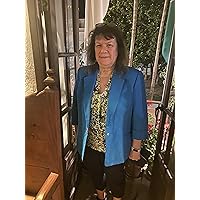
Ronald Mackay caught the travel bug early when he biked all over Scotland as a schoolboy. Within a couple of decades he'd lived and worked in the Kingdom of Morocco, Franco's Spain, Ceaușescu 's Romania, Zhivkov's Bulgaria, Echeverría's Spain and Trudeau's Canada -- and that was only the start.
After a lifetime of working internationally, he and his Peruvian wife spend most of their time at their home near Peterborough, on the Shores of Rice Lake in Ontario.
I have always considered the memoir form as the pursuit of self-indulgence by a writer seeking immortality for a life insufficiently lived. I make that qualification up front. Then I sat down to read Ronald Mackay's memoir of the year he spent in Tenerife in 1961 when he was eighteen, and I quickly revised that opinion.
Mackay is fleeing an unhappy family situation in Scotland. The idyllic family life he had with his siblings, mother and grandmother is destroyed when his father returns from the second world war a damaged man, prone to depression and abuse. On top of that, young Ronald fails to gain admission to university to pursue agricultural studies. The determined and adventurous young man sets off to find himself, and believes that fleeing to South America will help. He hitchhikes across Europe on a shoestring and arrives in the Canary Islands hoping to catch a boat across the Atlantic. He changes his mind when he gets to the idyllic village of Buenavista del Norte on the isolated tip of the Canary island of Tenerife and decides to stay at the fonda (rooming house) of matriarch Dona Lutgarda and her three daughters and niece, sensing perhaps that the lost home in Scotland is to be regained in this remote outpost. Our story really begins here.
In detailed descriptions, Mackay goes on to finely detail the village, its environs, its people, its customs, and some of the adventures he encounters during the next 12 months. This is a feat of memory, and I am sure that the older Mackay, writing this memoir in middle age, was helped by diaries and journals he must have recorded in at the time. What keeps a sceptical memoir reader like me turning pages is that this book is full of incident, learning, and danger: the dynamiting of fish (illegal), catching octopus (and risking being drowned), sailing around the island in storm-ravaged seas, descending into an active volcano spewing sulphuric fumes, being pursued by Franco's dreaded Guardia Civil, exploring the countryside and discovering ghost towns, getting lost on a fog-covered cliff and being rescued by a child, are some of the situations our intrepid hero gets into. His presence as the only foreigner in the region, his desire to master Spanish, and his willingness to perform any task asked of him, earns him the respect of the locals, and the diminutive "Extranjero," as he is called, soon casts a tall shadow over the land. His closer circle of confidants call him Orlando, as "Ron" has more alcoholic implications in Spanish.
Among Mackay's descriptions are the craft of stone masonry, including the dynamiting of stubborn sections of basalt (he works in a labour gang, breaking stones for construction), Sunday street dances, the developing of banana plantations (he gets a job as a stock-taker for a banana merchant), teaching, fishing, and cooking on the island. He meets some interesting people: the Fascist judge, Don Eduardo, who thinks Lorca was a communist and a pervert, the handicapped schoolteacher, Don Juan-Pedro, who rides daily to teach in a rural school high up in the mountains, the demon sailor, Sebastian-the-Devil, to whom no storm is a deterrent, and El Loco who specializes in completing the most dangerous wells. I picked up some lessons: a red-tinged tuna fish has probably been dynamited out of the water, for its blood vessels have shattered in the blast - a tell-tale sign. Ronald gets into trouble too, with Donna Lutgarda, when he fails to observe traditions in this insular society - how dare he ask eligible young women to dance with him if he were not planning to marry them? However, despite her frequent chastisements aimed at transforming this spirited Scot into a Canarian, she never fails to rise early to make him his breakfast whenever he is called out on various jobs.
As the year progresses, Mackay starts to make comparisons between life back in Scotland and life in Tenerife. An incident in his new home in Buenavista del Norte will often trigger a memory of a similar happening in Scotland, and through this process we are given a window into his past life and the demons he is fleeing. Finally, young Ron, much experienced from his exploits in Tenerife, has an epiphany during the El Loco incident and decides he has to go back home and face up to his reality: make peace with his family and re-apply for university admission. In a symbolic show of "climbing the mountain," he scales the high peak of Teide and realizes that he can climb any mountain as long as he sets his mind to it. Along the way, he has learned that life is uncontrollable, and yet, one has to constantly engage with it; and as the Extranjero, the outsider, he also learns that he has to work harder to prove himself.
More than a memoir, this book is a meditation on how to get satisfaction from studying nature and reading meaning and motive in the lives of simple peasants, a way of life that has probably disappeared through globalization and the internet. To that end, Mackay invokes Keats' "negative capability" theory, i.e. taking pleasure in beauty without demanding full and factual explanations. In other words, reverence holds a deeper truth than certainty. Although, I have to admit, that for the reader, through his minute and cinematic descriptions of life during this "coming of age" year in Tenerife, Mackay seems to turn Keats' theory on its head by delving and delivering full and factual detail to us.
What a delightful read this is. Ronald MacKay was a teenager in 1960 when he decided to leave his native Scotland for Europe and finds himself on the Canary Island of Tenerife in a tiny village at the end of the road, literally. I know Tenerife a little and have visited many of the places Ronald writes of, but what a different place it was 60 years ago. The author writes with love of a close-knit, almost self-sufficient community, their hard but ultimately rewarding way of life and of his determination to fit in and become a part of that community. A lovely story and one which leaves you with admiration for Mr MacKay and a certain yearning for the past when things were much simpler.
There are three reasons why this is one of the most interesting memoirs about the Canary Islands.
It is a real story with a beginning, a middle and an end, not just a series of loosely-related anecdotes.
It captures a unique period in time, a period that has passed, and it shows us how that period was different and why it was important from a human perspective.
It’s written with a real depth of feeling. The author may have been only 18 at the time, but the impression of those experiences of people, place and sentiment were such that after even more than 55 years, they have left their indelible mark.
An admirable, well-written book well worth reading.
This is quite simply a remarkable memoir by Ronald Mackay. As a young man of 18 he leaves his home in Scotland with a plan to make his way to South America. Eventually he arrives in Tenerife the 'Fortunate Isle' of the title. A stroke of luck means he ends up in the little village of Buenavista del Norte where he finds bed and board in the Fonda of the marvellous Dona Lutgarda. He settles into life in the village and sets about learning Spanish. He is a very sincere and thoughtful young man who takes a deep interest in village life and in learning all he can about the area where he is living and how the villagers interact with each other. He is Orlando ‘the Extranjero’ or foreigner and yet he makes friends and over time he earns the respect of the villagers for his willingness to work, learn and live among them. Beautifully written with wonderful descriptions and also the author’s reflections on his own thoughts and feelings it’s a very insightful memoir. You can feel how much he comes to love and admire the folks he is living with. However certain events force him to reappraise his future plans and he decides to return to Scotland to be with his family and continue his education. It’s an extraordinary tale with its vivid descriptions of a way of life which will, by now have gone, and one which I really enjoyed.
A young adventurous 18 year old with little money in his pocket leaves Scotland to discover the secrets of Tenerife.
This is a wonderful memoir describing a year in the life of Ronald Mackay, with descriptions of his travels that took him to an isolated village, lived comfortably with the locals, and learnt a new language. He found himself work and had the chance to explore this beautiful island.
Beautifully written with vivid descriptions throughout. I thoroughly enjoyed this memoir that included insightful informative photos.
Beginning to ending, I've enjoyed this book. The dedication to those who supported and inspired the author to tell his story are remarkable insights to Ronald Mackay's sensitivity to the world around him.
After leaving his comfortable home in Scotland to explore the world, he ends up in a tiny village, in a remote part of Spain, where villagers grow their own food and carry buckets of water to survive a harsh environment.
From the moment Ronald arrives in the Canary Islands as an eager young man of eighteen, in 1960, he gets to work to learn about the new culture and settle into the different and challenging environment. His delightful, optimistic approach to explore new smells, sights, and tastes in this 'semi-tropical' adventure is contagious.
Living with the natives, Ronald learns how to excavate basalt to build a banana plantation, faces the challenge of hunting octopus, meets 'El Loco' and learns valuable life lessons about choice and personal relationships.
Captivating! Beautifully written! How fortunate for Ronald to have experienced this Fortunate Isle! Highly recommended!
What a gorgeous memoir this is. It included everything I love: travel, people, local customs, adventure and real life as it’s lived in other countries. All of these are combined in this charming and reflective story of a young man’s journey to find his place in his world. I particularly enjoyed the parallels the author drew between life in the tiny village of Buenavista and rural life in Scotland. They were a constant reminder that despite the differences in culture, people and what they value are often intrinsically the same wherever we go. I also loved getting to know the people in the village where he spent almost an entire year. Ronald Mackay claims to have been quite reserved in talking about himself and his background, but he must have been an open and friendly young man to have won the respect and friendship of so many locals. Anyway, I have to say I was really quite sad to finish the book. It is beautifully evocative with lovely descriptions and marvellous character studies. This is a special memoir that I’ll remember for some time to come.
The author leaves his home in rural Angus in 1960, in search of an adventure and work on a ship that will eventually take him to S. America. However, after booking a 3rd class passage to Gran Canaria, fate takes him to the island of Tenerife where he has a "fortunate encounter" with a man with a machete! He has £25 remaining in his pocket and is desperately in need of employment and lodgings. Ronald finds both in the village of Buenavista del Norte, where Dona Lutgarda becomes his guide on island etiquette and his kindly landlady, also helping him find work among the island's banana plantations. Fortunate Isle is a beautiful glimpse into a bygone era with a host of wonderful characters. Highly recommended.
At 18, Ronald left his home in Scotland and sailed to the Canary Islands where he spent almost a year in a small village in Tenerife. In this well written memoir he relates his experiences; mastering the language, befriending the locals, working at various jobs, and exploring the area. I thoroughly enjoyed this wonderful memoir, and cannot recommend it highly enough. Bravo Orlando!
What attracted my interest to this book is the time Frame, it tells about what life was like in the 1960s before cellphones, before he Internet, before globalisation,and before ATMs. A young man could pack a simple backpack, trek out into the unknown, exist in a foreign culture, find work for survival, and live with the bare minimum. In this case, Ronald -- an 18-year old Scotsman who had just finished school -- also had to hitch hike 2000 miles, learn the language and offer his services as a laborer in the banana plantations on Tenerife, the largest of the Canary Islands. It´s well written, entertaining, easy to read and offers an authentic picture of what a great adventure was like for a young man in the early 60s. Ronald MackayRonald Mackay
I enjoyed Ronald's stories of his year on Tenerife - one of the Canary Islands. I learned a great deal about the Island and the people, as they were in 1960s. I liked how positive the author was in his writing, the comparisons to his homeland, and most of all hearing about the adventures and the relationships he built while residing there. I enjoyed the authors adventures (many entertaining, some dangerous), how he talked about the jobs he held to survive, the learning he gave me about banana plantations, and what he learned about himself during his time spent on the island. This is not simply a memoir recounting daily life, Ronald has crafted a wonderful and loving story from his memories and those he came to know. I may not have purchased the book based on the cover and the title - so I am glad it came highly recommended.
Fortunate Isle is the story of 18-year-old Scotsman’s attempt to work his way on a tramp streamer to Latin America from Franco’s Spain in 1960. The author has a good sense of humour – something that stood him in good stead when he ran out of money in the Canary Islands and had no option but to find work in the tiny and relatively isolated community of Buenavista del Norte on the island of Tenerife. Ronald – christened Orlando in Spanish -- finds a home in the local pension under the careful but covert eye of the innkeeper Doña Lutgarda who subtly steers him safely around the many pitfalls that the only foreigner in the region might ingenuously fall into. All the characters who befriend Orlando are larger than life: Don Eduardo-the-Judge who lures him to the municipal office while the Civil Guard search his belongings in the pension to determine if he is a political subversive or not; Francisco-the-Devil who takes him on a sea expedition to joust with ragged reefs; Juan-the-Foreman who introduces him to the power of dynamite; Doña Lutgarda’s myriad grandchildren who imagine that he possesses at least two tongues that he can switch at will to talk in different languages; Daniel the maker of sea-salt who lives, hidden from Franco’s dictatorship in an abandoned village cut off from the outside world; and Epifanio-the-banana-brander who forgets to tell him about giant spiders in the banana plantations. However, this is not just an story of adventures. The author reflects on life as he sees it, through the eyes of an 18-year-old, in and around the village and his insightful observations also help provide him with a penetrating view into his own life and family back in Scotland. He experiences a personal epiphany when ‘El Loco’ is buried in a dry-well cave-in. Ronald begins to strive towards an understanding of what it means to belong and where home might be found. This is an exciting, amusing, insightful and well-written book. Adults who remember what life was like in the 1960s will love it; younger readers, used to the comfort of modern technologies and all the safety-nets supplied by their parents and the state, should be inspired.
Would you urinate on your hands if someone told you to? That’s what someone asked Ronald Mackay to do in Fortunate Isle. I won’t ruin the story and tell you if Ronald did, but I can tell you I wouldn’t do it, whatever the reason. I wish I dared to leave my country for a life of adventure like the author does when he leaves his Scotland home with only a little money—I think it would help me get a clearer picture of who I am.
He meets unique and beautiful people as he settles in Tenerife. In this village, with strange food and bizarre customs, communication with the locals is difficult because he doesn’t speak the language—I can’t imagine. I’ve barely survived a one-week vacation when I didn’t speak the local language, let alone live there. And I forgot to mention, there’s no central plumbing. Call me spoiled, but that’s a deal breaker.
You’ll travel along with Ronald and pull the covers over your head when a rifle-carrying member of the Civil Guard interrogates him. Did the judge turn him in, thinking he’s a spy? But then you’ll return to the light when you remember you’re safely on your couch. You don’t want to miss this one-of-a-kind adventure.
These recollections from sixty years ago are both remarkable and inspirational.
They tell of an 18-year-old Scottish lad, mature beyond his years, who travelled abroad after failing to get into university.
Having journeyed through mainland Spain, a country that in 1960 was living under the Franco dictatorship, he boarded a ferry to the Canary Islands. He planned to travel onwards to South America and find work there. Instead, he ended up in the remote village of Buenavista del Norte in Tenerife.
As the only foreigner, locals were wary of him, but his maturity shone through as he learned the language and found work. He explored the region and got to know a few of the islanders, with whom he spent time and shared experiences. After a while, he achieved acceptance but knew they still regarded him as an outsider.
There are few people, let alone 18-year-olds, who have experienced the type of adventures that Ronald Mackay did during his stay in Tenerife. I am honoured to have read this insightful memoir.
"Fortunate Isle: A Memoir of Tenerife" by Ronald Mackay is a beautifully written and engaging exploration of the author's personal journey and his deep connection to the island of Tenerife. Mackay skillfully weaves together his own life experiences with the rich tapestry of Tenerife's culture, history, people, and landscapes to bring us a coming of age story that is authentic and honest.
The memoir offers readers a unique and intimate perspective on the Canary Island as the author shares his adventures, observations, and encounters with the local people. His writing is evocative, providing a vivid sense of the island's charm, from its breathtaking natural beauty to its distinct communities and traditions.
Mackay's storytelling is not just a travelogue but a heartfelt reflection on the impact a place can have on one's life -- especially a young man just embarking on his life. "Fortunate Isle" captures the essence of Tenerife and its ability to captivate those who are vulnerable and open enough to fully experience it. It is a well-crafted and touching memoir that will not only inform readers about Tenerife but also inspire a deeper appreciation for the world and the profound connections we can form with places.
Inspiring! Reading Fortunate Isle, A Memoir of Tenerife made me wish that I’d had the author’s get up and go when I was his age (18!). In 1960, with few funds and a desire to seek out the family of his great-grandfather in Argentina, he heads to the Canary Islands in search of a berth on a cargo boat. Instead, he runs out of funds, finds work in a small village where he is the only foreigner they’ve ever seen and lives comfortably as a local. He makes friends, finds paying work at many different jobs although all have to do, in some way, with the production and sale of bananas, learns the language and settles down. Until, that is, he is reminded of the ties of love that bind and, after climbing the volcano of Teide with a local friend, sets out to return to Scotland. This memoir is well-written and easy to read. At the same time, it addresses, in a thoughtful way, matters of great importance to the process of growing up. An excellent book worth reading more than once.
At the age of 18, Mackay leaves rural Scotland seeking adventure in South America, but due to a series of missteps, winds up in the Canary Islands without much money, no job prospects, and little knowledge of the language he’ll need to manage his day-to-day existence. Yet, with a great sense of adventure, a keen interest to learn, an excellent sense of observation, and a slim copy of Hugo’s Spanish in Three Months, Mackay sets out on a year that will change him forever.
The writing is detailed and descriptive, often cinematic, painting such vivid pictures of places, people and activities that one truly feels immersed, and in my view this is what a good book should do; it should transport us to a different time and place allowing us to experience things we may not experience firsthand.
Along with Mackay, we travel over worn pathways through fields and up hillsides, exploring the beauty of the island of Tenerife. We settle into the little town of Buenavista del Norte and get to know the townsfolk with all their quirks and charms. We learn about their way of life. We taste and smell the local cuisine. We ride the choppy surf in a small fishing boat and catch fish off the the rocky coast. We learn how to “hunt” octopus. We gain a deeper understanding of the banana trade - everything from building a plantation to managing the business end of things and exporting the produce. We travel deep into a dormant volcano and feel overcome by its sulfurous fumes. We even learn a bit about life in rural Scotland, as Mackay relates experiences from his boyhood, astutely showing how two places - Scotland and Tenerife - can appear on the surface to be so different and yet on more careful consideration so similar as well.
Through his experiences on Tenerife Mackay gains greater insight and appreciation for the importance of family and community, the value of teamwork and taking pride in a job well-done, the significance of tradition and respect for the distinctive role and contribution each individual has to offer. This is a memoir, but it is also so much more. Yes, it is a personal coming-of-age adventure, but the themes and lessons it explores are universal. I thoroughly enjoyed Ronald Mackay’s “Fortunate Isle: A Memoir of Tenerife” and recommend it highly.
This is an unusual and charming tale of an adventure of what later would have been called a gap year. The author looks back over nearly 60 years to the time he spent in 1960 in an obscure part of Tenerife as an 18 year old. Having failed to get the grades for university and bound for South America with just £40 after leaving his home in rural Perthshire, he stops en route in Tenerife and makes his way to an isolated village on the coast. He finds a cheap pension, stays longer than he intends and is gradually adopted by the locals who call him 'El Extranjero' (‘The Foreigner’). The story reveals how he adapts to the life of the village, takes on jobs, learns a new language, develops new skills and makes new friends. It’s a ‘rites of passage’ story about becoming independent and making one’s way. He gradually takes on new experiences that he can have barely anticipated such as learning how to manage banana plantations. The recall of events, conversations and people from years ago is both impressive and convincing. In short, it’s a good read about growing up thousands of miles from home.
Powerful life lesson within a lovely tribute to rural 1960s Tenerife - I was most interested to read about Tenerife having visited it recently (albeit a very different experience in a very different time!) and this memoir paints a vivid picture of remote village life during the early 1960s on the island.
The author spends a year on the island, gaining the respect of the locals with his hard work and willingness to get stuck into even the most difficult jobs. The Spaniards are risk-takers and they encourage the author - a mere teenager - to partake in several activities which involve danger. But with his youthful resilience and courage, nothing fazes him as he launches into their challenges (including killing octopus), relishing the experiences - albeit with natural caution, yet peppered with trust in the knowledge of the local men he meets. This earns him even more respect and acceptance into their close-knit community. While he's always referred to as "the foreigner" - a title he willingly accepts - he also doesn't take for granted the honour bestowed upon him by the local villagers of their welcome into their village life.
The memoir is an education about many different things - from banana plantations, irrigation, explosives, volcanoes to local foods and dishes, and I was tickled pink to learn they had Gloucester Spot pigs in rural Tenerife!!
The book - all very well written - concludes with the most amazing and moving piece of writing where the author conveys to the reader a life-changing moment born out of a near disaster. In that moment, he matures into a young man with a different kind of resilience: a special kind of resilience that the rural villagers unknowingly bestow upon him: a priceless gift which taught him a profound lesson about belonging.
I loved all the photos also. A lovely memoir and beautiful tribute to the island of Tenerife.
Coming of Age The author looks back over the years to the time he spent in 1960 in an obscure part of Tenerife as an 18 year old, I suppose now a days this would have been called a gap year. Finding lodgings in the little village of Buenavista Del Norte at The Fonda which is run by Dona Lutgarda, her daughters and niece. As he settles into village life he sets about teaching himself the language and his willingness to learn, work and live among them soon endears him to the locals and earn their respect. Known as Orlando (because his name is too hard to say), El Extranjero he soon becomes a part of the village and makes many friends.
Ronald soon picks up work and sets about learning the building and running of a Banana Plantation. On his days off he continues his wanderings on foot learning more about the Island and venturing where most of the locals have never dared to go. It did not seem to matter where he walked or traveled, far up in to the mountains, in lone desolate places, his notoriety had preceded him and people would greet him, Hola El Extranjero
Ronald goes into in depth detail and description about the Island he made home for a year, telling how he became a real part of village society, one very different from that of his Scottish heritage.
My wife and I thoroughly enjoyed Ron Mackay's coming of age story. The book delivers a non-stop series of hugely entertaining anecdotes, memorable people like Doña Lutgarda, wonderfully detailed description, and important insights into the randomness of life and the importance of family and community. With comical adventures in learning Spanish and the island's complicated "courting" mores to the impact on the author of witnessing the near-death of a intellectually disabled laborer, we kept saying to each other, "This would make for a wonderful movie!" The quality of the prose, too, makes Fortunate Isle a pleasure to read. As Mackay explains at the end of the book, his experiences on Tenerife as an 18-year-old prepared him to move on to the next phase of his life with much greater confidence and insight. There are lessons in Tenerife con Carino / Fortunate Isle for all of us.
Ronald (Orlando) was only 18 when he set off for Africa, landing in the Canary Islands and staying. Luck or fate brought him to a man that directed him to his future. He made the absolute most of that and all opportunities presented to become a part of the small community where he landed. This is a well told story of his year in Buenavista Norte. It brings in his personal trials with the language and the effort to become a useful member of his village. It also showcases his eagerness to learn and adapt, as well as his interest and love for the land surrounding. He learns a good many skills, makes lifelong friends, and due to an accident in town he decides he belongs back in Scotland with his family. He arrived from and returned to Spain on the same vessel and went back in 1995 to visit. Lovely memoir.
Ronald's tale of life in Tenerife as a young adult will astound you with his adventurous spirit. He travels alone to this Spanish island, not knowing any of the language, and makes a name for himself there. The locals come to love him as Extranjero (foreigner) and Ronal, and he forms family-like relationships with some of the people living there. His stay there teaches him about their culture, language, and hard work. The hard work is how he paid his way to stay there as long as he did. He finds time to travel around the island and see many of the sights, including a hike up Mt. Teide, a dormant volcano that's Spain's tallest peak. His sense of untamed adventure did get him into some precarious situations, but you will have to read this for yourself. A great read of a young adventurer!
This memoir is captivating for several reasons. First, Ronald’s chapters took me to a place I could not have imagined, in fact I had to look up Canary Islands to find it on a map.
Life in 1960 Tenerife as described is one of challenge, acceptance, courage, and wisdom, a testament to human ability to survive and adapt, put their best selves forward, unjudged. He describes a close knit and content community of people who wrested generations of lifetimes from what the island and sea had to offer for their endless hard work. They lived proudly in their own skins, not too threatened to welcome a young foreigner.
Woven within is Ronald’s exploration and growth at a transitional time in his life, which he portrays with excellence right to the last page.
This is a fascinating memoir, very interesting and highly entertaining. Ronald takes us to the island of Tenerife, on which nowadays would be known as his gap year. He actually had not even intended to go to Tenerife, but that’s where life took him. He made the very best of his time there, immersing himself with the locals. He stayed within the village community, who did not speak English, so he learned Spanish to communicate with them. He had many authentic experiences and participated in local events, absorbing their culture. I enjoyed reading about the commercial operation of the banana plantation. So many of the facts Ronald discovered about bananas I know, as I grow bananas myself and have the blackened clothing! A wonderful read. Highly recommend.
Fortunate Isle is a captivating coming of age story about a determined young man with steely resolve, willing to persevere through whatever hardship that came his way: physically and mentally taxing jobs, doggedly determining to master the language, boldly exploring. His honesty and his willingness to not take himself too seriously won him the respect and love of the close-knit village. His keenness to learn shows itself throughout the book, and the ending, oh the ending (don’t peek now) is breathtakingly priceless. Another winner by Ronald Mackay.
Ronald travels the way I like to, maybe more so. He lands in Tenerife with a vague plan of going to South America, but ends up staying in a village and becoming part of the life there. He befriends and works with the locals, learns their language and customs, respects them all and is respected in return. Rather than getting hung up on the differences, he finds the similarities with his home in Scotland, and that helps him fit in. It also gives us a glimpse of Scottish life as well as Tenerife. This is a great read if you want to experience the life of locals on a small island.
This is a captivating, interesting and amusing story which is really well written. It kept my interest throughout. In a detailed, fascinating and thought-provoking memoir that goes back almost 60 years to a time very different from today, the author, a Scotsman, tells of his experiences on the island of Tenerife, but particularly in the small and very traditional village of Buenavista del Norte. It is full of anecdotes about how the author learned the language, found work, got along with the villagers and made friends. Much more than a simple travel story, the author tells how he became a real part of village society, one very different from that of his Scottish heritage. Through insightful and amusing anecdotes, we step into Ronald’s shoes as he shares his sometimes-hair-raising experiences with us. This is an outstanding read depicting fascinating events, but, more importantly, it is a memoir depicting the positive results of how mutual respect and understanding between people of differing cultures, and educational backgrounds interact to the mutual benefit of all players.
I loved this book, and not just because it’s about my mum’s island and I’ve visited all the places in the stories. In 1961 an 18 year old from rural Scotland decides to work his passage across the world and spend a year in Latin America after failing to get into the university course of his choice. Instead Ronald ends up living and working for a year in Buenavista Del Norte on Tenerife in the Canary Islands.
The tiny town Ronald ends up in is about half an hours drive from the slightly larger tiny town where my mother grew up during the Spanish civil war and Franco’s dictatorship.
Ronald ends up being called “Orlando El Extranjero” by the locals, (Orlando The Foreigner), because Ronald is too hard to say in the local Spanish dialect and well, because he’s a foreigner and they didn’t get many foreigners in this remote part of Spain. One of the most likable things about this book and about Ronald, is that while they call him The Foreigner the locals end up thinking of him as one of their own because of his hard work, honesty and genuine respect for their way of life.
And their way of life is pretty alien. Ronald can relate to the hard working village life so like his life in Scotland, but this is a town where water is brought to the house by women carrying buckets on their head, plantations are blasted out of volcanic rock by dynamite, and locals grow or gather all their own food including hunting for octopus along the beach.
The best books are a pleasure to read and an opportunity to learn. This book is easy to read but deeper than you expect. It provided me with an opportunity to learn things as diverse as how to build a banana plantation from scratch, and how to deal with being scared in a small boat in rough seas when local children are throwing up on you!
The people Ronald describes sound exactly like my mother’s family and all the locals in her town: hard working, traditional, a little isolated culturally, generous, kind and loyal. Ronald’s fondness and appreciation for everyone shines through every story in the book.
I learned two big things in particular. There is a story of a person the locals call El Loco, an adult with a mild intellectual development issue. At first you wonder how El Loco fits into a bare subsistence society and you wonder if calling him El Loco, (the mad one), is a little cruel. Through the chapter on El Loco you see how the towns people look after each other and find a place for every honest person who wants to fit in and contribute…the very reasons Ronald is taken in himself. Seeing how a small community like that works was eye opening.
The second big thing I learned, or at least wondered about, was if I would have had the gumption to get up and leave my home to go wonder the world at eighteen. I know I didn’t, but what if I had? Reading how Ronald used his personality and skills and respect to fit into this little community I learned I wouldn’t have had a clue at eighteen and I can only admire someone who did.
I can vouch for the authenticity of every aspect of this snapshot of a community from my mother’s culture. This is a fun, uplifting slice of life from a world very different from anything most of us will ever experience.