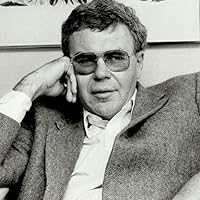
The writer, teacher and editor Gordon Lish a.k.a. "Captain Fiction is among the most influential figures in modern American letters. Spanning over half a century, Lish’s career has encompassed the counterculture of the 1960s, the rise and decline of so-called literary “minimalism” in the 1970s and 1980s, dramatic transformations in book and magazine publishing, and the rapid growth of creative writing instruction, characterized by Mark McGurl as “the most important event in post-war American literary history.”
Today Lish is known primarily for his radical, and controversial, editing of Raymond Carver, an intervention that proved decisive for Carver’s writing and reputation. Nevertheless, Lish’s impact reaches far beyond Carver. Over the decades, he has discovered, published, promoted and mentored two generations of major American writers. As an editor at Genesis West (1962– 1965), Esquire (1969–1977), Alfred A. Knopf (1977–1995), and The Quarterly (1987–1995), and as a teacher both inside and outside the university system, Lish has worked closely with many of the most inventive writers of recent times, including, for instance, Ken Kesey, Neal Cassady, Grace Paley, James Purdy, Jack Gilbert, Stanley Elkin, Harold Brodkey, Cynthia Ozick, Barry Hannah, Joy Williams, Amy Hempel, Mary Robison, Lily Tuck, Anne Carson, Will Eno, Sam Lipsyte, Diane Williams, and Ben Marcus.
Alongside teaching and editing, Lish has also written over a dozen books of his own. Praised as “reminiscent of Stein or Beckett,” his complex and comic avantgarde prose commands a loyal readership. But despite his role as “one of the major formulators of the canon of contemporary American fiction,” Lish has been neglected by literary scholarship. Partly because of the outcry surrounding his rewriting of Carver, as well as the sensationalized coverage of his “cult-like” writing classes, Lish has become, in the words of his friend Don DeLillo, “famous for all the wrong reasons.” In this collection of interviews, we hope to highlight some of the right ones.
This book will be essential reading not only for students and fans of contemporary fiction, but for writers included are several interviews in which Lish discusses his legendary writing classes. Indeed, these pieces themselves amount to a masterclass in Lishian literary language--each is a work of art in its own right.
It is astonishing to see how a literary giant is nothing more than a scaredy cat fostering and holding onto an image of competence. It is astonishing and inspiring. Some of his notions are also embarrassing like suggesting that one can only be affected by literature written not just in their native language but in their own linguistic variant. The book is filled with statements of this kind, and then moments later the interviewer catches Lish in contradiction after contradiction.
If you pick up this book with the image of the literary giant in your head, you’ll walk away with that of an almost cowardly craftsman. All in all, a short but incisive peek into the mind of the most feared literary editors ever.
Is Gordon Lish an author enjoyed most by writers, in the same way that people say jazz is enjoyed most by musicians? As I read through one of his short story collections, I'm beginning to think so. But this collection of conversations might appeal to anybody the least bit intrigued in writing as a process (sentence by polished sentence) and a passion. I hadn't known that Lish admired Don DeLillo, Cormac McCarthy and Harold Brodkey so much, and as name-dropping goes, I'm grateful he lists some of his published students, which has added a good number of books to my to-read list.
Winters is doing most wonderful work these days. Between his journal, EGRESS, this, and his critical essays, he’s keeping us all well stocked on engaging contemporary fictions. This collection, though not fiction, came as a welcome surprise for me. No longer must secretly hand my students PDFs for class, I can now use this text to teach Lish’s interviews. With Lish, sometimes you have to divine his meaning and other times he’s rather blunt. This collection certainly pulls that together.
Glad for this book and the things I got out of it. The PFFR postcard interlude is a fun aside, then the final interview drops the names of an excellent Lish essay/eulogy Death and Language which is readable on JSTOR and a piece by Leslie Fiedler called No, in Thunder! that’s free on the Esquire website. These are extremely good too.