

What do you think?

The Alphabet of Heart's Desire
A visitor calls with a gift and a message from the past in this literary, historical novel. In 1802 Thomas de Quincey, a young man from a comfortable middle-class background who would go on to become one of the most celebrated writers of his day, collapsed on Oxford Street and was discovered by a teenage prostitute who brought him back to her room and nursed him to health. It was the beginning of a relationship that would introduce Thomas to a world just below the surface of London's polite society, where pleasure was a tradeable commodity and opium could seem the only relief from poverty. Yet it is also a world where love might blossom, and goodness survive. The lives of a street girl, an aspiring writer, and a freed slave cross and re-cross the slums of London in this novel about the birth of passion, the burden of addiction, and the consolations of literature.
392 pages, Paperback
First published November 16, 2017
About the author
Brian Keaney
50 books147 followersBrian writes novels for adults, young adults and children. HIs latest novel for adults is The Alphabet of Heart's Desire (Holland House Books), based on an incident in the life of the nineteenth century writer and opium addict, Thomas De Quincey
Ratings & Reviews
Friends & Following
Create a free account to discover what your friends think of this book!
Community Reviews
Displaying 1 - 30 of 69 reviews

January 16, 2018
Thomas de Quincy is living a comfortable, middle class existence when we meet him in the early 1800's, and eventually he will go on to become a writer of some renown. However, much will take place on his life's journey before he's lauded as one of the best writers of his day.
After a disagreement with his family, Thomas finds himself destitute on the streets of London. He's discovered by Anne,( a young prostitute ) malnourished and close to collapse. Anne takes pity on him and takes him back to her lodgings where she feeds and tends to him until he slowly begins to regain his strength. Though these two are from very different backgrounds, they find the love and affection that so far has evaded them.
Tuah is a victim of the slave trade, taken from his island by Dutch traders, he is bought by the Captain of an English ship. The Captain treats him fairly and begins the slow process of educating Tuah, and after some years sailing the seas, they eventually return to the Captain's London home.
How the lives of a future writer from a middle class background, a prostitute, and a freed slave come together, it would be difficult to imagine, but the author has managed to do this beautifully, seamlessly weaving the threads of their lives together in a most pleasing way. From the drawing rooms of the wealthy middle classes, to the brothels and opium dens in the filthy London slums, all of life is here!
1800's London is brought perfectly to life, the smells, sights and sounds jump out from the pages. This was a time of extreme poverty for the majority of people, and it wasn't difficult to see how the young Anne turned to the world's oldest profession just to put a little food on the table. For Thomas, used to the better things in life, it appeared to be something of a comedown to be living in the slums of London, but he's clearly never been happier, and seems to relate to these people more than he ever did amongst his middle class acquaintances. For Tuah, he doesn't think London will ever be his real home, but he's well looked after, and content, even though others think he's beneath them, preferring to ignore his existence.
This was a wonderful tale that allowed us to walk the streets of early 19th century London, and to see first hand the poverty and it's associated problems including opium addiction, which was a way for the poor to forget their miserable existence for a short time, but of course the addiction which overpowered them, presented it's own immense problems.
Very well written with strong characters and a wonderful storyline.
*Thank you to Netgalley and Holland House for my ARC. I have given an honest review in exchange*
After a disagreement with his family, Thomas finds himself destitute on the streets of London. He's discovered by Anne,( a young prostitute ) malnourished and close to collapse. Anne takes pity on him and takes him back to her lodgings where she feeds and tends to him until he slowly begins to regain his strength. Though these two are from very different backgrounds, they find the love and affection that so far has evaded them.
Tuah is a victim of the slave trade, taken from his island by Dutch traders, he is bought by the Captain of an English ship. The Captain treats him fairly and begins the slow process of educating Tuah, and after some years sailing the seas, they eventually return to the Captain's London home.
How the lives of a future writer from a middle class background, a prostitute, and a freed slave come together, it would be difficult to imagine, but the author has managed to do this beautifully, seamlessly weaving the threads of their lives together in a most pleasing way. From the drawing rooms of the wealthy middle classes, to the brothels and opium dens in the filthy London slums, all of life is here!
1800's London is brought perfectly to life, the smells, sights and sounds jump out from the pages. This was a time of extreme poverty for the majority of people, and it wasn't difficult to see how the young Anne turned to the world's oldest profession just to put a little food on the table. For Thomas, used to the better things in life, it appeared to be something of a comedown to be living in the slums of London, but he's clearly never been happier, and seems to relate to these people more than he ever did amongst his middle class acquaintances. For Tuah, he doesn't think London will ever be his real home, but he's well looked after, and content, even though others think he's beneath them, preferring to ignore his existence.
This was a wonderful tale that allowed us to walk the streets of early 19th century London, and to see first hand the poverty and it's associated problems including opium addiction, which was a way for the poor to forget their miserable existence for a short time, but of course the addiction which overpowered them, presented it's own immense problems.
Very well written with strong characters and a wonderful storyline.
*Thank you to Netgalley and Holland House for my ARC. I have given an honest review in exchange*

September 23, 2017
My seven year old great nephew got it right about this book . No , he didn't read it, but he described perfectly to me why he (and I ) like to read. He was pretty animated, using his hands, had great facial expressions when he said , "Aunt Angela , do you know why I like to read ? Because when I read I feel like I'm in the book, you know like watching a movie." I replied, "Me , too , Nicholas!" What he described is exactly what I felt when reading this book - that I was transported to London in the early 1800's through wonderful descriptions of the streets, the society, and the people through the three characters who make up the alternating narratives of this story. The images were so clear - "like watching a movie".
When I read the description of this novel, the name Thomas de Quincey sounded only vaguely familiar, so I really went into it blindly not knowing much about him. As it turned out, at least from my perspective, this is not just a fictionalized account of de Quincey, who I later found out was a writer known for his essays, and most famous for "Confessions of an English Opium-Eater". It's the story of a young girl, Anne, whose misfortunate life forces her to find salvation from starvation and abuse as a prostitute. It's the story of a young boy, Tuah, taken from his native island by Dutch slave traders. I felt I immediately for Anne and Tuah as I read their first person narratives and was appalled and heartbroken for what happened to them. It took me longer to connect with Thomas, whose narrative, interestingly enough, was written in the third person. The book touches on some things that reflect the times - the slave trade, prostitution, class differences, and drug addiction, but it is also about the goodness of people who save each other . As their individual stories moved forward, I was anxious to see how they would converge. I won't say here, but will say that I was captivated and I would definitely recommend this to lovers of historical fiction.
I received an advanced copy of this book from Holland House through NetGalley.
When I read the description of this novel, the name Thomas de Quincey sounded only vaguely familiar, so I really went into it blindly not knowing much about him. As it turned out, at least from my perspective, this is not just a fictionalized account of de Quincey, who I later found out was a writer known for his essays, and most famous for "Confessions of an English Opium-Eater". It's the story of a young girl, Anne, whose misfortunate life forces her to find salvation from starvation and abuse as a prostitute. It's the story of a young boy, Tuah, taken from his native island by Dutch slave traders. I felt I immediately for Anne and Tuah as I read their first person narratives and was appalled and heartbroken for what happened to them. It took me longer to connect with Thomas, whose narrative, interestingly enough, was written in the third person. The book touches on some things that reflect the times - the slave trade, prostitution, class differences, and drug addiction, but it is also about the goodness of people who save each other . As their individual stories moved forward, I was anxious to see how they would converge. I won't say here, but will say that I was captivated and I would definitely recommend this to lovers of historical fiction.
I received an advanced copy of this book from Holland House through NetGalley.

October 7, 2017
This is beautifully written historical fiction with three captivating protagonists and some engaging minor characters. The book is very descriptive and there is a real sense of the period and atmosphere. It is loosely based on the early life of the British author Thomas De Quincey and the story is told in alternating chapters by Thomas, Anne (his first love) and Tuah (who was invented by the author for this book). The three characters are about the same age and the author follows them from their childhoods. The characters are linked by opium, literature and the fact that each has been cast adrift. My only problem with this book is the title, which makes sense in context but unfortunately sounds vaguely like a cheesy romance novel. There is love in this book but it is not a romance novel.
Thomas was an aspiring poet from a wealthy family but, after being sent to a series of dreary households, he wound up on his own and destitute in London. "...Thomas De Quincey was singularly unprepared for the teeming, villainous, bustling, cunning barbarity that was the nation of London."
Anne and her widowed mother lived in a run down room that they couldn't afford. "Down in the basement there was a collection of thieves that would have taken the steam off your piss and sold it back to you as a cure for scurvy." And then their landlord offered them someplace even lower, provided that they worked as washerwomen. Life kept going from bad to worse for Anne and she wound up in a brothel. Eventually she rescued Thomas and they shared love and laudanum.
Tuah was an orphan taken when he was 9 by Dutch slave traders from his village on an unspecified island. On the slave ship he learned "... a great and terrible truth, that it matters not how bad things seem to be, there is always worse that can be for a man." He was sold to a ship captain, who taught him English, and remained on the ship for three years before they landed in London.
I loved each of these characters and enjoyed this book tremendously. I would be happy to read more by this author.
I received a free copy of this book from the publisher.
Thomas was an aspiring poet from a wealthy family but, after being sent to a series of dreary households, he wound up on his own and destitute in London. "...Thomas De Quincey was singularly unprepared for the teeming, villainous, bustling, cunning barbarity that was the nation of London."
Anne and her widowed mother lived in a run down room that they couldn't afford. "Down in the basement there was a collection of thieves that would have taken the steam off your piss and sold it back to you as a cure for scurvy." And then their landlord offered them someplace even lower, provided that they worked as washerwomen. Life kept going from bad to worse for Anne and she wound up in a brothel. Eventually she rescued Thomas and they shared love and laudanum.
Tuah was an orphan taken when he was 9 by Dutch slave traders from his village on an unspecified island. On the slave ship he learned "... a great and terrible truth, that it matters not how bad things seem to be, there is always worse that can be for a man." He was sold to a ship captain, who taught him English, and remained on the ship for three years before they landed in London.
I loved each of these characters and enjoyed this book tremendously. I would be happy to read more by this author.
I received a free copy of this book from the publisher.

September 30, 2017
There is a reason I love historical fiction so much. In this genre one often learns things never known before.
The time is 1802 and a young man Thomas de Quincy is coming into adulthood. He had led a comfortable life in a severe family that tolerated little deviations on what they thought Thomas' life should be. Thomas is desirous of attending Oxford but his mother and uncle feel differently and set Thomas up with a teacher of low caliber. Thomas revolts and through an error in judgement is banished from his life of comfort, literally living on the streets with one pound a month given to him by her "generous" family.
One day, from lack of food, Thomas collapses on the street. He is found by a young doxy and she takes it upon herself to nurse Thomas back to health.
Anne, the young prostitute who helps Thomas, later falls in love with him and he with her. Of course this is London in the seventeenth century and that relationship can or should never be. We also meet Tuah, a former slave saved and bought by a captain of a ship returning to London and is taken into the captain and later his brother's home and freed. All three of these characters are presented in alternate chapters each relating their experiences and portraying to the reader the differences in their upbringing, their lives, and how society sees them. The saddest one of all is Anne, left to make her way, which in reality is the only way possible for her and becomes a prostitute. She is the one that there seems no possible escape from a harsh and cruel world. Even if she does escape she knows she is doomed because of what she has become. To cope she begins using opium and introduces Thomas to the level of escapism opium provides. These three lives intertwine and present to the reader a fine glimpse of the life one experienced in Victorian England.
Thomas de Quincey later goes on to be a well respected writer and in his book Confessions of an English Opium Eater, he explored the manners, the boredom, the passion and hopelessness oftentimes presented in Victorian life.
For those who love historical fiction, this novel was a treat and gave the reader perspective, fine writing, and ultimately a greater understanding of what life was like if one was a Victorian.
Thank you to NetGalley and Holland House for an ARC of this book.
The time is 1802 and a young man Thomas de Quincy is coming into adulthood. He had led a comfortable life in a severe family that tolerated little deviations on what they thought Thomas' life should be. Thomas is desirous of attending Oxford but his mother and uncle feel differently and set Thomas up with a teacher of low caliber. Thomas revolts and through an error in judgement is banished from his life of comfort, literally living on the streets with one pound a month given to him by her "generous" family.
One day, from lack of food, Thomas collapses on the street. He is found by a young doxy and she takes it upon herself to nurse Thomas back to health.
Anne, the young prostitute who helps Thomas, later falls in love with him and he with her. Of course this is London in the seventeenth century and that relationship can or should never be. We also meet Tuah, a former slave saved and bought by a captain of a ship returning to London and is taken into the captain and later his brother's home and freed. All three of these characters are presented in alternate chapters each relating their experiences and portraying to the reader the differences in their upbringing, their lives, and how society sees them. The saddest one of all is Anne, left to make her way, which in reality is the only way possible for her and becomes a prostitute. She is the one that there seems no possible escape from a harsh and cruel world. Even if she does escape she knows she is doomed because of what she has become. To cope she begins using opium and introduces Thomas to the level of escapism opium provides. These three lives intertwine and present to the reader a fine glimpse of the life one experienced in Victorian England.
Thomas de Quincey later goes on to be a well respected writer and in his book Confessions of an English Opium Eater, he explored the manners, the boredom, the passion and hopelessness oftentimes presented in Victorian life.
For those who love historical fiction, this novel was a treat and gave the reader perspective, fine writing, and ultimately a greater understanding of what life was like if one was a Victorian.
Thank you to NetGalley and Holland House for an ARC of this book.

December 6, 2017
Thomas de Quincey's Confessions of an English Opium-Eater & Other Writings (1822) is one of the first literary works written from the point of view of an addict and, an English addict at that. Samuel Taylor Coleridge also began using opium in 1791, after suffering from both jaundice and rheumatic fever and eventually consumed 80 – 100 drops of laudanum, opium prepared in an alcoholic solution, daily. His famed poem, Kubla Khan, is about the opium experience.
I found (online) the following recipe for laudanum:
By the middle of the 19th century, morphine was invented purposefully to offset/reduce addiction to opium. In 1874 chemists created heroin, with its potency twice that of morphine. Still opium imports (into the US) peaked in 1890. In 1937, methadone was first synthesized at Germany’s IG Farben company. Meanwhile, in 2017 the illegal opium trade continues, and the opioid crisis deepens.
But, I digress. Alphabet of Heart’s Desire takes the bare outline of what is known about De Quincey’s biography, including a brief encounter with a teenage prostitute, Anne, and tells the story of Anne, Thomas and a third character, Tuah, a slave, then ex-slave in late 18th century through 1802 London. The fourth character is opium, taken for most of the characters in the form of laudanum, and it is omnipresent throughout the novel. The novel is told in split narrative form – with each of the three named characters being given largely equal time, and with somewhat different voices. Tuah’s voice is the least successful, Anne’s the most, and Thomas, in comparison, can come across whiney and privileged, from time to time; nonetheless, his misery and sense of being trapped and limited by his family and its decisions about his schooling and living situation come across believably. The three characters don’t encounter one another until well into the novel. Hence, the experience for much of the novel is one of reading three books simultaneously. It works surprisingly well.
The first half was a 5-star read – the pacing was perfect, the characters well-drawn and London detailed in an absorbing, compelling manner. A 12-year old in a whorehouse. The desparation of a single mother unable to support herself. The Dutch slave trade and capture of Tuah at a young age. The ever present risk of street attacks and violence. The descent of a character, and decline of his health, into opium addiction, with nightly visits to an opium den. From the point where Anne and Thomas meet through the end of the book, it is a 3+ reading experience. The energy and suspense present earlier are greatly reduced, and Anne and Thomas spend a fair amount of time sharing laudanum and possible happy endings. Accordingly, 4 stars are merited.
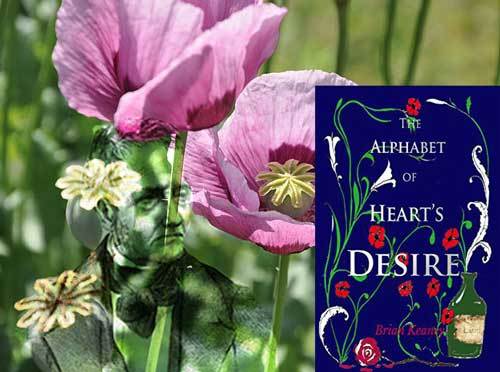
Ultimately, Keaney’s ending is realistic, reminding me of The Miniaturist by Jessie Burton, another literary historical fiction novel I read and liked more than many readers did. If you liked The Miniaturist, I suspect this one's for you. Don't be misled by the sweet title and floral cover. Alphabet is not for the faint-hearted, what with its rawness and commitment to truth-telling, at least with respect to the poor characters.
Thanks to NetGalley for providing an ecopy.
I found (online) the following recipe for laudanum:
Laudanum.-Best Turkey opium, 1 oz.; slice, and pour upon it boiling water, 1 gill (1/4 pint), and work it in a bowl or mortar until it is dissolved; then pour it into the bottle, and with alcohol of 76 per cent. proof, 1/2 pt., rinse the dish, adding the alcohol to the preparation, shaking well, and in 24 hours it will be ready for use. Dose -- Form 10 to 30 drops for adults, according to the strength of the patient, or severity of the pain.
By the middle of the 19th century, morphine was invented purposefully to offset/reduce addiction to opium. In 1874 chemists created heroin, with its potency twice that of morphine. Still opium imports (into the US) peaked in 1890. In 1937, methadone was first synthesized at Germany’s IG Farben company. Meanwhile, in 2017 the illegal opium trade continues, and the opioid crisis deepens.
But, I digress. Alphabet of Heart’s Desire takes the bare outline of what is known about De Quincey’s biography, including a brief encounter with a teenage prostitute, Anne, and tells the story of Anne, Thomas and a third character, Tuah, a slave, then ex-slave in late 18th century through 1802 London. The fourth character is opium, taken for most of the characters in the form of laudanum, and it is omnipresent throughout the novel. The novel is told in split narrative form – with each of the three named characters being given largely equal time, and with somewhat different voices. Tuah’s voice is the least successful, Anne’s the most, and Thomas, in comparison, can come across whiney and privileged, from time to time; nonetheless, his misery and sense of being trapped and limited by his family and its decisions about his schooling and living situation come across believably. The three characters don’t encounter one another until well into the novel. Hence, the experience for much of the novel is one of reading three books simultaneously. It works surprisingly well.
The first half was a 5-star read – the pacing was perfect, the characters well-drawn and London detailed in an absorbing, compelling manner. A 12-year old in a whorehouse. The desparation of a single mother unable to support herself. The Dutch slave trade and capture of Tuah at a young age. The ever present risk of street attacks and violence. The descent of a character, and decline of his health, into opium addiction, with nightly visits to an opium den. From the point where Anne and Thomas meet through the end of the book, it is a 3+ reading experience. The energy and suspense present earlier are greatly reduced, and Anne and Thomas spend a fair amount of time sharing laudanum and possible happy endings. Accordingly, 4 stars are merited.
Ultimately, Keaney’s ending is realistic, reminding me of The Miniaturist by Jessie Burton, another literary historical fiction novel I read and liked more than many readers did. If you liked The Miniaturist, I suspect this one's for you. Don't be misled by the sweet title and floral cover. Alphabet is not for the faint-hearted, what with its rawness and commitment to truth-telling, at least with respect to the poor characters.
Thanks to NetGalley for providing an ecopy.

October 8, 2017
This is a work of historical fiction focusing on the central character of Thomas De Quincey, an English essayist who lived through England's Regency and Victorian Eras. As I joyously ravished this book over the course of several days, I had no idea I was reading about an actual notable figure, nor whom the main character of the story was...until the very end. This is because each chapter deals with one of three characters: Thomas, Anne and Tuah, and are titled as such. Their individual stories are so lushly and richly written, they could have been a book unto themselves; but, they are deliciously woven together as the book nears its conclusion.
When we meet Thomas, Anne and Tuah they are each on the cusp of their teenage years, and all experience horrific tragedies...enough to cause post traumatic stress disorder in anyone. They have all lost either one or both of their parents and at some point have no idea how they are going to eat, where they can find shelter or earn money to live. Although Thomas was born into an upper class family, his widowed mother was quite a dour and harsh parent. Anne was born into an already poor family, but when her father drowned after an alcoholic binge, the living situation became even more dire. Tuah was abducted from his native home by Dutchmen onto a slave ship that docked in England. Their collective heartbreak, desperation and challenges are both poignant and riveting to read through.
Another common thread binding all three characters are their eventual associations with or consumption of the potent narcotic laudanum (tincture of opium). This drug became popular during these times for those suffering both mental and physical anguish.
I won't divulge any more details to spoil things for potential readers. In summation, this is a book that will whisk you away to historic England, with a very meaningful story and characters that will touch your heart. I award this a rare 5 stars.
Many thanks to NetGalley for providing this advance reader copy in return for my honest review.
When we meet Thomas, Anne and Tuah they are each on the cusp of their teenage years, and all experience horrific tragedies...enough to cause post traumatic stress disorder in anyone. They have all lost either one or both of their parents and at some point have no idea how they are going to eat, where they can find shelter or earn money to live. Although Thomas was born into an upper class family, his widowed mother was quite a dour and harsh parent. Anne was born into an already poor family, but when her father drowned after an alcoholic binge, the living situation became even more dire. Tuah was abducted from his native home by Dutchmen onto a slave ship that docked in England. Their collective heartbreak, desperation and challenges are both poignant and riveting to read through.
Another common thread binding all three characters are their eventual associations with or consumption of the potent narcotic laudanum (tincture of opium). This drug became popular during these times for those suffering both mental and physical anguish.
I won't divulge any more details to spoil things for potential readers. In summation, this is a book that will whisk you away to historic England, with a very meaningful story and characters that will touch your heart. I award this a rare 5 stars.
Many thanks to NetGalley for providing this advance reader copy in return for my honest review.

November 2, 2017
Thomas de Quincey was an English Essayist, best known for his Confessions of an English Opium-Eater. He dreamed of becoming a poet, but got as far as befriending William Wordsworth – a major English Romantic poet.
Set at the very beginning of the 19th century, this book briefly touches upon his childhood and mostly concentrates on his time living rough, penniless, and his encounter with Anne in Oxford Street and her subsequent disappearance. I wished this book brought more details of his life, but as the author mentions he was an opium edict and by no means a reliable source of information.
The story is revealed through three characters in subsequent voices: Thomas, Anne (his first love), and Tuah (fictional character).
After the death of his sister by which he is deeply affected, young Thomas feels very lost. He no longer has a sister who can interpret what their mother tells them. He feels very disconnected with their harsh mother, revealing his delicate nature. As a young man he gets employed by his mother’s friend, Lady Carberry, as a library organizer, which is of great interest to Thomas. The arrangement extends to teaching her Ancient Greek as well. This makes him very happy, but then an event occurs and penniless Thomas drifts into the streets of London.
After the death of her father, Anne and her mother struggle to survive. Not only poor conditions, but also her mother’s new partner’s abusiveness leads Anne on a path to search for something hopeful. At the age of 12, she has a lot to learn. Her new path doesn’t exactly take her to a more hopeful future.
Tuah is a black man captured by Dutch men. He becomes captain’s cabin boy. When on land, he lives with captain and his brother Archie, who teaches him English and Bible. Under Archie’s wing Tuah feels safe.
As the story progresses, it connects all characters together.
It is an engrossing story with engaging characters. Anne’s story is deeply moving. Her voice is so pure and honest. Thomas’ story reveals his delicate nature.
Set at the very beginning of the 19th century, this book briefly touches upon his childhood and mostly concentrates on his time living rough, penniless, and his encounter with Anne in Oxford Street and her subsequent disappearance. I wished this book brought more details of his life, but as the author mentions he was an opium edict and by no means a reliable source of information.
The story is revealed through three characters in subsequent voices: Thomas, Anne (his first love), and Tuah (fictional character).
After the death of his sister by which he is deeply affected, young Thomas feels very lost. He no longer has a sister who can interpret what their mother tells them. He feels very disconnected with their harsh mother, revealing his delicate nature. As a young man he gets employed by his mother’s friend, Lady Carberry, as a library organizer, which is of great interest to Thomas. The arrangement extends to teaching her Ancient Greek as well. This makes him very happy, but then an event occurs and penniless Thomas drifts into the streets of London.
After the death of her father, Anne and her mother struggle to survive. Not only poor conditions, but also her mother’s new partner’s abusiveness leads Anne on a path to search for something hopeful. At the age of 12, she has a lot to learn. Her new path doesn’t exactly take her to a more hopeful future.
Tuah is a black man captured by Dutch men. He becomes captain’s cabin boy. When on land, he lives with captain and his brother Archie, who teaches him English and Bible. Under Archie’s wing Tuah feels safe.
As the story progresses, it connects all characters together.
It is an engrossing story with engaging characters. Anne’s story is deeply moving. Her voice is so pure and honest. Thomas’ story reveals his delicate nature.

December 13, 2017
I found this to be a well written and researched story. It is the story of three different people coming of age and settling into adult life in different ways in London. The three main characters are Tuah, a freed slave, Anne, a doxy and Thomas, an opium addict. The book tells their stories from their childhood to young adulthood and how they came to be who they were. The three people in the story come to know each other, but not at the same times.
The story was based on the true story of Thomas de Quincy, a minor friend of Wordsworth and Coleridge, most known for his autobiography ‘ The diary of an Opium eater’. The ending stays true to the real life story and I am glad the author didn’t choose a more fictional option.
Thomas in my opinion was the least likeable of the characters,or the one who evoked the least sympathy.
My only quibble with the story is the title, which didn’t really fit for me.
Many thanks to Netgalley for an arc of this book. All opinions are my own.
The story was based on the true story of Thomas de Quincy, a minor friend of Wordsworth and Coleridge, most known for his autobiography ‘ The diary of an Opium eater’. The ending stays true to the real life story and I am glad the author didn’t choose a more fictional option.
Thomas in my opinion was the least likeable of the characters,or the one who evoked the least sympathy.
My only quibble with the story is the title, which didn’t really fit for me.
Many thanks to Netgalley for an arc of this book. All opinions are my own.

September 20, 2017
I've been trying to make my way through this book for something like two months now and obviously I'm having the hardest time.
I've made it halfway through it and this book isn't what the synopsis says it is, it takes nearly half the book for the story promised in the synopsis to start, which is kind of disappointing.
Usually I love reading a book with multiple point of views, but here it wasn't done that well? I don't know how to explain it but it made it more difficult for me to follow the story than anything else.
2.5
Thank you Netgalley for providing me an e-arc in exchange for an honest review.
I've made it halfway through it and this book isn't what the synopsis says it is, it takes nearly half the book for the story promised in the synopsis to start, which is kind of disappointing.
Usually I love reading a book with multiple point of views, but here it wasn't done that well? I don't know how to explain it but it made it more difficult for me to follow the story than anything else.
2.5
Thank you Netgalley for providing me an e-arc in exchange for an honest review.

June 29, 2018
I received this on NetGalley in exchange for my review. This book presents a fictionalization of the life of Thomas De Quincey, who wrote the first book about drug addiction. Based on his travels to London and time spent with the young prostitute Anne, the book imagines the time before they meet, their meeting and drug use, and their eventual separation. There is a third voice of a young man captured by Dutch slavers, but I found that more of a distraction. Apparently, the third character is based on one account of De Quincey’s where he meets someone he refers to as a Malay. The Thomas and Anne chapters were good with distinct voices. The book imagines what happened to Anne, even though De Quincey was never able to find her again. 3.5 ⭐️

November 3, 2017
Visit the locations in the novel
What a read! A historical fiction feast this one. Three interweaving stories but with the strong central character of the real life Thomas de Quincy who was known for taking opium. So much so, he even wrote a book on it in real life.
Novels which interweave fact and fiction are really fascinating and this was no exemption. A strong story, strong characters and an insight into a very troubled man. London, comes through in all its stinking glory with the opium fog killing you if the stench and the dirt on the ground doesn’t get you first.
It’s very immersive and I loved Annie in particular. Victorian life was hard and this gives a really good insight into the trials and problems of the day. Why people took opium and the different classes in life and how often money does not make you as happy as you think it will. Who is the most trapped person - a prostitute, a slave or someone who has wealth but has to live in a gilded cage?
A real historical feast for the senses.

May 1, 2018
Thank you Netgalley and Holland House for the ARC
Oh Joy! This is historical fiction how I like it!
There are three main characters: Anne, a survivor from London's East End who has a witty way with words and made me laugh out loud many times. Then we have Tuah, captured by the Dutch, keeping his stamina as he sails the seas as a slave, eventually making a life for himself in London. And last but not least there's Thomas, born into a well-off family somewhere in England's countryside, a curious intelligent boy with a private tutor. They each have their own chapters, keeping the reader in suspense on how such different characters are ever going to end up together. As we follow them from childhood into adults the three of them are close enough to touch several times. Their seperate stories are beautiful and entwined without them knowing, yet life keeps throwing them in different directions. The end is quite predictable but did not take away the pleasure.
This is a well crafted story full of indepth characters in a great setting. Superb writing.
Oh Joy! This is historical fiction how I like it!
There are three main characters: Anne, a survivor from London's East End who has a witty way with words and made me laugh out loud many times. Then we have Tuah, captured by the Dutch, keeping his stamina as he sails the seas as a slave, eventually making a life for himself in London. And last but not least there's Thomas, born into a well-off family somewhere in England's countryside, a curious intelligent boy with a private tutor. They each have their own chapters, keeping the reader in suspense on how such different characters are ever going to end up together. As we follow them from childhood into adults the three of them are close enough to touch several times. Their seperate stories are beautiful and entwined without them knowing, yet life keeps throwing them in different directions. The end is quite predictable but did not take away the pleasure.
This is a well crafted story full of indepth characters in a great setting. Superb writing.

September 3, 2018
This was one of those books that when I first picked it up I couldn't get into it so I put it aside to give it another try later... Of course lots of other books got in the way but when I finally decided to give it another try, I couldn't work out why I didn't dive straight into it the first time as this time it completely captivated me instantly.
It's an excellent historical novel, don't let the fact that its based on a real character from history whom you may or may not (as in my case) have heard of, put you off.
Its really 3 interconnected stories which cross over and each one is a story in its own right. The one I liked most was the story of Anna, a young woman forced by circumstances to become a prostitute, which reads a little like The Crimson Petal and The White. The second is the story of Tuah or Abdul, captured as a slave from his island home and brought to England by a series of mishaps. The third and least interesting to me is that of the real character Thomas de Quincy, a dreamy little fellow who never quite amounts to much and ends up addicted to laudanum, and I didn't really like him if I'm honest.
All these characters have a real story to be told and their paths cross (and criss-cross) and the detailed and intricate settings of the back streets of old London, accompanied by the noise and smells and crime therein is what makes it a joy to read for the historical would be time traveller like me.
Superbly written and delightfully readable I highly recommend this book.
It's an excellent historical novel, don't let the fact that its based on a real character from history whom you may or may not (as in my case) have heard of, put you off.
Its really 3 interconnected stories which cross over and each one is a story in its own right. The one I liked most was the story of Anna, a young woman forced by circumstances to become a prostitute, which reads a little like The Crimson Petal and The White. The second is the story of Tuah or Abdul, captured as a slave from his island home and brought to England by a series of mishaps. The third and least interesting to me is that of the real character Thomas de Quincy, a dreamy little fellow who never quite amounts to much and ends up addicted to laudanum, and I didn't really like him if I'm honest.
All these characters have a real story to be told and their paths cross (and criss-cross) and the detailed and intricate settings of the back streets of old London, accompanied by the noise and smells and crime therein is what makes it a joy to read for the historical would be time traveller like me.
Superbly written and delightfully readable I highly recommend this book.
September 27, 2017
Anne, a streetworker, lost her father to the waters of Thames, her mother to a drunkard lover, and her innocence to the vagaries of life that keep throwing her down. Tuah is an orphan on an island from where he is captured by Dutch sailors and brought to Cape Town to be sold. He is bought by a Captain of an English ship, who takes him under his wing, teaches him English and brings him to London to live with him and his brother. Thomas De Quincey is born into aristocracy and dreams of becoming a poet. But life throws him to the streets of London in unexpected turns of events. He suddenly finds himself sleeping in alleyways, going hungry and thirsty for days, in the slums of London.
Anne, Tuah and Thomas are very different in terms of their upbringing and life experiences. But they are quite alike when it comes to the twists and turns of fate that they are met with. On the streets of London, the paths of Anne, Tuah and Thomas cross and re-cross. They find hope, love, passion, addictions.
The story is loosely based on the life of Thomas De Quincey, an English essayist, best known for Confessions of an English Opium-Eater.
I thoroughly enjoyed reading this book. The author is a genius when it comes to storytelling and character development. The book is written from the perspective of Anne, Tuah and Thomas, and the author has done a great job with it. Their thoughts, emotions and internal struggles are flawlessly depicted chapter after chapter. The voices of Anne, Tuah and Thomas are very distinct, as are their characters and experiences. The steady pace of the book keeps the reader engrossed and wanting to read more. There are no fallacies in the book to write about. All in all, this is a great book. I am glad I read it and would definitely recommend it.
Anne, Tuah and Thomas are very different in terms of their upbringing and life experiences. But they are quite alike when it comes to the twists and turns of fate that they are met with. On the streets of London, the paths of Anne, Tuah and Thomas cross and re-cross. They find hope, love, passion, addictions.
The story is loosely based on the life of Thomas De Quincey, an English essayist, best known for Confessions of an English Opium-Eater.
I thoroughly enjoyed reading this book. The author is a genius when it comes to storytelling and character development. The book is written from the perspective of Anne, Tuah and Thomas, and the author has done a great job with it. Their thoughts, emotions and internal struggles are flawlessly depicted chapter after chapter. The voices of Anne, Tuah and Thomas are very distinct, as are their characters and experiences. The steady pace of the book keeps the reader engrossed and wanting to read more. There are no fallacies in the book to write about. All in all, this is a great book. I am glad I read it and would definitely recommend it.

February 15, 2018
Historical fiction, written with a lot of style and wit. A dedicated reader of this genre would get the most out of the book. The evocation of time and place is transportive, to say the least, though I didn't find myself engaged enough with the characters or their interactions. Lovers of historical fiction might find this an otherwise wonderful, mind-opening read.

December 11, 2021
Set in Georgian London, the book follows the lives of three people: Anne, a young woman forced into prostitution in order to escape a violent stepfather; Tuah, captured by Dutch slavers and brought to England by the captain of a trading ship; and aspiring writer, Thomas De Quincey. Their parallel stories are told in alternating chapters, in the first person in the case of Anne and Tuah, and in the third person in the case of Thomas.
Thomas comes across as naïve and something of a dreamer, creating imaginary worlds in which everyday practicalities do not exist. As Anne later observes, ‘He looked at the world but all he ever saw was his own strange thoughts’. In fact, imaginary worlds are something of a theme of the book. For example, Anne, focussing on a stain on the ceiling of her dingy room, imagines herself on a ship travelling the seas to distract herself whilst servicing customers. Meanwhile, Tuah has dreams in which he is back on the island of his birth, an island he doesn’t even know the name or location of. At other times, he loses himself in books.
For much of the book, the lives of Thomas, Anne and Tuah unfold quite separately with only the occasional ‘near miss’ or the revealing of a shared acquaintance with a third party. Gradually, their lives begin to interconnect more significantly. One connection between them is opium. The naval captain who brought Tuah to London was involved in the opium trade whilst Anne and Thomas both become consumers of the drug in the form of laudanum. For Anne, initially this is to relieve physical pain but increasingly it becomes a refuge, a way to distance herself from what she is forced to endure. For Thomas, it’s a way to escape the harsh realities of his existence which has left him homeless and penniless. However, as Thomas discovers, excessive use of the drug can unearth nightmarish memories.
Although I thought Thomas and Tuah were wonderful characters, my favourite was Anne. I loved her fortitude and determination, despite all the disappointments and obstacles thrown in her way. ‘I would find a ledge to stand on and keep standing there, whatever winds might buffet, whatever rain might fall.’ I also liked the distinctive, spirited voice the author created for her, describing her first client as ‘a great fat, red-faced gundiguts with lips as thick as rope and eyes like a pig’. Having fallen so low herself, she offers Thomas a lifeline just when he needs it most and is rewarded with the prospect of a different future.
I loved the way the author created a vivid picture of the London of the period: its sights, sounds… and smells. With the eyes and ears of a newcomer, Tuah likens the hubbub of the city to bees at work in a giant hive. ‘A great welter of human voices and animal cries all mixed up with the trundling of cart wheels, the grinding of stone, the hammering of metal, the banging of timber and the mighty creaking and groaning of all those buildings as the restless population swarmed back and forth in their constant frenzy of activity.’ Or how about this description of London in the heat of June: ‘The nights were sticky, full of the smells of the city: beer and dung, smoke and tallow, meat and tar, bread and grease, blood and fish and, hanging over everything, the great stink of the river’.
I had heard of Thomas De Quincey but knew little about his life and, although The Alphabet of Heart’s Desire is fiction, much of it is based on known facts, as the author’s historical note explains. Anne existed in real life too although she quickly disappears from the historical record. So, as well as the author’s own imagining of how things may have played out for her, there’s also space for the reader to reach their own conclusion.
The Alphabet of Heart’s Desire is a wonderfully imagined story that blends fact and fiction, and positively oozes period atmosphere.
Thomas comes across as naïve and something of a dreamer, creating imaginary worlds in which everyday practicalities do not exist. As Anne later observes, ‘He looked at the world but all he ever saw was his own strange thoughts’. In fact, imaginary worlds are something of a theme of the book. For example, Anne, focussing on a stain on the ceiling of her dingy room, imagines herself on a ship travelling the seas to distract herself whilst servicing customers. Meanwhile, Tuah has dreams in which he is back on the island of his birth, an island he doesn’t even know the name or location of. At other times, he loses himself in books.
For much of the book, the lives of Thomas, Anne and Tuah unfold quite separately with only the occasional ‘near miss’ or the revealing of a shared acquaintance with a third party. Gradually, their lives begin to interconnect more significantly. One connection between them is opium. The naval captain who brought Tuah to London was involved in the opium trade whilst Anne and Thomas both become consumers of the drug in the form of laudanum. For Anne, initially this is to relieve physical pain but increasingly it becomes a refuge, a way to distance herself from what she is forced to endure. For Thomas, it’s a way to escape the harsh realities of his existence which has left him homeless and penniless. However, as Thomas discovers, excessive use of the drug can unearth nightmarish memories.
Although I thought Thomas and Tuah were wonderful characters, my favourite was Anne. I loved her fortitude and determination, despite all the disappointments and obstacles thrown in her way. ‘I would find a ledge to stand on and keep standing there, whatever winds might buffet, whatever rain might fall.’ I also liked the distinctive, spirited voice the author created for her, describing her first client as ‘a great fat, red-faced gundiguts with lips as thick as rope and eyes like a pig’. Having fallen so low herself, she offers Thomas a lifeline just when he needs it most and is rewarded with the prospect of a different future.
I loved the way the author created a vivid picture of the London of the period: its sights, sounds… and smells. With the eyes and ears of a newcomer, Tuah likens the hubbub of the city to bees at work in a giant hive. ‘A great welter of human voices and animal cries all mixed up with the trundling of cart wheels, the grinding of stone, the hammering of metal, the banging of timber and the mighty creaking and groaning of all those buildings as the restless population swarmed back and forth in their constant frenzy of activity.’ Or how about this description of London in the heat of June: ‘The nights were sticky, full of the smells of the city: beer and dung, smoke and tallow, meat and tar, bread and grease, blood and fish and, hanging over everything, the great stink of the river’.
I had heard of Thomas De Quincey but knew little about his life and, although The Alphabet of Heart’s Desire is fiction, much of it is based on known facts, as the author’s historical note explains. Anne existed in real life too although she quickly disappears from the historical record. So, as well as the author’s own imagining of how things may have played out for her, there’s also space for the reader to reach their own conclusion.
The Alphabet of Heart’s Desire is a wonderfully imagined story that blends fact and fiction, and positively oozes period atmosphere.

October 18, 2017
via my blog: https://bookstalkerblog.wordpress.com/
I’m not trying to make out that I was innocent. You don’t grow up innocent in Limehouse. But I was ignorant. I saw things but I didn’t always know what they meant.
Brian Keaney writes beautifully, the sentences can have you smiling, cringing or gagging in disgust. I felt like I was Anne, stepping over oysters of spit (yuck), choking back the rotten smell of men, forced into a life of prostitution. Anne was by far the best character in this novel, how could Thomas de Quincy not fall in love with her? Anne’s mother is scraping by to keep them alive, but everything just gets more bleak, more so when her mother takes up with a dangerously cruel man, Harold Lampton (who carried his anger around with him everywhere he went, nursing it like a baby and feeding it with little tidbits of grievance,). It isn’t long before he poisons her innocence, and in this world and time, women didn’t have much chance to fight such men. In time, she escapes to a life, while not better, at least one she can be free of Harold. Anne and Thomas live in completely different worlds, Anne makes her living in the underbelly, Thomas is as sheltered and pristine as a proper man should be in the 1800’s. But some mysterious things happen to his own murdered sister, some sort of ‘punishment’ for not obeying? So just how ‘safe’ was his surroundings? Bucking at the life he feels confines him, he is ousted into the streets where Anne comes to his rescue. The London he now finds himself in, with scratching rats and violent strangers is nothing he could ever prepare for. The young man, one day to become a famous author, is a nervous, innocent youth before he falls for Anne. She comes to his rescue one night. Hope against hope they will last, but reality loves nothing better than to separate unfit lovers. Not before she takes the ‘bewildered’ Thomas home and nurses him to health with laudanum. “The cure for every pain and sorrow.” There is a magic in that “angel kiss” of laudanum. That isn’t all she gives him, though. He discovers many delights in Anne. That she could be loved by a poet, a man from a finer world, when she lived with vulgarity all her life, finally loved like a lady and not just a ‘street girl’- could it be? Could it really be?
Tuah is the third character, a slave taken abroad a ship, learning all horrors of man and that things can be worse, even from the pits of hell, there is always worse. He later is sold to a ship captain that becomes his future salvation. Both he and Anne are tied to Archie, a man who once read to Anne after a terrible incident. For Anne, the words do their healing, especially for an uneducated girl like her. Archie is a man of literature, which holds a special magic for Thomas, Tuah and Anne alike. The wheels of fate turn as it throws these three children about, each slaves to different lives, and tosses them into a fractured adulthood.
It isn’t a love story, and it is. While the rot of men and the world steals Anne’s innocence, somehow she still remains pure in some distant way. This was a hell of a novel! There wasn’t a boring moment, and the historical aspect felt genuine. There is no romanticizing about this time period, there is so much grim and grit that you know how bad things were for the unfortunate. I could smell the rot, tremble at the horrors, and warm at any token of kindness tossed Anne’s way. Three narrators delight the reader through the entirety of the novel, which is much like living in their shoes.
Publication Date: November 16, 2017
Holland House
I’m not trying to make out that I was innocent. You don’t grow up innocent in Limehouse. But I was ignorant. I saw things but I didn’t always know what they meant.
Brian Keaney writes beautifully, the sentences can have you smiling, cringing or gagging in disgust. I felt like I was Anne, stepping over oysters of spit (yuck), choking back the rotten smell of men, forced into a life of prostitution. Anne was by far the best character in this novel, how could Thomas de Quincy not fall in love with her? Anne’s mother is scraping by to keep them alive, but everything just gets more bleak, more so when her mother takes up with a dangerously cruel man, Harold Lampton (who carried his anger around with him everywhere he went, nursing it like a baby and feeding it with little tidbits of grievance,). It isn’t long before he poisons her innocence, and in this world and time, women didn’t have much chance to fight such men. In time, she escapes to a life, while not better, at least one she can be free of Harold. Anne and Thomas live in completely different worlds, Anne makes her living in the underbelly, Thomas is as sheltered and pristine as a proper man should be in the 1800’s. But some mysterious things happen to his own murdered sister, some sort of ‘punishment’ for not obeying? So just how ‘safe’ was his surroundings? Bucking at the life he feels confines him, he is ousted into the streets where Anne comes to his rescue. The London he now finds himself in, with scratching rats and violent strangers is nothing he could ever prepare for. The young man, one day to become a famous author, is a nervous, innocent youth before he falls for Anne. She comes to his rescue one night. Hope against hope they will last, but reality loves nothing better than to separate unfit lovers. Not before she takes the ‘bewildered’ Thomas home and nurses him to health with laudanum. “The cure for every pain and sorrow.” There is a magic in that “angel kiss” of laudanum. That isn’t all she gives him, though. He discovers many delights in Anne. That she could be loved by a poet, a man from a finer world, when she lived with vulgarity all her life, finally loved like a lady and not just a ‘street girl’- could it be? Could it really be?
Tuah is the third character, a slave taken abroad a ship, learning all horrors of man and that things can be worse, even from the pits of hell, there is always worse. He later is sold to a ship captain that becomes his future salvation. Both he and Anne are tied to Archie, a man who once read to Anne after a terrible incident. For Anne, the words do their healing, especially for an uneducated girl like her. Archie is a man of literature, which holds a special magic for Thomas, Tuah and Anne alike. The wheels of fate turn as it throws these three children about, each slaves to different lives, and tosses them into a fractured adulthood.
It isn’t a love story, and it is. While the rot of men and the world steals Anne’s innocence, somehow she still remains pure in some distant way. This was a hell of a novel! There wasn’t a boring moment, and the historical aspect felt genuine. There is no romanticizing about this time period, there is so much grim and grit that you know how bad things were for the unfortunate. I could smell the rot, tremble at the horrors, and warm at any token of kindness tossed Anne’s way. Three narrators delight the reader through the entirety of the novel, which is much like living in their shoes.
Publication Date: November 16, 2017
Holland House

February 26, 2018
Thanks to NetGalley for allowing me access to this prior to publication.
In this delightful historical fiction, we are given some thoughts as to what might have happened to Thomas de Quincey in the times explored in his autobiography.
For those who know anything of this writer, it will fascinate you. There are, it seems, some events rooted in fact and in others the author imagines what might have been. For those who know nothing of de Quincey, it is a thoroughly entertaining read exploring a point in time.
Having three characters on which we focus kept me entertained. It was good to see events from the view of our young girl forced into prostitution, and through the eyes of Tuah, a man captured by Dutch traders and sold into slavery. Perhaps a little glossy in terms of the positive sin on some events, but a good starting point to learn a little more of this time.
In this delightful historical fiction, we are given some thoughts as to what might have happened to Thomas de Quincey in the times explored in his autobiography.
For those who know anything of this writer, it will fascinate you. There are, it seems, some events rooted in fact and in others the author imagines what might have been. For those who know nothing of de Quincey, it is a thoroughly entertaining read exploring a point in time.
Having three characters on which we focus kept me entertained. It was good to see events from the view of our young girl forced into prostitution, and through the eyes of Tuah, a man captured by Dutch traders and sold into slavery. Perhaps a little glossy in terms of the positive sin on some events, but a good starting point to learn a little more of this time.

May 14, 2018
This was quite the story and represents much of the reasons I love historical fiction. When done well, historical fiction instructs as well as entertains and this book was no exception.
The tale follows Thomas, a well-to-do young man in the early 1800’s who dreams of going to Oxford. Headstrong, Thomas makes a few decisions that rankles his severe family and alters his life path forever.
Banished from the estate and disowned, Thomas soon finds himself unable to meet his basic needs and collapses in the street due to starvation. A women takes pity of him and takes him in, nursing him back to health. Anne isn’t just any woman however; classes collide when Anne is revealed to be a prostitute (her backstory is painful and beautifully weaves itself into Thomas’).
Touching, painful, real, instructive, and uplifting!
Thanks to netgalley and publisher for arc in exchange for a fair review.
The tale follows Thomas, a well-to-do young man in the early 1800’s who dreams of going to Oxford. Headstrong, Thomas makes a few decisions that rankles his severe family and alters his life path forever.
Banished from the estate and disowned, Thomas soon finds himself unable to meet his basic needs and collapses in the street due to starvation. A women takes pity of him and takes him in, nursing him back to health. Anne isn’t just any woman however; classes collide when Anne is revealed to be a prostitute (her backstory is painful and beautifully weaves itself into Thomas’).
Touching, painful, real, instructive, and uplifting!
Thanks to netgalley and publisher for arc in exchange for a fair review.

June 24, 2018
The story is told from the points of view of three people who meet at different points in their lives. There's Anne, the teenage girl who flees home. there's Tuah who was captured by the Dutch and sold as a slave, and there's Thomas middle class man, who'll become the writer Thomas the Quincey.
The blurb promises a meeting between Thomas and Anne, whereby Anne saves Thomas's life. This does not happen until the middle of the book. The slow progress of the book made it a bit tiresome to read and made me wonder how the three people are connected for a long time.
If you are interested in the life of people in London in the 19th century this might be for you. If you are looking for a fast paced historical novel, look elsewhere.
The blurb promises a meeting between Thomas and Anne, whereby Anne saves Thomas's life. This does not happen until the middle of the book. The slow progress of the book made it a bit tiresome to read and made me wonder how the three people are connected for a long time.
If you are interested in the life of people in London in the 19th century this might be for you. If you are looking for a fast paced historical novel, look elsewhere.

September 25, 2017
The Alphabet of Heart's Desire is a fantastic piece of historical fiction primarily set in Victorian London. In it, author Brian Keaney paints a vivid picture of three very different lives: that of a young woman struggling to survive as a prostitute, a captured Asian slave adjusting to an entire new way of life, and an imagining of the earlier days of poet Thomas De Quincey.
The chapters rotate between these three main characters, providing a quick and even flow to the story line. As the plot progressed, the lives of the characters intersected as well as becoming inextricably linked - some with final resolution and some without.
The book had many beautifully written passages describing various sensations and sights on the streets of London - the smells, the sounds, the faces, the clothing. He brought the past to life without succumbing to the habit of over-describing, as many historical fiction writers tend to do.
Fictionalising the life of a well known literary character can often come across as amateurish, but I felt that Keaney did Thomas De Quincey justice. His treatment of laudanum as the invisible, unofficial main character of the novel showed how a well educated man such as De Quincey could develop such a strong addiction to the drug. It seems like an entirely plausible backstory to the life of the poet.
My only complaint is that the book felt a little short, although that could be attributed to the fact that I loved it so much that I couldn't put it down.
Many thanks to Netgalley and the book's publisher, Holland House, for providing me with an ARC.
The chapters rotate between these three main characters, providing a quick and even flow to the story line. As the plot progressed, the lives of the characters intersected as well as becoming inextricably linked - some with final resolution and some without.
The book had many beautifully written passages describing various sensations and sights on the streets of London - the smells, the sounds, the faces, the clothing. He brought the past to life without succumbing to the habit of over-describing, as many historical fiction writers tend to do.
Fictionalising the life of a well known literary character can often come across as amateurish, but I felt that Keaney did Thomas De Quincey justice. His treatment of laudanum as the invisible, unofficial main character of the novel showed how a well educated man such as De Quincey could develop such a strong addiction to the drug. It seems like an entirely plausible backstory to the life of the poet.
My only complaint is that the book felt a little short, although that could be attributed to the fact that I loved it so much that I couldn't put it down.
Many thanks to Netgalley and the book's publisher, Holland House, for providing me with an ARC.

July 9, 2018
I absolutely adored this novel! I felt like I could relate in many ways and it had great depth to it thaf you don't find a lot these days. The only reason I am giving this title a 4.5 is because the ending wasn't the best or better yet fell a little short but still would recommend it!😁🧚♂️

October 9, 2017
Thomas De Quincey became an overnight sensation with the publication of his autobiography, Confessions of an English Opium-Eater, released in 1821. Wildly received in his day for this racy, seductive thriller, De Quincey was well-connected with friends like Coleridge and Wordsworth, and his life is the basis for Brian Keaney's historical fiction The Alphabet of Heart's Desire. This story is delivered by three young narrators: Tom De Quincey himself, Anne the teenage doxy (prostitute) he credits with saving his life, and Tuah an eventually freed slave. These three characters undergo varying degrees of tumult and tragedy, all equally entertaining and with story arcs that share a very similar pacing.
Keaney is an excellent, imaginative British writer, his descriptions and historic terminology are captivating and witty. I think the entire premise of this book is brilliant, filling in the unknown bits of a scandalous literary hero's shadowy life - but I wish Keaney would have further exploited his artistic license here and come up with more answers to numerous mysteries: what actually killed Thomas's beloved sister? What did their sinister brother allude to when he said "the basis of taxation in Greenhay is obedience, and the chief industry of our little kingdom is death." Why was Thomas kicked out exactly? Who was the letter in French from, was it intended for Thomas or for a different Thomas De Quincey? Who were Mrs. Sedgwick and Mr. Patterson, who got rid of Anne? Why would Thomas never venture back to Archie's, and simply find Anne there? Also what exactly is the Alphabet of Heart's Desire supposed to be? I enjoyed reading this book, I was thoroughly entertained while reading it, but I'm left feeling frustrated afterwards. Apropos of a book about laudanum, I suppose.
Keaney is an excellent, imaginative British writer, his descriptions and historic terminology are captivating and witty. I think the entire premise of this book is brilliant, filling in the unknown bits of a scandalous literary hero's shadowy life - but I wish Keaney would have further exploited his artistic license here and come up with more answers to numerous mysteries: what actually killed Thomas's beloved sister? What did their sinister brother allude to when he said "the basis of taxation in Greenhay is obedience, and the chief industry of our little kingdom is death." Why was Thomas kicked out exactly? Who was the letter in French from, was it intended for Thomas or for a different Thomas De Quincey? Who were Mrs. Sedgwick and Mr. Patterson, who got rid of Anne? Why would Thomas never venture back to Archie's, and simply find Anne there? Also what exactly is the Alphabet of Heart's Desire supposed to be? I enjoyed reading this book, I was thoroughly entertained while reading it, but I'm left feeling frustrated afterwards. Apropos of a book about laudanum, I suppose.

November 26, 2017
I am drawn to historical novels featuring artists or writers and looked forward to reading this book. I was not familiar with Thomas de Quincey and, perhaps if I was, that would have forewarned me of the darkness within this fictional look at his life.
The novel used the lives of three very diverse characters to tell the story and their experiences and voices were extravagantly varied. One a young intellectual; one a young boy captured by slavers; and one an impoverished child who "saves herself" through prostitution. I found it very challenging to read because hope was in very short supply.
Artfully written, the characters were so well-conceived that I felt like I knew them well. The challenge was wanting to continue walking in lock-step with them throughout the book. The well-born young man was the least appealing of the three featured characters -- he had the intellect, but not the common sense to know how to manage his gifts, his problems, and his future.
The slave and the prostitute both had heart-breaking challenges, but the grit to accept their issues and move forward. If the author had led me to do anything other than reflect on the hardships of these lives, I would have admired the book more. But, it left me depressed and nothing more.
NETGALLEY provided me with a complimentary copy of this book in exchange for an honest review.
The novel used the lives of three very diverse characters to tell the story and their experiences and voices were extravagantly varied. One a young intellectual; one a young boy captured by slavers; and one an impoverished child who "saves herself" through prostitution. I found it very challenging to read because hope was in very short supply.
Artfully written, the characters were so well-conceived that I felt like I knew them well. The challenge was wanting to continue walking in lock-step with them throughout the book. The well-born young man was the least appealing of the three featured characters -- he had the intellect, but not the common sense to know how to manage his gifts, his problems, and his future.
The slave and the prostitute both had heart-breaking challenges, but the grit to accept their issues and move forward. If the author had led me to do anything other than reflect on the hardships of these lives, I would have admired the book more. But, it left me depressed and nothing more.
NETGALLEY provided me with a complimentary copy of this book in exchange for an honest review.

October 7, 2017
'The Alphabet of Heart's Desire' is a well-written piece of historical fiction. The outline of this book is drawn with facts taken from the life of Thomas De Quincy, an essayist from 19th century famously known for his work 'Confessions of an Opium-eater', and colored in with the fictional world of Anne and Tuah created by Brian Keaney.
Summary:
Thomas is the prodigal son of De Quincy household and is a scholar but naive at dealings of life. He wants to be a poet. The inability of his family to understand his potential though leaves him to find his own path in life. He ends up sick and miserable.
Anne is a street girl who is abused at the hands of life. One day while looking for customers she finds Thomas collapsed on Oxford street. She takes him in and nurses him back to health. For the first time in their lives, they both find happiness in the love and the laudanum(Opium) they share, no matter the squalor that surrounds them.
Tuah is a freed slave who fails to belong as an Englishman even after adopting the language, the culture and the religion of England.
Beautiful Writing:
The book interleaves the story of these three people and they appear to be as separate from each other as possible. But then the thread of their lives start to entangle and entwine each time their paths cross and create the web in which they find themselves enmeshed.
The narration is beautiful and atmospheric. I found not a single dull moment. It reads so well as fiction, I did not realize until half the book in, that it was about a real person.
The characters are very well developed and I found myself completely vested in their lives, lost in the setting of early 19th century England. I wanted to scream at Thomas at times to man up and do something instead of seething and raging silently.
One particular detail that stood out for me was how the language differed for the three narrations. It was fancy and sophisticated in Thomas’s sections while full of slangs and easy grammar in Anne’s. Phrases from Bible in Tuah’s sections were aptly used.
Misunderstood Genius:
The only thing that Thomas ever wanted was to be a poet and study at Oxford. I wonder, what if his family had understood him better, what if they had let the facade of royalty not interfere with his simple desires? We might have had many more great creations. A genius might not have gotten lost to Opium. It pained me to see such misfortunes could befall a scholar of such caliber.
Wish to Read More:
I wanted to read more of it, especially on following points.
The relation Tuan and Captain McKerrars shared or what drove the captain to opium.
Thomas’s mother, why she was so stern etc.
What really happened to Thomas’s sister and what about his other siblings. Like his brother whom he meets. Could they never help Thomas?
Recommendations:
I recommend this to all fans of Historical Fiction who enjoy traveling back in time to claim a piece of history for themselves or to learn something new, something buried underneath dust and rubble of time.
Thank you NetGalley and the publisher for providing me an ARC of this book.
Summary:
Thomas is the prodigal son of De Quincy household and is a scholar but naive at dealings of life. He wants to be a poet. The inability of his family to understand his potential though leaves him to find his own path in life. He ends up sick and miserable.
Anne is a street girl who is abused at the hands of life. One day while looking for customers she finds Thomas collapsed on Oxford street. She takes him in and nurses him back to health. For the first time in their lives, they both find happiness in the love and the laudanum(Opium) they share, no matter the squalor that surrounds them.
Tuah is a freed slave who fails to belong as an Englishman even after adopting the language, the culture and the religion of England.
Beautiful Writing:
The book interleaves the story of these three people and they appear to be as separate from each other as possible. But then the thread of their lives start to entangle and entwine each time their paths cross and create the web in which they find themselves enmeshed.
The narration is beautiful and atmospheric. I found not a single dull moment. It reads so well as fiction, I did not realize until half the book in, that it was about a real person.
The characters are very well developed and I found myself completely vested in their lives, lost in the setting of early 19th century England. I wanted to scream at Thomas at times to man up and do something instead of seething and raging silently.
One particular detail that stood out for me was how the language differed for the three narrations. It was fancy and sophisticated in Thomas’s sections while full of slangs and easy grammar in Anne’s. Phrases from Bible in Tuah’s sections were aptly used.
Misunderstood Genius:
The only thing that Thomas ever wanted was to be a poet and study at Oxford. I wonder, what if his family had understood him better, what if they had let the facade of royalty not interfere with his simple desires? We might have had many more great creations. A genius might not have gotten lost to Opium. It pained me to see such misfortunes could befall a scholar of such caliber.
Wish to Read More:
I wanted to read more of it, especially on following points.
The relation Tuan and Captain McKerrars shared or what drove the captain to opium.
Thomas’s mother, why she was so stern etc.
What really happened to Thomas’s sister and what about his other siblings. Like his brother whom he meets. Could they never help Thomas?
Recommendations:
I recommend this to all fans of Historical Fiction who enjoy traveling back in time to claim a piece of history for themselves or to learn something new, something buried underneath dust and rubble of time.
Thank you NetGalley and the publisher for providing me an ARC of this book.

December 20, 2017
This book follows the stories of three young people in the early years of the 1800s: Thomas de Quincey (later to become author of “Confessions of an Opium Eater); Anne, a child prostitute (a person de Quincey actually knew); and Tuah, a freed slave and avid reader, who, as far as I know, was not a real person. Their stories are told in alternating chapters; Anne and Tuah tell their tales in the first person, Thomas’s is in the third person, which makes him seem a little more distant and less real.
Anne is a pre-teen girl who becomes a prostitute to avoid a fate just as bad with her step-father. Coming from a life of grinding poverty, living in a brothel and being warm and not having to wash load after load of clothes with urine is a step up. Tuah is captured by Dutch slavers who kill and rape his family and friends; the captain of another ship buys him and brings him to London. Along the way he is taught English and how to read. Thomas, whose father dies when Thomas is young, is very bright and his school masters say he should go on to Oxford. Sadly, his mother and her brother, who are controlling Thomas’s inheritance, are too stingy to pay his tuition. After an attempted theft, he is told by them to get out of the area, and disappear for a few years. They give him an allowance that would have been hard for the most frugal of souls to live on. Thus he ends up on the streets, starving and freezing, where Anne finds him.
The stories of Anne and Thomas are closely connected after the middle of the book. Tuah, however, while having the story that I found most interesting, seemed not to really fit in with the other two- he does connect with Anne, briefly, mid-way, and then again at the end. Tuah and Archie, the brother of the sea captain who saves Tuah, are the characters that caught my attention. Archie runs a used clothing store and does fitting; his building is filled with old clothes and books, hundreds of books. Archie reads incessantly, a hobby that does not hurt his hunch-backed body. His gentle humanity, and kindness to both Tuah and Anne, are a stark contrast to many of the other supporting characters.
Oddly, I found Thomas the least interesting of the main characters, even though history tells us the most about him. He just seemed sort of… helpless. He was dealt a bad hand in life, but seemed to be the least able to make a go of it. I was really captured by the book, and I’ll give it five stars even though Thomas was a disappointment.
Anne is a pre-teen girl who becomes a prostitute to avoid a fate just as bad with her step-father. Coming from a life of grinding poverty, living in a brothel and being warm and not having to wash load after load of clothes with urine is a step up. Tuah is captured by Dutch slavers who kill and rape his family and friends; the captain of another ship buys him and brings him to London. Along the way he is taught English and how to read. Thomas, whose father dies when Thomas is young, is very bright and his school masters say he should go on to Oxford. Sadly, his mother and her brother, who are controlling Thomas’s inheritance, are too stingy to pay his tuition. After an attempted theft, he is told by them to get out of the area, and disappear for a few years. They give him an allowance that would have been hard for the most frugal of souls to live on. Thus he ends up on the streets, starving and freezing, where Anne finds him.
The stories of Anne and Thomas are closely connected after the middle of the book. Tuah, however, while having the story that I found most interesting, seemed not to really fit in with the other two- he does connect with Anne, briefly, mid-way, and then again at the end. Tuah and Archie, the brother of the sea captain who saves Tuah, are the characters that caught my attention. Archie runs a used clothing store and does fitting; his building is filled with old clothes and books, hundreds of books. Archie reads incessantly, a hobby that does not hurt his hunch-backed body. His gentle humanity, and kindness to both Tuah and Anne, are a stark contrast to many of the other supporting characters.
Oddly, I found Thomas the least interesting of the main characters, even though history tells us the most about him. He just seemed sort of… helpless. He was dealt a bad hand in life, but seemed to be the least able to make a go of it. I was really captured by the book, and I’ll give it five stars even though Thomas was a disappointment.

January 11, 2018
My book club read this book and this is our verdict.
We loved this book!!
This is the author’s first attempt at adult fiction but he has written a number of junior fiction books and he has really delivered a quality novel with this book.
The book tells the story of three characters, one of whom Thomas de Quincy later becomes a writer himself and a friend to the Wordsworth family. The other two characters are Anne a young prostitute and Tuah an African man stolen into the slave trade. The lives of these characters touch over many years without them realising and the story is told by each character in separate chapters. This worked extremely well, the “voices” of the individual characters were clearly recognisable which contributed to the flow of the story.
The book has been extremely well researched with much social history described and explained, from the details of the laundry service using stored urine, to the machinations of the Post Office as a way to access money in different places while travelling was all fascinating.
The author describes the poverty and squalor of the times so well that the reader can smell the stink in the streets.
The individual stories of each character are heart-breaking in their own way, Anne the young girl abused by her step father running away to seek refuge in a brothel where she is put to work. Tuah the African man stolen from his home and family and sold into slavery on the other side of the world. Thomas a man with a comfortable middle class background but fallen on hard times after a quarrel with his family. We follow each of them over a number of years observing how they live their lives in the social conditions of the day. We are able to observe the lives of the three characters as they change and then merge to the conclusion of the book.
This is an excellent historical novel in which the author has taken a few known
facts and woven a very credible story around them. An immersing and completely believable novel it caused our group to have a wide ranging discussion on social issues covering poverty, abortion, drug addiction and the difficulty of living in the times portrayed in this excellent book.
Even our member who hates historical fiction began her contribution to the discussion by calling it “very very good” which from her is praise indeed.
We thought this was one of our best books of 2017.

November 13, 2017
Firstly, Thank you to Netgalley and the publisher for an ARC of this book in exchange for an honest review.
'The Alphabet of Heart's Desire' is a book drawn from the essayist, Thomas De Quincy, who was best known for his work 'Confessions of an Opium-eater', and two other fictional characters, Anne, a young girl thrown into a life of prosititution, and Tuah, a slave taken by Dutch slave traders from his home at a young age.
The book rotates around the three characters of Thomas, Anne, and Tuah giving the reader the viewpoint of each character in chapters told from their point of view. Thomas' chapter portrays his life as a educated, but naive young man who ends up living on the streets of London. Anne describes the events that led her into a life of prostitution and the slippery slope she found herself in. The 2 characters become connected when Anne finds Thomas nearly dead on the streets and nurses him back to health. Eventually, the two fall in love with each other and opium. Tuan's chapter describes how he came to England, and shares his journey of trying to fit into a world that he doesn't feel a part of and his connection to the other characters in the book. The book also had several very engaging minor characters that helped the reader understand how the main characters were connected and also really played into the description of London in the 1800's.
The narration is beautiful and very descriptive. I could see, smell, and hear what was taking place in the story. The writing style differed for each character so the reader really got a feel for the character and what station in life they were a part of.
There were a couple areas I wish the author had given me more, including what happened to Thomas's sister and why his mother was so harsh, and the background workings of how Thomas' family was still involved even when he was sent away.
I had no idea that opium was such a popular drug during that era, but I really enjoyed reading about how it effected the characters in this book and it made me want to look into the real life of Thomas De Quincy.
'The Alphabet of Heart's Desire' is a book drawn from the essayist, Thomas De Quincy, who was best known for his work 'Confessions of an Opium-eater', and two other fictional characters, Anne, a young girl thrown into a life of prosititution, and Tuah, a slave taken by Dutch slave traders from his home at a young age.
The book rotates around the three characters of Thomas, Anne, and Tuah giving the reader the viewpoint of each character in chapters told from their point of view. Thomas' chapter portrays his life as a educated, but naive young man who ends up living on the streets of London. Anne describes the events that led her into a life of prostitution and the slippery slope she found herself in. The 2 characters become connected when Anne finds Thomas nearly dead on the streets and nurses him back to health. Eventually, the two fall in love with each other and opium. Tuan's chapter describes how he came to England, and shares his journey of trying to fit into a world that he doesn't feel a part of and his connection to the other characters in the book. The book also had several very engaging minor characters that helped the reader understand how the main characters were connected and also really played into the description of London in the 1800's.
The narration is beautiful and very descriptive. I could see, smell, and hear what was taking place in the story. The writing style differed for each character so the reader really got a feel for the character and what station in life they were a part of.
There were a couple areas I wish the author had given me more, including what happened to Thomas's sister and why his mother was so harsh, and the background workings of how Thomas' family was still involved even when he was sent away.
I had no idea that opium was such a popular drug during that era, but I really enjoyed reading about how it effected the characters in this book and it made me want to look into the real life of Thomas De Quincy.

November 28, 2017
'The Alphabet of Heart's Desire' is a well-written piece of historical fiction by Brian Keaney. Mr. Keaney is an excellent writer. His characters easily come to life as does the time period. There were many wonderful descriptive passages about London in the 1800's
The outline of this book is drawn with facts taken from the life of Thomas De Quincy, an essayist from 19th century who is famously known for his work 'Confessions of an Opium-eater'.
The chapters rotate between three main protagonists along with some interesting minor characters. A young prostitute, an Asian slave and the youthful Thomas De Quincey. I did not know until after I finished the novel that Mr. De Quincey was a real person during this historical time frame.
I found myself feeling drawn to the three main protagonists. Their trials and tribulations were vivid and at times stomach churning. I was not all together pleased with the ending. The bobbing and weaving to bring these three characters to the same place and time was a tad unbelievable. However, I did not investigate if this was actually part of the main character’s life.
I would like to thank Holland House, Brian Keaney and NetGalley for an ARC.
The outline of this book is drawn with facts taken from the life of Thomas De Quincy, an essayist from 19th century who is famously known for his work 'Confessions of an Opium-eater'.
The chapters rotate between three main protagonists along with some interesting minor characters. A young prostitute, an Asian slave and the youthful Thomas De Quincey. I did not know until after I finished the novel that Mr. De Quincey was a real person during this historical time frame.
I found myself feeling drawn to the three main protagonists. Their trials and tribulations were vivid and at times stomach churning. I was not all together pleased with the ending. The bobbing and weaving to bring these three characters to the same place and time was a tad unbelievable. However, I did not investigate if this was actually part of the main character’s life.
I would like to thank Holland House, Brian Keaney and NetGalley for an ARC.
January 11, 2019
As a Lovereading Ambassador I was asked to read and review this.
This book present the a fictional view of Thomas De Quincey, who wrote the first book about drug addiction. Based on his time in London where he is found living on the streets- a middle class person and spend time with whore Anne and partaking in drugs. the time is around the beginning of the 19th centaury. The author creates from historical research how London would have been at that time, what the person would see, smell and experience. The third main character is called Tuan, a captured slave living in London and he is eventually freed by his owner. it is interesting and shocking how society was at that time.
This is such a great historical novel, well researched with three stories intertwined, written with thought and a little comical at times too. the reader is pulled in by the author to this story.
Surprisingly I had never hear of Thomas De Quincey yet coming from Edinburgh had no idea he is buried in St Cuthbert's church yard at the West end of Princes Street. I will make a point of visiting his grave the next time I fly up for a visit. So how he ended up in Edinburgh well that is probably another story.
This book present the a fictional view of Thomas De Quincey, who wrote the first book about drug addiction. Based on his time in London where he is found living on the streets- a middle class person and spend time with whore Anne and partaking in drugs. the time is around the beginning of the 19th centaury. The author creates from historical research how London would have been at that time, what the person would see, smell and experience. The third main character is called Tuan, a captured slave living in London and he is eventually freed by his owner. it is interesting and shocking how society was at that time.
This is such a great historical novel, well researched with three stories intertwined, written with thought and a little comical at times too. the reader is pulled in by the author to this story.
Surprisingly I had never hear of Thomas De Quincey yet coming from Edinburgh had no idea he is buried in St Cuthbert's church yard at the West end of Princes Street. I will make a point of visiting his grave the next time I fly up for a visit. So how he ended up in Edinburgh well that is probably another story.
Displaying 1 - 30 of 69 reviews