There are more than one billion Catholics in the world, and each one has a similar set of basic beliefs and practices that he or she follows. Some of the teachings of Catholicism are thousands of years old, while others are more recent. So what is the Catholic culture like and what do they believe? Catholicism For Dummies answers these and many other questions. Whether you're a Catholic or not, you may be totally clueless or just unaware of some aspects of Catholic traditions, history, doctrine, worship, devotion, or culture. No sweat. Regardless of whether you're engaged, married, related to a Catholic, or just curious about what Catholics really do believe, this book is for you.
Catholicism For Dummies is not a catechism or religious textbook, but a casual, down-to-earth introduction for non-Catholics and reintroduction for Catholics. It gives commonsense explanations so that the next time you're invited to a Catholic wedding, Baptism, funeral, Confirmation, or First Communion, you won't be totally confused. You'll also discover other important topics that can help you better understand the Catholic culture--from morality and devotions to worship and liturgy. This book will familiarize you with Catholicism by showing you:
What it means to be a Catholic: traditions, prayers, beliefs, and holidays Who is who in the Catholic hierarchy How Catholics worship What the Seven Sacraments and Ten Commandments are The book regarded as the holiest to Catholics: The Bible The Church's stand on some sticky issues Catholicism For Dummies presents a rich tapestry and history of the Catholic faith--from devotions to doctrines. This intelligent and faithful look at Catholicism will open your eyes to this religion and answer many of the questions you may have about it.
Father John Trigilio, Jr. is a native of Erie, Pennsylvania. He graduated from Gannon University in 1983 with a B.A. in Liberal Arts (concentration in Theology and Philosophy). After studying for the Diocese of Erie and then for the Diocese of Arlington, Father Trigilio joined the Diocese of Harrisburg where he was ordained in 1988 by William Cardinal Keeler. He completed his seminary training at Holy Apostles Seminary, Cromwell, CT and at Mary Immaculate Seminary, Northampton, PA. Fr. Trigilio is also a cooperator in the Personal Prelature of Opus Dei.
On the cover of this book is the publishers’ upbeat trademarked tag
Making Everything Easier! ™
You have to smile when it’s on the front of a guide to Catholicism, because I can safely say, having perused this fat volume at length, that being a Catholic does not make anything easier. Not at all. Quite the opposite. The Catholic faith makes everything, from declaring war to telling the rosary, a whole lot more difficult, way more complicated than the most complicated computer or board game, which, many times, it resembles.
Because the whole thing is a Quest. The Player is issued with a Soul at the beginning of the game, and the object of the game is to convey the Soul to Heaven and avoid Hell. It sounds simple, like every great board game (the object of Monopoly is to bankrupt all the other players which may be unkind but it’s very clear). This detailed account of the rules for How To Save Your Soul is just exhausting. If God has set up so many many traps to fall into, hundreds of things you must do (confession, the sacraments), things you mustn’t ever do (extra-marital sex, pre-emptive invasion of a foreign country without sufficient justification), things that whilst not essential would please him if you took the time to do (self-mortification, pilgrimage), he’s just giving me the strong impression that he’s just waiting for me to commit a mortal sin and die without a priest and then zzzzap me off to Hell without no Get Out Of Hell Free cards, of which there are none in this game, that is not a Catholic concept.
THE GNASHING OF MY TEETH
I think this is probably something the general “For Dummies ™” series editors insist on, but the language used in this book is likely to set your teeth on edge
(The fathers have eaten sour grapes, and the children's teeth are set on edge, Ezekiel 18:2.)
It tries so frantically to be hip and street and down with the kids and like your breakdancing uncle at Christmas it just makes you wince. Some examples -
In this chapter you get a peek at what Catholicism is all about – the common buzzwords and beliefs – a big picture of the whole shebang.
(Discussing differences in worship between eastern and Western traditions) Both Masses are cool by the pope, though.
What’s referred to as The Force in the Star Wars movies is not the Holy Spirit (I’m glad they cleared that up)
And a favourite :
Even Jesus got some downtime. Jesus wasn’t a workaholic.
THIS BOOK COULD HAVE BEEN SHORTER
There are pages devoted to the most tedious and you may think unnecesaary details :
Diocesian priests are responsible for buying and maintaining their own automobiles
The local bishop blesses three oils during Holy Week… the Chrism Oil, the Oil of the Sick and the Oil of Catechumens. The bishop blesses all three oils in multigallon containers. Chrism is the only oil that has balsam added to it.
THE RESTAURANT ANECDOTE
I was in a restaurant the other Saturday with a friend of mine. He recognised the guy sitting on the next table and a conversation ensued. It quickly turned to matters of religion, I can’t remember why. And it was like we were part of a joke beginning “A Muslim, a Catholic and an atheist go into a bar” because that’s what we were, a Muslim, a Catholic and an atheist. The reason I mention this is because it was very striking when our Catholic was trying to explain the Trinity and saying that Jesus, as he wasn’t the Father but the Son, wasn’t, of course, God, because only God is God. Well, he wasn’t a very diligent Catholic because even I know that all three guys in the Trinity are completely God 24 hours a day. To quote our authors:
Jesus is regarded as fully human and fully divine – true Man and true God. This premise is the cornerstone of all Christian mysteries. It can’t be explained completely
I wonder how many Christians also do not realise that Jesus is God. I think they think that because he’s got the title Son of God, it’s like Son of Godzilla, and the son of Godzilla is not the real Godzilla. But the news which is now 2000 years old is that Jesus is GOD.
YOU ARE MY SPECIAL ANGEL
before the first human beings were created in the Garden of Eden, God created beings known as angels : beings with no bodies. Angels are pure spirit. An angelic nature consists of an angelic intellect and an angelic will.
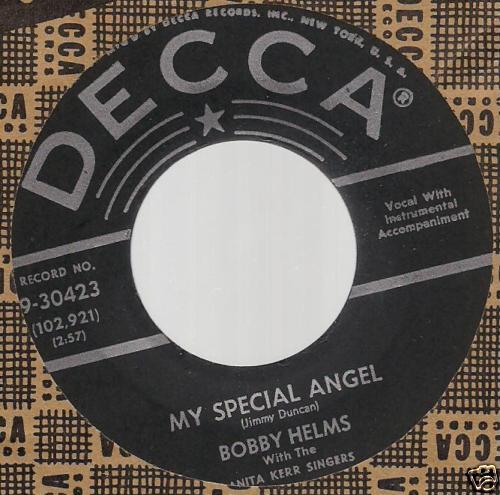
Where do they get this from? Because it’s not in the Bible. And it's not from Bobby Helms. Answer is : sacred tradition. So I think that means somebody like St Augustine just kind of made it up in the 5th century.
WHEN YOU’VE TRIED ALL THE REST, BABY
I was impressed that the authors are careful never to rubbish any other Christian denominations or other religions. They never say non-Catholics are wrong. What they do say is Catholics are just the best, baby, the best.
The Church believes that all religions know some truth, but it knows more. Jesus Christ himself founded the Catholic Church, and therefore the Church possesses all the truths and graces necessary for salvation, whereas other faiths possess only some (partial) truth or grace.
What they don’t say is what will happen to non-Catholics in respect of the ticklish but kind of crucial Heaven/Hell thing. I mean, do all good Muslims go to hell? Or because their faith possesses “partial” truth maybe their heads and right arms can go to Heaven and the rest goes to Hell? Or maybe they end up in Purgatory (that’s where you go if you die without confessing your sins but your sins aren’t mortal) for a few thousand years of theological correction.
WE DON’T MAKE THE RULES
The Reverends Trigilio and Brighenti, our authors, do not pull their punches about the less popular aspects of Catholic teaching, so you got to give them respect for that. According to the Church, ALL I mean ALL sex which isn’t between a married man and the woman he’s married to is a sin and you shouldn’t do it, it will put your soul in danger. And even some sex between a married couple is sinful, too. I would explain further, but children could read this. So I will just let you adults use your imaginations there. But not too much, because thinking about a married couple having sex if it’s not you and your spouse is also a sin. Actually, from what these guys say, I’m going to say that thinking about you having sex with your spouse is also a sin. You can see that none of this is Making Everything Easier! ™
A MINOR OMISSION
What this book did not tell me is how a loving God can and does (according to this guide) allow humans to condemn themselves (I guess that’s the way I should put it) to an eternity of horrible torture in Hell. I mean, that's a real kick in the head when you think about it - all eternity! I never could believe that one.
CONCLUSION
This is a very solid, very detailed explanation of WHAT Catholics believe. HOW they believe it is not explained.
The 'For Dummies' books have an unearned stigma, I think. In general, books that survey subjects are considered inherently flawed because those that are "in-the-know" feel slighted by the lack of nuance these books give to their subjects. My feeling is, they're not meant to, and I've always thought the 'For Dummies' books were great for everything I've ever turned to them for. They do a great job of covering the entirety of a subject enough to hammer home the fundamentals but provide enough suggestions for further study for those interested.
While I don't have a great basis for comparison, I thought this book was surprisingly informative and I highly recommend it. If anything, the casual reader may find it too informative than their modest need of it requires. It contains and explains (sometimes ad nauseam) everything from the essential dogmas to church hierarchy and history to the saints to the presence in the Eucharist, etc.
I actually read this one cover to cover like a regular book, but most people will probably buy this book for reference. I actually wouldn't recommend it for that. Use the 'Catechism of the Catholic Church' instead. Although, these two books together were a great way for me to introduce myself to Catholicism.
It's only fault I thought was all of it's think-of-it-like-this analogies when describing doctrinal ideas seemed panderous and read more like apologetics than explanations. But, to be fair, the book was also surprisingly honest about dissent of some church members about current practices in the Church since the reforms of Vatican II, and the current molestation scandals in the clergy. It's concise history of the church in Appendix A is biased, but it admits as much, which is admirable.
Not being Catholic, there are a number of questions I had concerning the Catholic faith and why Catholics believe/practice the way the do. This book answered all the questions I had and even a few that I didn't even know I had.
I also liked how the authors did not disparage other religions when comparing them to Catholicism and how careful they were to point out where other religions and Catholicism agree.
If someone is looking for a good resource to learn more about the Catholic faith, I would highly recommend this book as the best place to start.
This really is a good, comprehensive introduction to a very large topic. Although I already knew the theological elements presented in this book, I learned a lot about Catholic traditions and practices. However the one critique that I have is that it is clearly one sided. Catholicism does contain liberal elements and this book dismisses them as not true Catholics through some of the comments made about those who would dissent against papal decrees or dissent over other issues such as birth control. Considering that most American Catholics actually do use birth control, for example, indicates that the book gives the official story and to find what lived Catholicism looks like from the ground will require more digging.
I'm not done with this book yet but I have to say it is well written and easy to read. It's helping me make peace with some of the struggles I've had regarding Catholicism. (If you're interested, and I'm not trying to spark an argument here, I am finding Catholicism to be more scriptural than I have given it credit for. I don't always like it but God never said I had to. :)
Update: This book was interesting all the way thru. About half way into it, I couldn't put it down. We are re-reading it at church now.
I am a cradle Catholic, but found this book to be extremely helpful. I’ve always known the main beliefs of my faith, but this book delved into areas I really needed explained further. It was well written, concise and informative. I loved the detailed history of the Catholic Church and the stories of the Saints. I think this is a great book for Catholics to learn more about their faith and for non-Catholics to learn facts about the faith all in one place. There is an incredible amount of misinformation in the world about Catholicism and this is a helpful resource to weed out rumors and untruths. For me personally, I found great comfort in this book, the love and mercy of God, the logic and reason of Catholicism and the gift of my faith. It brought me peace and I’m thankful to the authors for the blessing of this book.
I hate the title of this book but loved how informative and straight forward this book was on everything about the Catholic Church. Although, I have been attending Mass for almost eight years, I realized there was a lot I still did not know. This book explained the history of the church, the changes through the years and the significance of every part of the Mass in a non-judgmental, direct,and easy to understand way. I recently went through RCIA and found this a very helpful guide. Would recommend it to anyone who was interested in learning more about the Church.
I haven't quite read every single page of this book yet, but I think it's a great way to get an introduction to the essence of Catholicism. I bought it to brush up on the Catechism and other teachings of the Church because I was taking a teacher's course in religion. It's a great book for giving facts and figures and snippets of history for many Catholicism-isms, but it doesn't delve so deeply that you feel overwhelmed trying to remember all the details of each of the ecumenical councils, for example. It's breadth, rather than depth, is what I fancy most!
I thought I knew a lot about Catholicism already, but this book taught me so much. I learned just enough about Church history, found support for the defenses of the faith that I already knew, and had a blast with the authors' humor at the same time. The authors are priests from EWTN, so you know their writing is 100% Orthodox. If you're interested in Catholicism, get this book!
Just a brush-up course for myself as Abigail begins her religious ed. classes.
A fine overview of the Catholic faith. Useful for non-Catholics who want to learn about Catholicism, as well as for Catholics who perhaps have fallen away or simply want to reacquaint themselves with the basic tenets and core teachings. Written in a very accessible manner.
And I learned something I didn't know, but always wondered. After 34 years as a Catholic, I finally learned what CCD stands for: Confraternity of Christian Doctrine.
Actually, my daughter was assigned this book in a religion class as she is going to a Catholic University. (You have to take a class in religion. Buddhism qualifies, but is usually filled. Perhaps that says something.)
Sorry Catholic friends, that's the whole story. Did want to pick up interesting tidbits, partly for my interest in Joyce (although that is a little dubious since this is post Vatican II).
Anyway, Catholic (and orthodox religion in general) is pretty alien to my way of thinking. So I perhaps qualify in the dummies category.
I finally finished reading this book. It has so much information in it that it takes a while to absorb it. I don't know why these books are called for dummies because there was nothing dumb about the book or the subject. It is very informative. You would have to look to other sources for more indepth study but it is a great overview. I don't feel that they really scimped on info either. I would reccommend this to anyone interested in the Catholic faith.
After 16 years of Catholic school, I still have questions and love this as a reference book. It is also a great guide to get to the heart of some "why" questions I get from others as well. Raising three children in the Catholic faith and having been through a divorce, then remarrying a divorced non-Catholic can be tricky. Trust me! I have never questioned my faith but this book reinforces my choice as an adult to still remain steadfast in my beliefs.
So, yes, one is setting oneself up when you acknowledge turning to a "For Dummies" book to answer your questions, but this book really did answer a lot of them, as well as give a good overview of the Catholic Church. Honestly, most Protestants could probably benefit from reading this since it clearly and concisely clears up most of the misconceptions that Protestants tend to have about Catholics (i.e., worshiping Mary and the Saints, etc.). Definitely keeping it as a reference. No shame.
So I figure I'll be currently reading this one for awhile but I'm going to move it to the "read" shelf because I've read most of it. I am a dummy when it comes to Catholicism and this is a helpful, thorough introduction. If you're interested in learning more about the religion, I'd recommend it. It seems to be a good starting point.
I have been catholic all my life, and now I am trying to get back into my faith. This is a great book to start with. There are so many things I don't know about my own religon that I hope to understand a little better through this book. Very good book, and it will be a good reference when I need it.
This book was pretty much as expected. It gives an overview of Catholicism, with brief introductions of beliefs and customs. Don’t expect any depth here or serious explanations but obviously that wasn’t the purpose of this book. This is a good beginners book for a non-Catholic or a Catholic who doesn't really understand why they do what they do.
I enjoyed the layout and the information. I ended up learning loads about the Catholic faith however, I didn't finish it because it didn't completely hold my attention. Nothing at all to do with the book itself, I just got sidetracked. I would recommend to anyone who wants to learn, in detail, about Catholicism.
Only didn't get more stars because I'll probably never read it again but I do refer back to it from time to time. It can't really be an "excellent read" in my mind, more like an "excellent source of information/text book". If this was GoodTextbooks.com it would probably pull a 4 from me.
My wife has a very elderly friend that we have taken to different churches several times, the Cathedral Basilica of St. Louis, and soon the Old Cathedral near the St Louis Arch. The friend is in a Catholic retirement home, they have some sort of chapel there and all her spiritual needs are taken care of, but she enjoys going to some of these grand churches in St Louis every now and again.
The majesty of the buildings can't be denied, and the incense and the bells and the cadence of the mass has not changed much since I was a boy. I took my First Communion, but I wasn't confirmed and really don't know much about Catholicism. I am not a believer in any faith, I just wanted to know a little more about the Catholic Church and this book was an easy way to start.
It is very much like all the other "Dummies" books, very broad strokes, a starting place, but not enough info to make a start in anything that interests you. I got an old edition online for cheap, it was in ok shape, I paid like 4 bucks. It was adequate to my purposes, I didn't really learn much, though I did not recall it was a sin to miss Mass and there was some clarity on the Solo Scriptura issue. I don't intend to become Catholic, I just wanted to know what I was seeing when we went to Mass with my wife's friend.
If like me, you just wanted to know a little more about the Catholic Church, this is great. If you are thinking of becoming Catholic or returning to the Church, this is a waste of time. My copy is going to the local "Feed My People" Resale Shop right down the street, or maybe the St Vincent de Paul, I would hope the non-denominational resale shop would not get rid of it but you never know.
This book is perfect for those thinking of converting and those in process of converting through an RCIA course - Rite of Christian Initiation of Adults. I've been a Catholic for years and while I have more serious references it's still useful as a handy guide when I need a quick answer. I also think those who have a negative view of the Church might find it useful to get passed their prejudice. Catholicism is a beautiful religion. I alway found it interesting how those in the west will drink up books on Buddhism and other Eastern faiths and ignore the religion with 1.2 billion members worldwide. BTW: The book is written by two priests.
I am not kidding when I say this was my husband's textbook for RCIA, AKA his adult conversion to Catholicism. As his sponsor, I was encouraged to read along.
To be honest, it's not very good. I know some reviewers are saying it's too long, but I honestly found it way too short. However, this is also my first "For Dummies" book, so I think brevity comes with the territory. The book is also not afraid to be opinionated on controversial topics, which were in chapters my husband's instructor told us not to read. They made the faith look really bad to an outsider, meaning the people who are likely picking up this book. It made me wonder who this book is for? I guess the RCIA teacher found a way to use it, albeit heavily abridged.
A compromise rating, because as a source of information it was good. There have always been so many things about Catholicism that I've never really understood, and this answered a lot of questions. But as a non-Catholic, I would have preferred it to have been written in a neutral, third person manner, as in "this is what Catholics believe" rather than by a priest from the point of view "this is what is true, of course." It made me a little crazy quite a few times, some homophobic and misogynistic crap in particular made me almost quit, and do not bother reading the history of the Catholic church as told by a priest, (Galileo was right--darn science!-- but he didn't PHRASE things correctly, that's why he got in trouble and had to go into "very comfortable" house arrest"..sort of thing)
So, I read this book because at this point in my life I needed to, but really anyone who's interested in this could do well to read this book. Now list mainly the plus and minus points of this books while still saying that even with the minus sides it's still quite essential:
+ this book was informative even to me, and will be for those who already know many of the things mentioned here - there is always something cleared or explained a bit more + everything is laid out clearly and the text doesn't feel too heavy. one could say it's friendly even though it's point of view is the mainline/conservative one, as mentioned below at minus points + some pictures (black and white) and illustrations like how the rosary progresses were nice
- this book is written from a mainline/conservative point of view, which shows especially in the 'sticky issues' (also knows as hot-button subjects IMO) chapter. this might grate if you view things from another point, and frustrate. on the other hand, if you can live with it and keep reading, it doesn't grate so much as make the other parts unreadable - you can also skip it because it's clearly marked *lol* - I don't know if later prints have fixed this, but JFK had four kids, not three (two of which died soon after birth - yeah, I've made a Kennedy family tree at one point so I knew about this). - Christopher Columbus' negative impact is softened, so one should take this book's opinion with a grain of salt; he's still worth mentioning. some other mentions no doubt rise from this book being US-centric, but not too much.
I am not Catholic, but I have been wanting to learn the foundations of the major religions, and I started with this one for unrelated reasons. I have been to Catholic Mass a few times and watched movies with Catholics in them (the extent of my prior knowledge).
I tried to go into this with an open mind because all I wanted from it was to know what was up with the religion [Caveat: I am very pro-choice]. There were definitely a few places where I wanted to throw my Kindle at the wall, but I persevered and made it through. Needless to say, I will not be converting to Catholicism, but I think the current Pope is a real cool guy and it was very interesting to learn all of the little details that go into Mass and the Catholic year.
This was very well written, detailed, and well-organized. I did not feel like it was preachy or attempting to convert me, but there were one or two spots where I did think it sounded overly defensive. And I side-eyed a segment at the end that praised Christopher Columbus--facts were a little rose-tinted in that one, I think. Overall a solid basis for learning more about the Catholic faith, whether for academic reasons like me or for with an eye for converting to it.
Got this book years ago (John Paul II was still pope when it was published) and have been reading it off and on until I finally finished the whole thing. It is written in easy-to-understand language, so it is suitable for both cover-to-cover reading or as a reference if you want to look up different topics. Also good for Catholics (let's face it, most don't know much about their own religion) and non-Catholics who may be curious about the faith. My favorite part was actually Appendix A, which contained a "brief" history of the Catholic Church, and I think this should have been made a chapter in the book, not an appendix stuck at the end. Although I noticed the authors left out the Inquisition, this history part was nevertheless fairly balanced, more or less, in how it explained some things that happened within the church (Galileo, Crusades), while admitting faults--some really bad priests and popes and a whole lot of corruption and abuses along the way. Keep in mind this isn't a spiritually inspirational book, but more of an overview nuts-and-bolts look at Catholicism.