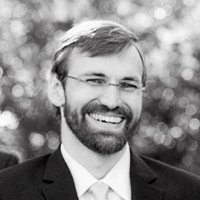
Here at last is a collection of the best work of Jan Morris, considered by many the preeminent travel writer of our age. Reviewing her most recent book, The matter of Wales, the Christian Science Monitor wrote, "With this book, Morris joins the immortals. The splendors of the prose are like Homer's sea, simply everywhere. She is an absolute master of the sentence." Included are 37 separate pieces drawn from earlier books that span Morris's entire career as well as pieces origninally written for this book. Whether taking us back to Berlin and Beirut of the 1950's or to Houston and Sydney of the 1980s, Morris depicts each place with elegance, passion and wit. She captures and conveys its complex personality and makes us see the familiar in a new light or introduces us to places off the beaten track, taking us around the globe from Sri Lanka and Cashmir to Trouville and Cozco to Wyoming and Bath. About the Author : Jan Morris is the author of such books as the Pax Britannica trilogy, Spain, Destinations, and, most recently, Journeys and The Matter of Wales .
Jan Morris was a British historian, author and travel writer. Morris was educated at Lancing College, West Sussex, and Christ Church, Oxford, but is Welsh by heritage and adoption. Before 1970 Morris published under her assigned birth name, "James ", and is known particularly for the Pax Britannica trilogy, a history of the British Empire, and for portraits of cities, notably Oxford, Venice, Trieste, Hong Kong, and New York City, and also wrote about Wales, Spanish history, and culture.
In 1949 Jan Morris married Elizabeth Tuckniss, the daughter of a tea planter. Morris and Tuckniss had five children together, including the poet and musician Twm Morys. One of their children died in infancy. As Morris documented in her memoir Conundrum, she began taking oestrogens to feminise her body in 1964. In 1972, she had sex reassignment surgery in Morocco. Sex reassignment surgeon Georges Burou did the surgery, since doctors in Britain refused to allow the procedure unless Morris and Tuckniss divorced, something Morris was not prepared to do at the time. They divorced later, but remained together and later got a civil union. On May, 14th, 2008, Morris and Tuckniss remarried each other. Morris lived mostly in Wales, where her parents were from.
I am as surprised as anyone that this book didn't work for me. I didn't enjoy it very much.
True, there were a few chapters that I did enjoy - the one on Sri Lanka, the Iceland one was ok, Istanbul was good, Cusco (Peru) ok. But largely for me, they felt dated, negative and judgemental. Written, I suppose, with British pomp, during the decolonisation of the British Empire.
Normally I don't fault "dated". They should stand as a snapshot in time, and are not subject to updating or revisionism.
Perhaps I am just not well suited to the authors style. I have read only a couple of Penguin 60s by Jan Morris - and found them three and two stars. I have few other books by this author to read, but will probably struggle for motivation, after this one.
This is a book consisting of essays about foreign travel written over a thirty-year period. About half of the essays were written before Jan Morris started becoming a transsexual around 1964 (he was formerly James Morris), though it didn't seem to make any difference in the way the essays read. Among the Cities is a good read throughout. I was particularly happy to see that she didn't fall into the usual trap travel writers fall into when writing about Los Angeles, where I live.
Some of Morris's cities weren't really cities, such as the essays she wrote about Wyoming, Iceland, Darjeeling, and Kashmir -- but they fit in well nonetheless. Some of the information, particularly from the 1950s, can tend to be dated -- but not always. A good book for armchair travelers.
Liked: Combines local history with a personal account of cities and nice prose. The author draws from an exceptional amount of travel.. Disliked: At times the author exhibits arrogance and condescension towards other cultures and peoples. Chapter delivery begins to feel formulatic after a while.. There is enormous potential in the authors decades of travel, descriptive powers and historical research, but I ended up a little underwhelmed.
This book consists of reprints of articles Morris wrote for various publications over the decades, each chapter focusing on a city, but it comes off as a dated collage of impressions. The attitude seems very post-WWII era, sometimes insightful but too often colored by the author's own prejudices, of which she seems unaware. I'd forgive that of someone who was writing in the 19th century or early 20th, but it's a little hard to take from a writer active into the 21st. The author had a chance to address some of these problems in each chapter's introductory notes (which she wrote expressly for this collection), but mostly doesn't. Added to that, not all of the chapters are particularly interesting; some are just short, bland takes that left me wondering why I'd spent the time.
The best thing about this book is Morris's thoughts about cities that I'm familiar with, even if only through having read about them. At times she captures certain insights that, although no longer relevant, give us a snapshot view into a place's history. These "historical moments" are set to words by a well-read and capable writer who knows how to turn a phrase, even if she's not always able or willing to set the historical context.
A collection of essays about famous cities or regions. Would've been so much better if they were more current. When I visited Istanbul it had 14 million inhabitants, in the 1980s when the author described it, there were 3 million.
Come for the pioneering trans author, stay for the unreconstructed imperialism? Incredibly useful as a primary source and (naturally) a document of its time and unique authorial voice, but so cringey to a modern ear that it's a harder read than it should be.
As with most collections of essays - especially one spanning such a long and varied career - this was hit or miss. I enjoy Jan Morris but this was perhaps not the best format to encounter her writing.