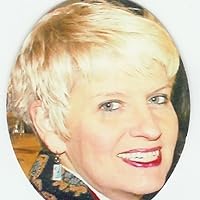
Author Melinda Worth Popham left home for Yale Divinity School at age fifty-six after a barrage of painful life events brought her to her knees and led to the discovery that pain is the Miracle Gro of spiritual growth.
Grace Period recounts the spiritual journey launched by the break-up of her marriage and her teenage daughter's descent into an intractable depression that led to an Ivy League seminary, not in pursuit of ordination to ministry but quite simply to her -plain old ordinary sacred self.- Wise, honest, and unexpectedly humorous, Grace Period is not only about Popham's study of God but about God's education of her.
-In this impeccably written memoir, Popham ... proves herself a highbrow, refined spiritual sister to Anne Lamott.
I won this book through GoodReads First Read program.
Popham writes about a time in her life where it seemed that everything was going poorly. Her marriage was falling apart, her son was off to boarding school, her daughter went through a deep depression in which nothing seemed to help and her relationship with her daughter was at a low point. When this happened she decided to leave her LA home and go to Yale Divinity Seminary. Popham covers her two years at YDS. The best part of the book for me was her experience with God when her daughter was wrecking cars left and right.
I wish she would have explained in more detail what she got out of YDS and how that changed her relationship with God. Seemed more academic then relational. She does give hope to those who are going through tough times.
Picked this up at the library, and ultimately found little to like about it. It was highly disjointed, and oddly flat, as though the writer herself had not yet done enough self-reflection to discern the arc of her life. What drew her to such an emotionally distant man in the first place? Why did she stay so long, and what ultimately led her to leave the marriage? All that is barely touched on, and then, poof, she is in Yale Divinity School. I would have like to read more of her spiritual journey, how she came to the decision to even go to divinity school in the first place -- and what was the special appeal of Yale? She talks about verbally blasting a man whose dog has no leash -- but to what end? It starts to dawn on her that she holds back her anger, but she doesn't seem to take this insight forward and develop it and show how she has changed.
A well-crafted memoir, to my mind, builds toward epiphanies in the storyteller's life. I did not see that here, alas.
Melinda Worth Popham is no ordinary writer. The memoir is a candid, down-to-earth story, laced with relevant quotes and poignant details. Part I: Holy Hell describes the unraveling of her family, and the reason for leaving Southern California to study at Yale Divinity School. In her mid-'50s, Popham says she have could have taken theology courses at a Southern California seminary, but "I wanted to go whole hog. Like doing the Hokey Pokey, I wanted to put my whole self in." Part II: Grace Period gives the reader a picture of numerous incidents experienced during her two years at YDS. "....this book never was about my study of God at Yale Divinity School," says Popham. "It's always been about God's ongoing education of me." Her MA Major was a combined study for religion and the arts for secular purposes. As a result, Popham is an excellent, intelligent writer. Hers is a story of spiritual growth that comes through in this book, and also in her book, Skywater.
Grace Period is a skillfully written, inspiring story of spiritual growth that recalls the writings of Anne Lamott, with its openness about the raw vulnerabilities of motherhood and Elizabeth Gilbert’s Eat, Pray, Love with its honest and searing search for a higher purpose in life.
Melinda Worth Popham was a privileged, middle-aged Malibu writer when her young daughter developed debilitating depression. At the same time, Popham was divorcing her emotionally distant husband. Thus destabilized, this intellectual with “spiritual inklings” signed up for a Centering Prayer Workshop, “so nervous and excited you’d think I agreed to go on a blind date with God.”
The meditation activated her awareness of the divine and, to fan that spark, she impulsively decided to trek east to attend Yale Divinity School (motto: “Faith and Intellect”) without a goal in mind. As she relates her story of loneliness and learning, this Buddhist-leaning Episcopalian shares Bible passages sparingly and delightfully references Jung, Gilgamesh, Dante and Ram Dass, among others.
Her stories—such as her admission of anxious parental over-protectiveness, and a confession that she rewarded herself with wine when she completed New Testament flashcards—endear her, while her insightful turns of phrase send us reaching repeatedly for the highlighter.
The narrative momentum slows slightly about halfway through, with a couple of self-contained stories (one chapter about a troubled child with whom Popham volunteered for several years, and another relating the disturbing day when Popham’s dark “shadow self” allowed her to verbally savage a dog walker whose pet was off-leash). But she picks up the threads of her studies— and the relationship with her daughter we are rooting for—and leaves us with a satisfying ending when she is settled back home in California.
Ultimately, this is a wise, honest, satisfying memoir. Anyone who has suffered, or lives with a modicum of spiritual curiosity, will relate to Popham’s experience and want to press this book into the hands of a friend (or 12).
One woman's path on this earth to find God in tragedy and heartache. Is usually where we find Him though He is in everything that occurs. Melinda is married with two children and a dog at the onset of this book. Is a true account of her journey not yet concluded. She and her spouse do not communicate and end up in divorce. The older son is sent to boarding school when a teenager. The daughter develops severe clinical depression in her teen years and is placed in hospital care often due to self inflicted harm. All of these events lead Melinda to Yale Divinity School and on a journey with her God and the mystics. What I loved best about her memoir is her honesty. She bears her soul ugly and all without holding back. One time while walking her dog in the woods she came across two young women with unleashed dogs and read them the riot act for not leashing. Melindas dog being afraid of strange dogs would get in a fight. As if this were not enough she meets a man with an unleashed dog and asks him in a very loud voice to leash his dog as hers is not friendly. Like most men he takes his food old time doing so and the dogs get in a fight. Melinda then unleashes her wrath on him and he in turn does same to her. Love the honesty of this encounter. We all need to see how ugly our flesh is in order to desire the One that is anything but ugly. Thanks Ms. Popham for sharing your journey to this point.
Growth in 'dark, wintry, dug-up times' Only a gifted artist can lead others into the pathway of a broken heart and move them to find in its darkest chambers a light, a shared humanity. Author Melinda Worth Popham does this in Grace Period: My Ordination to the Ordinary, a memoir describing the circumstances of her life that led her to Yale Divinity School: a beloved teenage daughter suffering an intractable depression who rejected Popham, a husband who emotionally withdrew from the marriage, their divorce, and an adored son who left home for boarding school. She honors her readers by revealing her life with its missteps and flaws, its searing loneliness, and she does it with gentle humor, muted sorrow and honesty, always offering insights that stun with their truth. She is a great writer: her language yields analogies that are luminous as an icon, some extending for paragraphs before ending in utter perfection. The author has been down on her knees more than once and her soul has passed through fire: the wonderful part is that through her story she comforts, heals, and gives courage and hope to the rest of us by deepening our understanding of being.