The gift of tongues, prophecy exorcism. . . what might such concepts mean in a complacent backwater of North London? For Richard Bowen, adolescence becomes a nightmare when his parents join the charismatic movement and find a devil in his brother.
Winner of the Somerset Maugham and Betty Trask Awards.
Born in Manchester in 1954, Tim Parks grew up in London and studied at Cambridge and Harvard. In 1981 he moved to Italy where he has lived ever since, raising a family of three children. He has written fourteen novels including Europa (shortlisted for the Booker prize), Destiny, Cleaver, and most recently In Extremis. During the nineties he wrote two, personal and highly popular accounts of his life in northern Italy, Italian Neighbours and An Italian Education. These were complemented in 2002 by A Season with Verona, a grand overview of Italian life as seen through the passion of football. Other non-fiction works include a history of the Medici bank in 15th century Florence, Medici Money and a memoir on health, illness and meditation, Teach Us to Sit Still. In 2013 Tim published his most recent non-fiction work on Italy, Italian Ways, on and off the rails from Milan to Palermo. Aside from his own writing, Tim has translated works by Moravia, Calvino, Calasso, Machiavelli and Leopardi; his critical book, Translating Style is considered a classic in its field. He is presently working on a translation of Cesare Pavese's masterpiece, The Moon and the Bonfires. A regular contributor to the New York Review of Books and the London Review of Books, his many essays are collected in Hell and Back, The Fighter, A Literary Tour of Italy, and Life and Work. Over the last five years he has been publishing a series of blogs on writing, reading, translation and the like in the New York Review online. These have recently been collected in Where I am Reading From and Pen in Hand.
Interesting novel about the Charismatic movement taking over a Church of England parish in the late 1960s and its effect on the Rector and his family. Rings true for anyone who grew up in an evangelical church that flirted with Charismatics (speaking in tongues, etc), and its obsessions with teen sexuality.
I found this to be an interesting story about a reverend and his family in a conservative English parish and their experience with the religious hysteria that occurs after the new curate in the parish introduces a kind of fevered "born again" movement into the community. We see the changes in the family, as well as in other people in the community though the eyes of a 15 year old boy trying to remain neutral until due to his love for his brother he can do so no longer.
I've started at the beginning with Tim Parks, debut novel of 1985. It impressed literary panels of the time, winning both the Somerset Maugham Award and winning the largest prize fund of those selected for the Betty Trask Award. In my view the 30 year-old Parks was a worthy choice.
The clatter of ping pong balls, claustrophobically well-meaning holiday camps, and slow-simmering intensity of devout congregational life felt observed from the inside. The text does as much as the disclaimer on the inside cover to back this up. I could almost taste the cloyingly strong orange squash.
The plot itself veered just slightly too far into the fantastical. The road to evangelic babbling didn't track for me, while the pinioned scene towards the end put me in mind of Carry on Screaming. Still, this short novella packs a lot in. Overall, it manages to be less odd job, more good job.
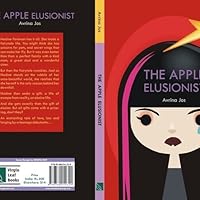
There were only two things that I liked about this book: the cover art and the brevity. I have the first American edition so the cover art is different than what is pictured here.
An interesting read. Not quite 'oranges are not the only fruit', but a powerful read nonetheless and one which explores the experiences of a young man within a cult. Painful to read at times but important.
I feel sort of cheated by this book, which supposedly looked at a 'believable portrayal of male puberty' as quoted on the back of the book. I mean, in essence, it does follow a family of man and wife with three children, but the two teenage boys seem a little caricature. The first, Adrian, the rebellious, sex-craved boy who continually questions his father knowing it gets the Vicar riled up. The main protagonist, Ricky, the other boy, is the quiet, shy, reserved type who never really has an impact.
And that is the problem really. Apart from the very end, and I mean the very end of the book, Ricky isn't really there apart from the device that over hears everything that goes on. You could quite easily take him out the story and it would still be the same.
The religious nature of this book, quite easily comparable to Philip Pullman, leaves me even more sceptical about religion, and that Parks uses subtle sarcasm and loose humour to bring this wild family alive. For they really are a wild family that don't realise that their religious doctrine is actually a form of child abuse - clearly seen in the final few pages of the book.
The Server (a much later Tim Parks novel that follows religion) is better told and better structured. But with the author's upbringing, I have no doubt that some of these events are actually true, despite the disclaimer at the front of the book stating otherwise.
Now I know that I can take Tim Parks more seriously than I used to.
This guy could and can write something better than sweet and sour accounts of his Italian family life. Not to mention those times in which Parks wrote about a season he spent having a fling with the gross supporters of an Italian football team (sic!)
This novel flirts quite a lot with the likes of David Lodge, but has a black and somehow American-like mood rather than a touch of British humour.
What I learnt from "Tongues of Flame" is the utter confirmation that those who mispronounce "Ay-men" instead of "Amen" are not the kind of people I'd like to spend time with.
For once I lived in sin, Father Tim. Behold! Once I attended a Christian gathering somewhere in Scandinavia. It happened by chance. No hosts involved. No gospel choir.
And while listening to two zealous guys named Jeremi-ah and Jebedi-ah reading chosen passages of the Corinthians aloud (by the way, does anyone know where to find those Corinthians on a pocket Bible?) I understood that the free dinner we were offered before -sheep stew- was not enough a reward for such proselitism.
Towards the end, the spirit is not just written about. It's passed to the reader. The reader is not given a choice but to hold the spirit as he/she holds the book and reads through the last few pages in an emotional reverie, angry at the protagonist, angry at everyone else. A concise and well written book. It builds to a point where you can no longer sit outside the book.
Unusual. A minister's teenage son in England in 1968 when the charismatic movement came in. A rebellious older brother. Well-balanced picture, keeps you guessing whose side he will come down on.