This first of two volumes comprising L. Frank Baum's complete series of Oz books. The stories included in this collection are "The Wonderful Wizard of Oz", "The Marvelous Land of Oz", "Ozma of Oz", "Dorothy and the Wizard in Oz", "The Road to Oz", "The Emerald City of Oz", and "The Patchwork Girl of Oz", all published between the years 1900-1914. Volume 2, the companion volume to this compilation, includes the rare "Little Wizard Stories of Oz", "Tik-Tok of Oz", "The Scarecrow of Oz", "Rinkitink in Oz", "The Lost Princess of Oz", "The Tin Woodman of Oz", "The Magic of Oz", "Glinda of Oz". The "Little Wizard Stories of Oz", seldom published anywhere, marked the break between the first and second set of tales, which Baum wrote during the years 1914-1920. The self-proclaimed Royal Historian of Oz, Baum was succeeded by others who assumed the title, resulting in a Canon of some 40 Oz titles, proper. Dozens of other Oz books have been written, in various languages around the world.
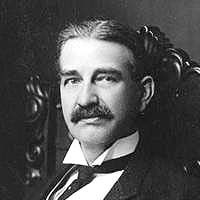
Lyman Frank Baum was an American author best known for his children's fantasy books, particularly The Wonderful Wizard of Oz, part of a series. In addition to the 14 Oz books, Baum penned 41 other novels (not including four lost, unpublished novels), 83 short stories, over 200 poems, and at least 42 scripts. He made numerous attempts to bring his works to the stage and screen; the 1939 adaptation of the first Oz book became a landmark of 20th-century cinema. Born and raised in Chittenango, New York, Baum moved west after an unsuccessful stint as a theater producer and playwright. He and his wife opened a store in South Dakota and he edited and published a newspaper. They then moved to Chicago, where he worked as a newspaper reporter and published children's literature, coming out with the first Oz book in 1900. While continuing his writing, among his final projects he sought to establish a film studio focused on children's films in Los Angeles, California. His works anticipated such later commonplaces as television, augmented reality, laptop computers (The Master Key), wireless telephones (Tik-Tok of Oz), women in high-risk and action-heavy occupations (Mary Louise in the Country), and the ubiquity of advertising on clothing (Aunt Jane's Nieces at Work).
J'ai toujours adoré les contes pour enfants, et celui-ci fait partie des grands classique. C'est un conte farfelu comme il faut, l'auteur devait sans aucun doute faire preuve d'une imagination débordante. Le pays d'Oz est un pays tout simplement extraordinaire, qui n'a de cesse de nous surprendre et de nous émerveiller. J'ai vraiment eu l'impression de retomber en enfance avec ce livre, vous savez, quand tout nous semble encore possible, quand on frémit à l'idée qu'on nous raconte une histoire parce que dans nos petites méninges innocentes il y a toujours la même idée qui revient encore et encore après chaque rebondissement, simplement parce qu'on ne sait pas encore ce qui est possible et ce qui ne l'est pas, alors on continue à ce dire après tout, Pourquoi pas ?
Seulement voilà, j'ai malgré tout grandi depuis cette époque là, et désormais il m'a quand même fallu faire abstraction de quelques détails pour véritablement me plonger dans ma lecture. A commencer par les répétitions, surtout dans la première partie, Le Magicien d'Oz. Ça m'a vraiment parut lourd, et j'ai eu du mal à avancer dans ma lecture. Heureusement, la deuxième partie est passée bien plus vite. Même s'il y avait toujours quelques détails pas très logiques que j'ai pu relever et qui m'ont un poil dérangés. Cependant, comme je le disais plus haut, je pense qu'il s'agit d'un livre destiné avant tout aux plus jeunes. Au moins je l'aurais lu, ça reste une belle histoire, sans oublier que les illustrations de Stéphane Levallois sont juste Magnifiques, il a fait un travail remarquable ! Vraiment, j'adore son coup de crayon, il est fin et raffiné, c'est un vrai plaisir à regarder. J'avouerais même que sans les illustrations pour rythmé ma lecture, j'aurais très probablement abandonné...
Toujours est-il qu'il s'agira sans conteste d'un très bon livre à lire aux plus jeunes, l'histoire n'en demeure pas moins belle et inventive, c'est simplement l'écriture qui m'a en quelque sorte lassée, et j'ai peut-être tout simplement fini par ne plus être d'humeur pour ce genre de lecture. Dommage...
As fantasy comes around to a broad audience, as kids of Harry Potter graduate to vampires, zombies, and wizards, Oz called to me. I'll grant that Baum's not created the most detailed and interwoven world. I just read a review of the 'Eragon' books, where it was mentioned that kids react more strongly to incidents and objects, classifications and such, than to plot--it's more fun to memorize the world that surrounds a hero or heroine (to fully pretend to be that person) than to follow their adventure. A sense of this lingers. Baum's not so concerned with how the four corners of his world interact or who's dependent on whom, but that everyone's there, the Emerald City's at the center, and no one dies (unless killed--this doesn't much happen). 'Oz', I find, does a bang-up job of throwing a load of different incidents to the reader--all sorts of new kinds of people, fantasy objects, and remarkable worlds. There's a common mood to all the books: someone's to venture out into Oz, to get lost, and to find new things and experiences along the way--Dorothy's the main participant, but she's not around in the second book, and is sometimes upstaged by other's adventure. The point being: someone's always finding something new in the world, and Baum's careful to comment on the newness, often having characters mention the unreality of the situation. That's the good of fantasy: lace the world with unreality, make the common seem uncommon, and experience it more fully. Murakami does this very well. It is in a way a childish thing to do--but sometimes as adults we need the reminding of what adventure and exploration (even just in our heads) might do.