

What do you think?
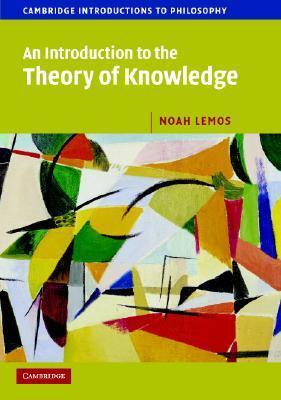
Cambridge Introductions to Philosophy
An Introduction to the Theory of Knowledge
Epistemology or the theory of knowledge is one of the cornerstones of analytic philosophy, and this book provides a clear and accessible introduction to the subject. It discusses some of the main theories of justification, including foundationalism, coherentism, reliabilism, and virtue epistemology. Other topics include the Gettier problem, internalism and externalism, skepticism, the problem of epistemic circularity, the problem of the criterion, a priori knowledge, and naturalized epistemology. Intended primarily for students taking a first class in epistemology, this lucid and well-written text would also provide an excellent introduction for anyone interested in knowing more about this important area of philosophy.
- GenresPhilosophyNonfiction
239 pages, Paperback
First published February 15, 2007
Ratings & Reviews
Friends & Following
Create a free account to discover what your friends think of this book!
Community Reviews
Displaying 1 - 14 of 14 reviews

October 9, 2014
I have used this monograph twice in my courses and have found it to be a serviceable introduction to traditional epistemological topics in analytic philosophy. The presentation is generally clear and well organized.
I am disappointed that the book does not address topics like feminist epistemology, relativism, evolutionary epistemology, Popper's theory of conjectures and refutations, and Kuhn's theory of paradigm change. In addition, when writing about Quine in the chapter on naturalized epistemology, Lemos never discusses Quine's theory of confirmation holism.
Lemos also doesn't try much to stimulate a reader's interest in the subject. Although this volume might be a good choice for a student already interested in epistemology, this book may seem dry and tedious to those who need either more examples to illustrate the concepts discussed or more verve or humor in the writing.
I am disappointed that the book does not address topics like feminist epistemology, relativism, evolutionary epistemology, Popper's theory of conjectures and refutations, and Kuhn's theory of paradigm change. In addition, when writing about Quine in the chapter on naturalized epistemology, Lemos never discusses Quine's theory of confirmation holism.
Lemos also doesn't try much to stimulate a reader's interest in the subject. Although this volume might be a good choice for a student already interested in epistemology, this book may seem dry and tedious to those who need either more examples to illustrate the concepts discussed or more verve or humor in the writing.

April 22, 2020
A very clearly written and easily readable introduction to a fairly broad range of areas of epistemology. My only direct comparison to Lemos's intro to epistemology is Audi's, and I would estimate that the former is about one billion times clearer and better structured than the latter.
Not too much else to say; this is just a very good introduction to epistemology.
Not too much else to say; this is just a very good introduction to epistemology.

June 24, 2013
This is a really nice introduction to analytic epistemology. The issues are set up in a clear (and, I think, accurate) way. It is written in an accessible style, even if the contemporary analytic style of defining and redefining in light of objections does get tedious. This text would serve as an excellent supplement to an undergraduate survey course in epistemology, and provides a decent bibliography for further research.
June 18, 2019
Good introductory text laying out many of the major theories of epistemology(at least according to the author). It's true that it's a bit short, other reviewers felt that there were some things missing, so there was definitely leeway to go to around 300-400 pages in order to include these parts, but I didn't come away from any section thinking it was poorly explained and could've done with further explanation. In fact, the opening few chapters felt a little over-explained, he repeated himself a lot and they possibly could've been improved by keeping to the pace of later chapters.
That said, it's not perfect. The author seemed to agree with a 'common sense', anti-skeptical view of epistemology and it came across in the book. Despite these views being very thin on justification, the author spent a lot of time expounding them. I don't know if this was purely bias, or if this is a popular view in philosophy. The 'Darwinian theory' was also laughably indefensible and the book would've been improved by leaving it out, assuming it's not a popular theory of course, in which case this could've been mentioned.
The one exception to what I mentioned above about no section feeling minimally explained was the section on skeptical infallibilism. The author provided a seemingly contradictory refutation of this belief and didn't at all explain what he was saying, I assume he was writing this in good faith, the rest of the book is, but he still didn't explain at all his refutation of this idea at all. There are one or two other parts like this where the author unconvincingly concludes that something is refuted or states something as the case when it seems like it isn't. For example where he claims that everyday experience of seeing a TV working is not an example of empirical science so therefore something can be a posteriori knowledge without being scientific. Observing something to be the case is the very definition of science.
Anyway, these are fairly small issues, the book is still very readable, mostly unbiased and provides a good explanation of it's topics. I highly recommend it and have not seen any better introduction to the topic.
That said, it's not perfect. The author seemed to agree with a 'common sense', anti-skeptical view of epistemology and it came across in the book. Despite these views being very thin on justification, the author spent a lot of time expounding them. I don't know if this was purely bias, or if this is a popular view in philosophy. The 'Darwinian theory' was also laughably indefensible and the book would've been improved by leaving it out, assuming it's not a popular theory of course, in which case this could've been mentioned.
The one exception to what I mentioned above about no section feeling minimally explained was the section on skeptical infallibilism. The author provided a seemingly contradictory refutation of this belief and didn't at all explain what he was saying, I assume he was writing this in good faith, the rest of the book is, but he still didn't explain at all his refutation of this idea at all. There are one or two other parts like this where the author unconvincingly concludes that something is refuted or states something as the case when it seems like it isn't. For example where he claims that everyday experience of seeing a TV working is not an example of empirical science so therefore something can be a posteriori knowledge without being scientific. Observing something to be the case is the very definition of science.
Anyway, these are fairly small issues, the book is still very readable, mostly unbiased and provides a good explanation of it's topics. I highly recommend it and have not seen any better introduction to the topic.

December 16, 2025
كالعادة، سعيد إني أكون أول مصري يكتب مراجعة على الكتاب ده.
الكتاب –بالنسبالي– جزء من خطّة قراءة كتب مدخلية لنظرية المعرفة، منهم كتاب
• Michael Huemer Understanding Knowledge,
• Dan O'brien An Introduction to the Theory of Knowledge
والكتاب ده.
من وجهة نظري ده أفضلهم
كتاب هيومر لذيذ وخفيف بس طويل، وهيومر فيه أسلوبه ممكن ميعجبش ناس كتير، أمّا كتاب أوبراين حسّيت طريقة كتابته تقيلة شوية، تقيلة مش معقّدة، الكتاب ده بقى كان لذيذ ومش طويل ولكن في نفس الوقت دَسِم مع إنه مش صعب، بس في النهاية أنا ببقى قاصد أقرا كذا كتاب مدخلي ورا بعض علشان يساعدوا بعض واللي مش واضح يوضح، وده اللي حصل فعلا
الكتاب –بالنسبالي– جزء من خطّة قراءة كتب مدخلية لنظرية المعرفة، منهم كتاب
• Michael Huemer Understanding Knowledge,
• Dan O'brien An Introduction to the Theory of Knowledge
والكتاب ده.
من وجهة نظري ده أفضلهم
كتاب هيومر لذيذ وخفيف بس طويل، وهيومر فيه أسلوبه ممكن ميعجبش ناس كتير، أمّا كتاب أوبراين حسّيت طريقة كتابته تقيلة شوية، تقيلة مش معقّدة، الكتاب ده بقى كان لذيذ ومش طويل ولكن في نفس الوقت دَسِم مع إنه مش صعب، بس في النهاية أنا ببقى قاصد أقرا كذا كتاب مدخلي ورا بعض علشان يساعدوا بعض واللي مش واضح يوضح، وده اللي حصل فعلا

January 1, 2026
4.5/5
There are a lot of really interesting topics covered here, many of which one hardly ever thinks about despite encountering them every day.
For example, what should we do when we disagree with someone else and both of us are more or less equally competent? Is there any knock-down way to establish that we aren’t actually living in a simulation? Can we know anything just off the basis of reason alone, without any type of experience?
I only knock off half a star because the author is a bit repetitive at times, though given that this is an introductory textbook, it may be forgiven.
There are a lot of really interesting topics covered here, many of which one hardly ever thinks about despite encountering them every day.
For example, what should we do when we disagree with someone else and both of us are more or less equally competent? Is there any knock-down way to establish that we aren’t actually living in a simulation? Can we know anything just off the basis of reason alone, without any type of experience?
I only knock off half a star because the author is a bit repetitive at times, though given that this is an introductory textbook, it may be forgiven.

October 7, 2020
A clear and simple introduction to epistemology, covering some of the main theories in the epistemological field. However, its lack of exploration into the metaphysics, since the book often states that it knows best, makes it a very dull and repetitive read with not much wonder and insight into the true nature of reality.
Good read for newcomers, bad read for those searching to expand their awareness on what we know.
"The only true wisdom is in knowing you know nothing." -Socrates
Good read for newcomers, bad read for those searching to expand their awareness on what we know.
"The only true wisdom is in knowing you know nothing." -Socrates

December 19, 2025
Precis som förra, är jag inte världens största epistemologi kille men det är intressant och se hur kunskap är något som konstant utvecklas och något som inte riktigt går att förklara helt och hållet med ord.
3/5
3/5
Want to Read
December 11, 2020Recommended in YouTube video "Introduction to Epistemology" by Academy of Ideas: https://www.youtube.com/watch?v=X3Icb...
This entire review has been hidden because of spoilers.
October 22, 2022
Easy read.
Easy to read. Informative introduction to the topic, with clear explanations of the key areas. Good place to start studying.
Easy to read. Informative introduction to the topic, with clear explanations of the key areas. Good place to start studying.
May 20, 2026
bra sammanfattning.

August 2, 2025
فوقالعاده است. درعین سادگی بسیار عمیق و چگاله.

August 14, 2015
A competent, if a bit uneven, introductory textbook in contemporary epistemology. Lemos adopts a fairly straightforward format: every chapter charitably discusses some theory/ies, while also providing a number of objections. There's minimal overlap -- any overlapping material becomes more evident toward the end of the book -- so you can practically read whichever chapter you find the most interesting. Lemos is a good writer, one that has honestly tried to write a comprehensive introductory textbook.
Yet, there are important omissions. For instance, knowledge-first epistemology is nowhere to be found, while the chapters on the a priori and naturalized epistemology feel underdeveloped -- the latter, in particular, seemed to me overly biased too. Moreover, while certain chapters are fairly dense and rewarding (Tripartite theory & the Gettier Problem, Coherentism and Foundationalism), others just pack too many things together, thus giving a very superficial overview. For example, the chapter on scepticism manages to include discussions on Relevant Alternatives, Moorean Common Sense, and Contextualism in less than 25 pages.
Despite all that, I would still recommend this book to the uninitiated who wants to supplement his understanding of the field and get a better grip on the very general discussions that take place between troubled, contemporary epistemologists.
Yet, there are important omissions. For instance, knowledge-first epistemology is nowhere to be found, while the chapters on the a priori and naturalized epistemology feel underdeveloped -- the latter, in particular, seemed to me overly biased too. Moreover, while certain chapters are fairly dense and rewarding (Tripartite theory & the Gettier Problem, Coherentism and Foundationalism), others just pack too many things together, thus giving a very superficial overview. For example, the chapter on scepticism manages to include discussions on Relevant Alternatives, Moorean Common Sense, and Contextualism in less than 25 pages.
Despite all that, I would still recommend this book to the uninitiated who wants to supplement his understanding of the field and get a better grip on the very general discussions that take place between troubled, contemporary epistemologists.

July 18, 2010
A Decent itnro. Wish there was more on nozicks tracking theory and contextualism.
Displaying 1 - 14 of 14 reviews