Now in paperback, this stunning collection of elegies--a finalist for the National Book Award--bears witness to the small beauties and inevitable losses of our transient life.
Elegy for a Broken Machine is a son's lament for his father. It takes us from the luminous world of childhood to the fluorescent glare of operating rooms and recovery wards, and into the twilight lives of those who must go on. In one poem Phillips watches his sons play "Mercy" just as he did with his hands laced, the stronger pushing the other back until he grunts for mercy, "a game we played // so many times / I finally taught my sons, // not knowing what it was, / until too late, I'd done." Phillips documents the unsung joys of midlife, the betrayals of the human body, and his realization that as the crowd of ghosts grows, we take our places, next in line. The result is a twenty-first-century memento mori, fashioned not just from loss but also from praise, and a fierce love for the world in all its ruined splendor.
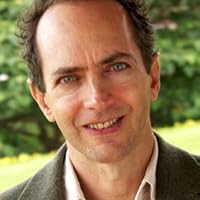
Patrick Philips was born in Atlanta, Georgia. He earned a BA from Tufts University, an MFA from the University of Maryland, and a PhD in English Renaissance literature from New York University. He is the author of the poetry collections Chattahoochee (2004), winner of the Kate Tufts Discovery Award, Boy (2008), and Elegy for a Broken Machine (2015), a finalist for the National Book Award. Through his poems, Philips frequently tells stories of earlier generations of his white, working-class family’s life in Birmingham, Alabama; in his work, he also grapples with race relations, the complex and violent dynamics of family relationships, and parenthood. In an interview for storySouth, Philips noted that he has found working in traditional poetic forms to be “generative” while acknowledging a poem’s need for both narrative and song.
His honors include a fellowship from the National Endowment for the Arts, a Guggenheim Fellowship, and a Fulbright Scholarship to the University of Copenhagen. He won the American-Scandinavian Foundation’s translation prize for his translations of the work of Danish poet Henrik Nordbrandt.
I read this because it is on the longlist for the National Book Award in poetry. I thought the first Elegy (title poem) was the strongest, a nice blend of memories of his father intertwined with his death. Much of the feelings in this volume have to do with death, and the pattern of life he sees as he gazes at his own children.
Beautiful, understated, and masterful in their simplicity, the poems Phillips writes here work immediately but also manage to convey great depth of emotion and insight. Worthy of rereading.
It is seldom I find poems that move me, let along those I wish I had written. Patrick Phillips is a major exception. I think the problem is that many contemporary poets write from their heads using unnecessarily complex or obscure language; the reader is left to puzzle out their meaning, but rarely is there an emotional response.
Joni Mitchell, one of the most poetic of all songwriters, feels similarly, summing up such poets with a quote from Nietzsche: "They muddy the water, to make it seem deep.”
These poems of Patrick Phillips, however, are simple, clear, and from the heart. If Joni Mitchell wrote free verse, I imagine it would read something like them. We need more poets like Patrick Phillips; maybe then people would turn to poetry as well as music to find artistic expression that is relevant to their lives.
Old Love
You, lovely beyond all lovely, who
I've loved since I first looked into
your blue beyond blue eyes,
are no longer anywhere on earth
the girl these words call out to,
though never, since, have I not been
a darkening wood she walks through.
Mattress
We wrapped it in plastic and strapped it with duct tape;
we wrestled it out to the curb where, dusted with snow,
it slumped like a body the garbagemen fed
through the maw of a truck that they drove
out the tunnel, to Jersey— to the dump where a thousand gulls keened,
hovering over the map of old stains where we'd dreamt, and read, and made love—
where we sweated out fevers and fought, and gave up,
and once gazed at our blinking three-day-old babies
never thinking it would end full of maggots and fleas,
full of suckling rats and blind moles— or whatever out there
sleeps where we slept, as it sloughs its guts into the dirt.
My criteria for poetry aren't sophisticated or academic.
They're simple:
Does it remind me of experiences (often sensory) from my own life that I've forgotten?
Does it steer my attention to the observed rather than the observer?
Does it try to describe something that is impossible to summarize or understand?
Does it inspire me to write poetry?
Patrick Phillips's work meets all of these. He finds the mundane rich, the past alive, and family connections sacred. In this collection, he observes the inevitability of death. Technology keeps advancing, but it will never be able to remove the inevitability of our endings -- or provide the comfort we yearn for when the lives of those we love wind down before our eyes.
From "Elegy for a Broken Machine":
I keep asking where he'd been, / until he put down a wrench / and said Listen: / dying's just something // that happens sometimes
He untangles fragility from the urge to protect so we can glimpse their individual threads.
From "Four Haiku":
Out the window, rain. Behind the paper curtain someone worse off moans.
The only problem I have with poetry collections by Patrick Phillips is the amount of time between them. To get around this, I'm planning to read his translations of Henrik Nordbrandt in When We Leave Each Other.
Picking out poetry is not like selecting a novel. How the poet writes, and what their project is matters in a very important way with poetry collections. I found this collection by chance, and thought it might be worth a shot, without knowing anything about Phillips or his work. This collection was a shot in the dark, where I felt at home in these dark poems about death, and felt ready to leave, only because it became too much by the end. But isn't that just the human condition? To not want to dwell in darkness and death too long? I'd argue that the first two sections were stronger for me, and that the approachability of these poems is really what sold it.
Some poetry collections you give a single read. Some, much fewer you realize if you read a lot of poetry, are masterworks of voice, tone, subject, verbal brilliance. Phillips' most recent warrants holding onto, for second readings and beyond. He brings a focused consideration for matters closest to his heart; his previous books have touched on much of the same emotional geography. Phillips brings some formal poetics to bear, but not in a contrived, forced manner; it always adds to the content rather than say to the reader, "see what I can do!" Over the years of reading poetry (several decades now) I've grown weary of the first person, 'dramatic' poems that seem to ask for credit for unearned emotions. You know usually how to spot them: the concluding line of each poem will routinely go for the gut shot, or brilliant epiphany. Sorry...you can only realize you must change your life once or twice. Phillips though, he gives us genuine stuff of life in words only possible in true poetry. I may even memorize one or two of them.
A snapshot of moments in life not to be forgotten. Brilliant. While I read this in a short time, this is a beautiful work of poetry that will be read many times in the future. It is hard to pick a favorite. "Elegy to Gasoline" may be my favorite poem in Patrick's work as it was surprising and masterful in its uniqueness.
The book is divided into three sections. The first contains poems about a specific death, the death of the speaker’s father. The second section widens the view to include poems about other deaths, while the third zooms out even further to poems about other kinds of losses. These poems are clear, sharp, and plain-spoken, and the emotion is very understated, so much so that it was sometimes easy to miss if I let my mind wander. Phillips is a very good poet, and from what I could tell when I met him, a fine man.
The subject of this book of poems should not surprise a reader since the word Elegy is in the title. But it is more than just poems about those who have died. The broken machine is, of course, the human body, as indicated by the cover. The poet pricks the reader with insights on many levels.
Does it speak to my attention span they poems move me most when they give me lines short enough to fit on a T-shirt? Is it simple of me to love the straightforward verse over that which is considered dense and difficult? If either are true, I don’t really care, as this collection is fuller than every poem would have you believe. Heartfelt and swimming with nostalgia, Patrick Phillips gives us something really dang special in as few words as he can muster. A must read for literally anyone, as you can finish, as I, the slowest reader in all the land, did, in under an hour.
Elegy for a Broken Machine by Patrick Phillips is a warm and reverent soliloquy about the mystery of physical decline and the intendent mortality of the human body. Several of the poems detail the illness of his father and his slow death. There are also poems dealing with his relationship his son and their relationship. This collection is a moving and slightly melancholy collection that is well worth your time.
Each of these poems creates such a perfect little snapshot of a moment, or a series of moments. Phillips writes about the death of his father with such emotion and clarity, and finds ways to bring tangential moments into the narrative, like in "Once," where he talks about noticing the grief of another man who has just lost his father.
Favorites: Once, The Singing, and Work-Clothes Quilt. That last one in particular, whew. That really got me.
I really enjoy Phillips as a poet. This is my fourth book of poetry by him. It might be my least favorite, but it was still very enjoyable. Phillips went heavy with the Elegy theme throughout the book. It is a pretty quick read. I appreciate Phillips' use of descriptive but everyday language is always appreciated and enjoyable.
I listened to a radio interview with Patrick Phillips when his book Blood at the Root was released. The host talked about his poetry and asked that he read one from Elegy For A Broken Machine. I enjoyed what he shared and decided to pick it up and I'm not disappointed. Well done collection.
about death, about memories, about sons and fathers, about missing, about nostalgia, about sadness, about happiness. this collection of poems were simple yet very emotional. it was an instinct-pick for me, without any knowledge about the poet, but I'm glad I picked it up.
I wanted to like this book and I thought its subject matter (and metaphor of the human body being a broken machine) were fascinating, but I felt as though this collection lacked the urgency and emotionally evocative nature of writing I tend to appreciate and seek out in poetry.
The clerk at the store had the author as his professor. I bought it on his recommendation. In turn I recommend it to you! My favorites are "Mattress," "Once," "The Man," and "Elegy for a Broken Machine." The whole is greater than the sum of its parts for this collection.
I really liked this collection of poetry. The poem "Aubade" in particular made me stop and think for a while. It's plainly written but creates powerful imagery, which made it more impactful and relatable to me.
I loved the simplicity and the deep meaning in each poem. I felt the loss the writer tries to transmit, but not only the loss of a loved one but of stages, moments in life, people, memories.
"The singing" and "Aubade" were my favorites but I loved almost the whole book.