

What do you think?
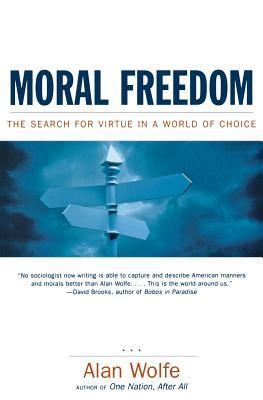
Moral Freedom: The Search for Virtue in a World of Choice
"No sociologist now writing is able to capture and describe American manners and morals better than Alan Wolfe."―David Brooks What is the difference between right and wrong? What does it mean to lead a good life? How binding is the marriage vow? What are your obligations to an employer? To your friends? To yourself? Is it always immoral to tell a lie? "[A]n alert and knowledgeable social critic," Alan Wolfe asked Americans around the country such questions in "his intriguing exploration of our collective character, testing prevailing notions of the culture war" ( New York Times Book Review ). Focusing on the traditional virtues of loyalty, honesty, self-restraint, and forgiveness, Wolfe "strips away ulterior agendas to give us a look at the raw material of the American conscience" ( New York Observer ) and discovers that "Americans...have not so much left traditional morality behind as they have redefined it in ways that suit their individual tastes, purposes, and situations" ( Washington Post ). "Wolfe is right that [the search for moral freedom] is a revolution...a very American revolution."― Newsweek
- GenresPhilosophyNonfiction
268 pages, Paperback
First published April 17, 2001
About the author
Alan Wolfe
71 books24 followersAlan Wolfe is professor of political science and director of the Boisi Center for Religion and American Public Life at Boston College. The author and editor of more than twenty books, he is a frequent contributor to the New York Times, Harper's, and the Atlantic. He lives in Cambridge, Massachusetts.
Ratings & Reviews
Friends & Following
Create a free account to discover what your friends think of this book!
Community Reviews
Displaying 1 - 1 of 1 review

July 12, 2014
A compassionate / sympathetic (I think there is a better word, but I cannot readily locate it) look at the everyday ethics of everyday people--middle America--finds themes that unite people who think they would be very different. As much as one claims to hew to the past or to the future, conservative or liberal, it is very hard to escape defining yourself in the language of the present day. The book finds that it is a particular thing called "moral freedom," something he describes in all the pain of existentialism but without using such an academic word. In any case, a brilliant book for presenting people as they understand themselves.
Displaying 1 - 1 of 1 review