What do you think?
Rate this book


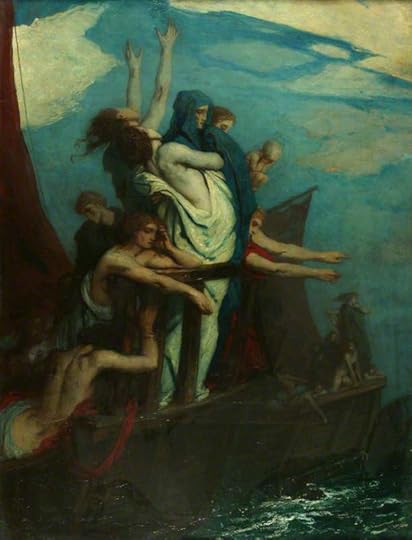
Among surviving Greek tragedies only Euripides' Trojan Women shows us the extinction of a whole city, an entire people. Despite its grim theme, or more likely because of the centrality of that theme to the deepest fears of our own age, this is one of the relatively few Greek tragedies that regularly finds its way to the stage. Here the power of Euripides' theatrical and moral imagination speaks clearly across the twenty-five centuries that separate our world from his. The theme is really a double one: the suffering of the victims of war, exemplified by the woman who survive the fall of Troy, and the degradation of the victors, shown by the Greeks' reckless and ultimately self-destructive behavior. It offers an enduring picture of human fortitude in the midst of despair. Trojan Women gains special relevance, of course, in times of war. It presents a particularly intense account of human suffering and uncertainty, but one that is also rooted in considerations of power and policy, morality and expedience. Furthermore, the seductions of power and the dangers both of its exercise and of resistance to it as portrayed in Trojan Women are not simply philosophical or rhetorical gambits but part of the lived experience of Euripides' day. And their analogues in our own day lie all too close at hand.
This new powerful translation of Trojan Women includes an illuminating introduction, explanatory notes, a glossary, and suggestions for further reading.
128 pages, Paperback
First published January 1, 416
"My body rocketh, and would fain
Move to the tune of tears that flow:
For tears are music too, and keep
A song unheard in hearts that weep...
...O, I will think of things gone long ago
And weave them to a song, like one more tear
In the heart of misery."
"O ye Argives, was your spear
Keen, and your hearts so low and cold, to fear
This babe ? 'Twas a strange murder for brave men!
For fear this babe some day might raise again
His fallen land! Had ye so little pride?"
"Called me kind names, and promised: 'Grandmother, When thou art dead, I will cut close my hair.
And lead out all the captains to ride by Thy tomb.'
Why didst thou cheat me so? 'Tis I,
Old, homeless, childless, that for thee must shed
Cold tears, so young, so miserably dead.
Dear God, the pattering welcomes of thy feet,
The nursing in my lap ; and O, the sweet
Falling asleep together! All is gone.
How should a poet carve the funeral stone
To tell thy story true?"
"Lo, yonder ships: I ne'er set foot on one.
But tales and pictures tell, when over them
Breaketh a storm not all too strong to stem.
Each man strives hard, the tiller gripped, the mast
Manned, the hull baled, to face it: till at last
Too strong breaks the o'erwhelming sea: lo, then
They cease, and yield them up as broken men
To fate and the wild waters…"
"Often and often did I charge thee ;
'Go, My daughter ; go thy ways. My son [Paris] will know
New loves. I will give aid, and steal thee past
The Argive watch. O give us peace at last,
Us and our foes!'
"Thy thought doth walk with mine in one intent.
'Tis sure ; her heart was willing, when she went
Forth to a stranger's bed. And all her fair
Tale of enchantment, 'tis a thing of air!"
Hommes de l'Europe,
vous méprisez l'Afrique et l'Asie
et vous nous appelez barbares, je crois,
Mais quand la gloriole et la cupidité
vous jettent chez nous,
vous pillez, vous torturez, vous massacrez.
Où sont les barbares, alors ?
Et vous, les Grecs, si fièrs de votre humanité,
Où êtes-vous ?
Je vous le dis : pas un de nous
n'aurait osé faire à une mère
ce que vous me faites à moi,
avec la calme de la bonne conscience
(Men of Europe
You despise Africa and Asia
And I think you call us barbarians
But when your greed and love of glory
Bring you to our shores
You pillage, you torture, you kill.
Who are the barbarians then?
You Greeks, so proud of your civilization,
Who are you?
I tell you this: not one of us
Would have dared to do to a mother
What you are doing to me
Without it even disturbing your conscience)

در چشم من مردگان چناناند که گویی هرگز به دنیا نیامدهاند.
مردن برای من بسی برتر از زیستن به اندوه و عذاب است.
چرا که مردگان را اندوهی نیست
و از کشاکش دوران برکنارند.
لیک آن کس که از بام نیکبختی به کام سختی میاوفتد
دلی آماج افسوس دارد و یاد ایام کامکاری قرارش میرباید.
کاساندرا: همانا من خونبارترین عروسی خواهم شد
که آگاممنون نامدار به حجله برده است.
بدان که خواهمش کشت
و دودمانش به آتش خواهم کشید؛
آنچنان که دودمان من تباه کرد.
و کین پدر و برادر از او بازخواهم ستاند.