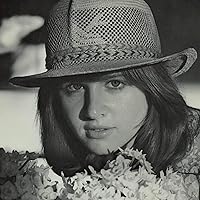
Today, most remember “California Girl” Lillian Frances Smith (1871–1930) as Annie Oakley’s chief competitor in the small world of the Wild West shows’ female shooters. But the two women were quite different: Oakley’s conservative “prairie beauty” persona clashed with Smith’s tendency to wear flashy clothes and keep company with the cowboys and American Indians she performed with. This lively first biography chronicles the Wild West showbiz life that Smith led and explores the talents that made her a star.
Drawing on family records, press accounts, interviews, and numerous other sources, historian Julia Bricklin peels away the myths that enshroud Smith’s fifty-year career. Known as “The California Huntress” before she was ten years old, Smith was a professional sharpshooter by the time she reached her teens, shooting targets from the back of a galloping horse in Buffalo Bill Cody’s Wild West. Not only did Cody offer $10,000 to anyone who could beat her, but he gave her top billing, setting the stage for her rivalry with Annie Oakley.
Being the best female sharpshooter in the United States was not enough, however, to differentiate Lillian Smith from Oakley and a growing number of ladylike cowgirls. So Smith reinvented herself as “Princess Wenona,” a Sioux with a violent and romantic past. Performing with Cody and other showmen such as Pawnee Bill and the Miller brothers, Smith led a tumultuous private life, eventually taking up the shield of a forged Indian persona. The morals of the time encouraged public criticism of Smith’s lack of Victorian femininity, and the press’s tendency to play up her rivalry with Oakley eventually overshadowed Smith’s own legacy.
In the end, as author Julia Bricklin shows, Smith cared more about living her life on her own terms than about her public image. Unlike her competitors who shot to make a living, Lillian Smith lived to shoot.
Who knew? The tale of a girl who grew up not only enjoying shooting, but was very talented. Its such a different perspective when you realize Annie Oakley not only had fierce competition, but was actually more like second best. Lillian wasn't in it just for the public notoriety; she was an athlete in a sport that she took quite seriously and made a living at it. She also found ways to keep doing it differently. She was smart, resourceful and amazingly gifted. I also found the history of California so interesting. Having grown up there, we were never taught about much of the history other than: there was a Gold Rush and Missions. So not only was it an enjoyable account of an intriguing historical figure, but also drew a completely new picture for me of my home state
For almost forty years, I have studied and researched women of the nineteenth-century AmericanWest, always looking for a subject for a fictional biography. But I never heard of Lillian Smith. Now, historian Julia Bricklin has shed light on this neglected woman's career, bringing her out of the shadows and shattering some misconceptions along the way.
If known at all, Smith is known as Annie Oakley's rival. But the two shootists were vastly different. Oakley was demure, petite, married for a lifetime to Frank Butler, content to retire to her dressing room or tent after a show: Smith's figure was generous, and she was flamboyant, a woman who lived life large but had trouble staying with one man. Bricklin suggests that the rivalry between the two may have been exaggerated by the press, but elsewhere the historian provides a quote to the effect that Annie was nervous enough about Lillian joining Buffalo Bill's show that she subtracted six years from her age, giving herself the advantage of more youth. It was probably Annie and Butler who got Lillian ousted from her early career with the Buffalo Bill Wild West, after the troupe's successful visit to England and command performance before Queen Victoria. And finally, there's a suggestion that Annie and her husband were responsible, by innuendo, for Lillian's lasting and unjust reputation as a slovenly alcoholic. Although never as famous, Lillian is praised by many as the better shootist of the two, An accomplished horsewoman, she perfected the act of shooting from horseback, an act Annie never duplicated.
After her ouster from Buffalo Bill Cody's show, Lillian for many years was in the uncertain and difficult world of the free-lance artist, working small local shows and living from job to job. Lillian's father, Levi, managed her career during this period and might best be described as a jack-of-all trades who saw profit in his talented daughter's skill and manipulated it to the best of his ability. Apparently, he was not nearly as successful a manager at Oakley's Frank Butler, and Lillian eventually severed her ties with him—twice.
Fairly early in her career, Lillian took the identity of Wenona, a "rehabilitated" Sioux princess, abandoning her Anglo identity permanently, except for a brief spell around 1908. Although she probably darkened her skin with greasepaint, her naturally dusky complexion and dark hair made the transformation plausible. She became one of many show-business Anglos to imitate Native American identity, a fact somewhat resented by the real Indians who performed regularly for less attention and pay.
Lillian Smith was not as successful in love and marriage as Annie. Lillian first eloped with rodeo performer Jim Willoughby, a marriage that became public in spite of the bride's attempts to deny it. She threatened to sue Willoughby if he revealed it. Father Levi Smith was angry about the marriage, because he thought it signaled the end of her career. The marriage was not long-lasting and when it dissolved, Lillian returned to California and Levi's management. Perhaps her most outrageous stunt during this period was a foolhardy trip alone in a small (6.5 x 3.5 feet) boat following the Columbia River to the Pacific and south to San Francisco. Some reporters claimed she had made the boat herself.
Smith's second marriage was to Frank Hafley. Together they invented and introduced the persona of Wenona, often in fictional re-enactment dramas. Hafley formed California Frank's Wild West Show and joined his small troupe first to the Pawnee Bill show and then the Miller 101. The marriage lasted about eight years, until Hafley was overly attracted to Mamie Francis, who dove headfirst, on the back of her horse, sixty feet from a platform into a tub of water. Bricklin hints that Wenona carried a torch for her ex-husband after that. She had no children, but there is the possibility she had a baby in seclusion—the dates make it plausible—and that child later became Nellie, the younger sister she was particularly close to.
In the 1920s Smith, then in her fifties, suffered from declining health, much of it due to her career in rodeo, with ailments shared by many other rodeo performers. She was arthritic and probably deaf, and developed congestive heart failure. A severe case of food poisoning weakened her and a few years later, in February 1930, she died of double pneumonia. The world she knew, the men she had worked with were all gone. Moving pictures had heralded the end of Wild West shows. Bricklin writes that "Annie Oakley was the woman who shot to make a living, and...Lillian Smith was the woman who lived to shoot."
Bricklin's study is thorough, relying on archival sources, books both popular and scholarly, periodicals and interviews. Occasional letters, sometimes signed by Lillian, sometimes anonymous, provide clues to her thinking and life, but there are still gaps. Bricklin writes in a readable, accessible style, though, like many scholarly studies, the print on the page is too dense for easy reading.
Bricklin has done Lillian and the history of women in the American West a great service by bringing the shootist life to public attendtion.
by Judy Alter for Story Circle Book Reviews reviewing books by, for, and about women
Lillian Frances Smith was a gifted athlete in a time when women’s athletic competition didn’t exist, and opportunities and avenues for independent women to earn a living and survive were limited.
She was a flashy “California Girl”, initially a teen rival (though likely a better shot) to Annie Oakley, before sweet prairie Annie and her manager allegedly had the robust ass-kicking Lillian kicked out of Buffalo Bill’s Wild West Show in 1889. Perhaps Lillian’s poor performance at the Wimbledon shooting competition after she and Annie shot for Queen Victoria had something with her leaving the Wild West show? Or did the famously slimy press twist facts and build up a rivalry? The history is murky, but author and historian Julia Bricklin clarifies, meticulously researches and sifts through the material to present Lillian’s hard-scrabble tough-talking, sharp-shooting biography, a rich cultural record of the American West.
In 1907 Lillian moved to Oklahoma and performed with the Miller Brothers 101 Ranch Wild West Show, faking Native American ancestry as fictional Princess Wenona, Sioux princess. She continued to freelance with other shows as she was able, until retiring in about 1920. Throughout her life she fell in love with wrong men and some of the right men, and was in at least four marital and common-law relationships all ending in divorce. She put herself in relationships that enabled her to maintain her autonomy and follow her passion and shoot. She never officially had a child, but some speculate that she may have had a daughter. She made great friends (like Mamie Francis, a fellow shooter who married one of Lillian’s ex-husbands) and had a long career as part of the nomadic Wild West and vaudeville performance circuit before passing in 1930, at about 59.
If Annie Oakley was a sharpshooting lady-like Nancy Kerrigan, Lillian Smith was the more athletic, tough-talking, hard-loving Tonya Harding - except Annie was a little more strategic and polished, Lillian was a little more naive and both struggled to make their way in a world where the press and the system worked against them. Both had long careers and opened doors for women who liked to shoot. But before this book, Lillian’s extraordinary ordinary life was largely forgotten.
Julia Bricklin has written a remarkable biography of a woman whose life experiences and personality were inextricably entwined with the vitality and poignance of American frontier myth. Bricklin celebrates Lillian Smith’s unusual career and memorializes her fascinating life with care and justice. I loved the photographs of the Wild West Show, of Lillian’s rehearsing and her Princess Wenona character; of Lillian, her horses, her colleagues, and her guns.
This is a do-not-miss biography for fans of the American West mythology, and especially for anyone who appreciates sharp-shooting plain-talking hard-riding women.
Meticulously researched account of Lillian Frances Smith—extraordinary sharpshooter, and Annie Oakley’s biggest rival. History has allowed Smith to fade in the shadow of Oakley, when in fact, Smith was a strong woman who played second fiddle to no one.
Pushed into the limelight at a young age by her father, Smith had the ambition and talent to stay there. Over a long career, she reinvented herself when necessary, and found love (in many places) along the way. An accomplished trick shooter and equestrienne, Smith headlined Buffalo Bill Cody’s Wild West Show, and other similar shows during her lifetime. Yet, the rigors of such a life took its toll.
Julia Bricklin has done an outstanding job in writing the only comprehensive biography of Lillian Frances Smith, a woman unafraid to defy the Victorian values of her time. I highly recommend America’s Best Female Sharpshooter to anyone interested in learning more about a unique and intriguing woman of America’s Old West. Bricklin’s biography will no doubt serve to finally bring Smith the recognition she truly deserves.
A fun and admirable effort to document the life of a woman who defied odds and was as much the captain of her own destiny as she was a vocal champion of her own skill. Definitely worth reading!
The title is a bit of a misnomer: the word “female” shouldn’t be there. The author makes clear that Annie Oakley, under the direction of her husband-manager, had no intention of jeopardizing the public’s misperception that she was the better shot by engaging in a head-to-head contest with Lillian Smith. Similarly, the great male competitive marksmen of the day such as Adam Henry Bogardus and William Frank “Doc” Carver ignored entreaties by Lillian's father and later her boyfriend to engage in a contest. The word “fall” in the subtitle is also a poor choice. “Decline” might have better characterized the slow loss of public interest in seeing the same shooting feats and wild west shows again and again especially after the advent of vaudeville and motion pictures.
Not only a biography of a little known but highly talented entertainer, it describes the workings of the wild west shows and captures the milieu of the post-frontier West.