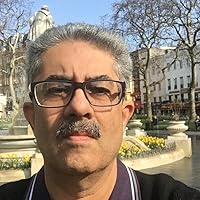
K. Natwar Singh is an Indian politician and former cabinet minister. He was born on 16 May, 1931, and educated at Mayo College, Ajmer; Scindia School, Gwalior; St. Stephen’s College, Delhi; and Corpus Christie College, Cambridge. He joined the Indian Foreign Service in 1953 and has served in Beijing, New York, Warsaw, London and Lusaka. He received the Padma Bhushan in 1984. He is married to Heminder Kumari of Patiala, and their son, Jagat Singh, following in the footsteps of his father, has also entered politics.
That one star is just for the amount of research that has gone into writing this book. I picked it up only because I recently read somewhere that the Maharaja of Patiala was the first Indian to own a private aircraft. I wanted to know the backstory, guessing the Maharaja must have been an avid aviator, if not a pilot himself.
What I got was page after page about the Maharaja's extravagant lifestyle and his uncontrolled excesses. And how he would complain to anyone who would listen, including the viceroy's wife, about how he had always been misunderstood by others! Talk about royal hardships!
I got to know details that I absolutely was not looking for: how many cars he owned (more than 40 Rolls-Royces), how many horses he had (more than 500), how many wives he had (8), and how many children he fathered (88 as per recorded count).
The book also showed some interesting (and not flattering) aspects of the colonial rule where, even after knowing all his fallacies, they not only allowed him to rule (which he desperately wanted to, anyway), but also encouraged his larger-than-life persona by making him an honorary lieutenant-colonel, and including him in the war cabinet! Oh, and making him a captain of a cricket team!
By the time he passed away (in 1938), the struggle for Independence in India had reached even the remotest corners of India. But clearly, the Maharaja was living in a different world altogether, untouched by all this!
Oh, and by the way, no mention of that aircraft anywhere in the book! Who keeps track of all the toys that wealthy boys play with, anyway?
The magnificent maharaja (Hardcover) by K. Natwar Singh- This book describes the life of Maharaja Bhupindar Singh (MBS) of Patiala. The book is an output of Natwar Singh's rigorous hard work, having read all available files, letters and documents public, personal, secret and confidential related to his grandfather-in-law and making an outline of the man's personality and times. However, the book is a chronicle of the events in the life of the Maharaja. One has to dig really deep for a revelation about the Maharaja whose life was spent in splendour and festivity, there was never a dull day (or night) in MBS's life. Singh remains a faithful grandson-in-law and stays away from gossip and malice. Readers will enjoy the chapters - 'Cricket, Ranji and Patiala' and 'Churchill and the Indian Princes' most. The rest of the book of more description. The chapter 'Alcohol and Protocol' only briefly spoke about Patiala Peg. The author devoted only a page and a half on MBS's drinking preferences and offers no associated anecdotes. Overall, the book is a scholarly work, one meant only for scholars and not for a leisurely read. There have been many books written about the life of Maharaja MBS of Patiala. This book clears the confusions created about the life of MBS.
For a lively personality like Maharaja Bhupindar Singh (MBS), the book is quite dull. The book is an output of Natwar Singh's rigorous hard work, having read all available files, letters and documents (public, personal, secret and confidential) related to his grandfather (in-law) and making an outline of the man's personality and times. However, I found the book is nothing more than a chronicle of the events. One has to dig really deep for a revelation about the Maharaja whose life was spent in splendour and festivity, there was never a dull day (or night) in MBS's life. Singh remains a faithful grandson (in-law) and stays away from gossip and malice (hence disappoints). I enjoyed the chapters - 'Cricket,Ranji and Patiala' and 'Churchill and the Indian Princes', rest of the book was a drag. Much to my disappointment, even the chapter 'Alcohol and Protocol' only briefly spoke about Patiala Peg. The author devoted only a page and a half on MBS's drinking preferences and offers no associated anecdotes (many still does rounds in Patiala). Overall the book is a scholarly work, one meant only for scholars and not for a leisurely read.