Jump to ratings and reviews
Rate this book

Des femmes écrivent l'Afrique

Rate this book

The acclaimed Women Writing Africa project "opens up worlds too often excluded from the history books" (Booklist) and is an "essential resource for scholars and general readers alike" (Library Journal). It reveals the cultural legacy of African women in their own words, in never-before- published texts that include communal songs and lullabies, letters and speeches, poetry and fiction.

Representing 20 languages and 12 countries, volume 2 covers western Africa, where most African Americans find their roots. The collection presents an epic history of the region through the eyes of its women, from the age of African kings through colonialism and independence.

Volume 1 of the series, Women Writing Africa: The Southern Region, is also available; volumes 3 and 4 will be published in 2006.

610 pages, Paperback

First published August 1, 2005

Loading...
Loading...

About the author

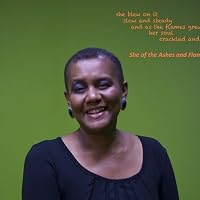
Esi Sutherland-Addy

7 books2 followers

Ratings & Reviews

What do you think?
Rate this book

Friends & Following

Create a free account to discover what your friends think of this book!

Community Reviews

5 stars
8 (36%)
4 stars
6 (27%)
3 stars
8 (36%)
2 stars
0 (0%)
1 star
0 (0%)
Displaying 1 - 3 of 3 reviews
Profile Image for Friederike Knabe.
400 reviews192 followers
December 3, 2011
Opening this substantial volume - the second of four in the series " Women Writing Africa", a project conceives in 1990 by members of the Modern Language Association, the reader immediately realizes that this is not a book to read from page 1 to the end. Instead, browsing, picking up and getting absorbed in a story or a poem, is the most likely reaction. It is a companion book for any interested reader curious or knowledgeable about West African writing. Its great value lies in this being a very rare, rich reference collection of West African women's writing, going back to the eighteen hundreds and covering any form of writing, from poetry and songs to letters to stories. It took years to bring the material together and the editors and many contributors deserve praise for having achieved this rich compilation of thought, experience and - in short - glimpses into life, of a great diversity of peoples and cultures. The book's index is very well structured and easy to use, first by broad time-lines and within those, by themes. The themes cover the domestic life from rituals to love songs to lullabies, the various work situations for women, political issues with the rise of nationalism in countries to "Negotiating New Social Identities" and more. A comprehensive list of sources and bibliographic references assists those who want to pursue one or the other author's writing or theme in substantive ways.

In their highly informative preface the editors place the collection into the wider historical and cultural contexts and address the question a reader might have, why concentrating on "women writing"? They also stress that the selection was difficult, given "the intense richness and complexity of the West African Region... a mosaic of ethnic groups, languages, cultures, histories, and countries". Twelve "nations" were eventually chosen to be featured by their writers, poets and thinkers: Benin, Burkina Faso, Cote d'Ivoire, Gambia, Ghana, Guinea-Conakry, Liberia, Mali, Niger, Nigeria, Senegal, Sierra Leone. Especially helpful are theme-focused introductions, especially relating to more historical themes that add to the understanding of meaning and context. For example, the brief poem "Bamako" - then the capital cit of French Sudan and now of Mali, expresses the wailing of the women as their lovers depart for Bamako; for them the "city was close to hell":

Bamako!
I do not bemoan my mother. I do not bemoan my father. I bemoan my lover who has no clothes To go to Bamako And that is tough!

[Friederike Knabe]
Profile Image for Philippa Namutebi.
Author 1 book4 followers
June 12, 2017
This is not a book that one reads all in one go. I have been dipping in and out for quite a while... I am not sure I will finish it... but I think I will often refer to bits of it.
Profile Image for يوسف عبداللطيف.
60.4k reviews18 followers
June 30, 2026
In Women Writing Africa: West Africa and the Sahel, Esi Sutherland-Addy shows that the strongest leverage isn't physical force—it's controlling the options people are allowed to imagine.
Displaying 1 - 3 of 3 reviews