In our quest to renew the church, Christians have walked through seeker-friendly, emergent, missional, and other movements to develop new expressions of the body of Christ. Now in the post-Christian world in North America we're asking the question again: is there a way to be the church that engages the world, not by judgment nor accommodation but by becoming the good news in our culture? InFaithful Presence, noted pastor and scholar David Fitch offers a new vision for the witness of the church in the world. He argues that we have lost the intent and practice of the sacramental ways of the historic church, and he recovers seven disciplines that have been with us since the birth of the church. Through numerous examples and stories, he demonstrates how these revolutionary disciplines can help the church take shape in and among our neighborhoods, transform our way of life in the world, and advance the kingdom. This book will help you re-envision church, what you do in the name of church, and the way you lead a church. It recovers a future for the church that takes us beyond Christendom. Embrace the call to reimagine the church as the living embodiment of Christ, dwelling in and reflecting God's faithful presence to a world that desperately needs more of it.
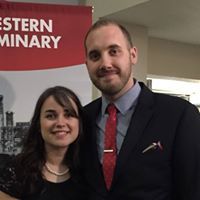
David Fitch is B. R. Lindner Chair of Evangelical Theology at Northern Seminary Chicago, IL. He's married to Rae Ann and they have one child, a son Max. He's pastored and participated in many church plants including Life on the Vine Christian Community a missional church in the Northwest Suburbs of Chicago of the Christian and Missionary Alliance. Most recently he and his family have joined Peace of Christ Church, Westmont, a church planted from Life on the Vine.
He writes on the issues the local church must face in Mission including cultural engagement, leadership and theology. His theology combines Neo-Anabaptist streams of thought, his commitments to evangelicalism and his love for political theory. He has lectured and presented on these topics at many seminaries, graduate schools, denominational gatherings and conferences. Dr. Fitch is the author of numerous articles in places like Christianity Today, The Other Journal, Missiology Evangelical Missions Quarterly, as well as academic journals. He has been featured in places like OutReach Magazine, Anabaptist Witness, Homebrewed Christianity.
He is the author of The End of Evangelicalism? Discerning a New Faithfulness for Mission (Cascade Books, 2011), The Great Giveaway: Reclaiming the Mission of the Church from American Business, Para-Church Organizations, Psychotherapy, Consumer Capitalism and Other Modern Maladies (Baker Books, 2005) and Prodigal Christianity: 10 Signposts into the Missional Frontier (Jossey-Bass 2013) with co-author Geoff Holsclaw. His latest book is entitled Faithful Presence: How God Shapes the Church for the Sake of the World. It is due Summer of 2016 with InterVarsity books.
"When I get up on the average day, I don't know how to transform the world. But I know how to pray, show hospitality, and proclaim truth. With scholarly care and pastoral zeal, David Fitch reminds us that it's in long-term, communal devotion to small but transformative practices that we both discover and reflect the faithful presence of God. Faithful Presence gives us permission to step aside from our own efforts at greatness, encouraging us to give our time and attention to disciplines that reveal and proclaim God's presence in our churches, homes, and neighborhoods." (Mandy Smith, lead pastor, University Christian Church, author of The Vulnerable Pastor)
A ecclesiastical reflection on the author's experience in ministry exhorting more holistic service and faithfulness to Christ in a space between missional and incarnational: faithful presence in the Kingdom.
The author sets forth seven disciplines for faithful presence (the Lord's table, reconciliation, proclaiming the Gospel, being with the "least of these", being with children, the fivefold gifting, and Kingdom prayer), and describes them in terms of presence within the "closed circle" of the dedicated members of a local congregation, the "half dotted circle" of the local church members, regular visitors, and people who express interest in faith, and also the "open circle," the greater community at large.
The author does well at demonstrating the importance of all three aspects of ministry and presence so that the work may thrive: to focus only on the closed circle is to turn to maintenance mode, but focusing only on the open circle is to lead to exhaustion and abandonment of the Gospel to become a social service organization. The "half dotted circle" becomes a very important place in that regard.
Many good things about each subject, and some points of disagreement, as always. The section on the "least of these" is very powerful, and does well to overturn the paternalistic and systemic model of benevolence on its head, emphasizing instead community and sharing and joint participation in ways that empower all involved. Kingdom prayer, especially as contrasted with constant striving, is all important. The fivefold gifting is an interesting way of taking the first century situation and bringing it to the twenty-first without necessarily becoming charismatic, although in so doing there is some disconnect from the original use of some of the terms. Being with children is rather convicting; evangelism models are very fit for 21st century life, since they focus on presence and relationship, the embodiment of the message as opposed to rhetorical flourish. Don't sleep on the appendices either, especially 3 (warning about the extremes of missiology and incarnation) and 4 (looking at the "least of these" as all the poor, but seeing Christ's presence in their midst as the work the Christians did by bringing the Kingdom to bear on their condition).
Highly recommended.
**original galley received as part of early review program
David Fitch, Professor am Northern Seminary und früherer Pastor einer Gemeinde, spricht sich dafür aus, Kirche vor allem im Zusammenhang mit Gottes „faithful presence“ zu denken. Gott möchte in der Kirche gegenwärtig sein und die Kirche soll diese Gegenwart in die Welt tragen.
Damit Gottes Gegenwart aber in der Community selbst und in der Gesellschaft sichtbar wird, schlägt er sieben Übungen vor, die dies fördern sollen: 1. Die Übung des Tisch des Herrn, 2. die Übung der Versöhnung, 3. die Übung der Verkündigung des Evangeliums, 4. die Übung mit den Schwächsten zu sein, 5. die Übung mit den Kindern zu sein, 6. die Übung des fünffältigen Dienst und 7. die Übung des Königreich Gebets.
Hat mir richtig gut gefallen. Sehr pastoral aufgemacht. Ein Stern Abzug, weil mir manchmal seine Überzeugungen zu stark in Texte reingelesen werden, um simpel zu klingen und sie in seine klar verständliche Struktur zu bringen.
I received this book as a Christmas gift from one of my church small group members. I probably wouldn’t have read it otherwise. In that sense, it was a perfect gift.
The basic premise of this book submits that a church’s (including her individual congregational members’) effectiveness in reaching a community is enhanced by practicing seven disciplines. In so doing, the presence of Jesus is brought to bear in these settings. Divine favor, power, love, etc. is increased as our efforts are blessed through the Lord’s presence and empowerment.
Mr. Fitch makes his case scripturally and with real-life examples. He is a pastor who promulgates these disciplines within his church. The disciplines are:
• The Lord’s Table • Reconciliation • Proclaiming the Gospel • Being with the “Least of These” • Being with Children • Fivefold Gifting • Kingdom Prayer.
Pastor Fitch also presents a paradigm relating to the work of the Church. As far as the Church is concerned, there is no “in here” and “out there.” There are, however, three settings in which the Church operates:
• Closed Circle: This is a gathering of believers in mutual submission of Christ. Typically, this takes place within the church (as in the building). Here the intensity of the presence of Christ is known like nowhere else. • Dotted Circle: A close social gathering of believers is still present. In this setting a Christian is the host. Often these gatherings take place in people’s homes. Non-believers are welcome to enter in and experience God’s presence in this circle. • Half Circle: In this space the Christian is present as a guest and extends the presence of Christ into the world.
Mr. Fitch is careful to emphasize the risk in unbalanced time spent in one circle at the expense of the others. If the Church stays too long in the Closed Circle, it tends to enter “maintenance mode.” Likewise in overemphasis in the Half Circle could result in exhaustion. As Fitch examines each discipline, he gives examples of how these disciplines operate in each of the circles.
Of these disciplines I was most impressed with the Discipline of the Lord’s Table. Rev. Fitch calls this Eucharist. This sacrament is also known as the “Lord’s Supper” and “Communion”. This chapter contains the most profound and edifying teaching on this subject that I have ever received. I don’t think that I’ll approach communion the same way again.
There are worthy takeaways from each of the disciplines backed by solid scriptural support and real world examples. Fitch also applies solid research from (mostly) theological and some secular resources to support his theses. The book is well footnoted and he discloses those items in which there are debatable conclusions.
Although this work is ostensibly written for pastors/church leaders, there is some red meat for the average Joe/Jane believer to devour. I’ve found his approach to be very solid and I didn’t disagree with much (Really just a couple of points but given the book’s overall excellence, I think it would be nitpicky to bring these up). The book contains ideas that are deeply profound coupled with advice that is very practical. I was simultaneously challenged and motivated. I pray that I can make an impact as these believers have and can assist in the Kingdom “breaking into” our part of the world.
THIS IS THE BEST BOOK ABOUT "CHURCH" THAT I HAVE EVER READ.
Ok, I really mean that. Fitch masterfully takes the reader through the most enlivening practices that the Christian community should be meaningfully engaged with. His explanation, defense, and summation of these practices each individually reads like a masterclass in that topic: the chapter on 'reconciliation' is some of the best material on that subject I've ever read; the chapter on "preaching" is the most exciting vision for preaching I've ever read; the chapter on "children's ministry" made me immediately want to volunteer at my church's Kids' Program, and so on and so on....
I don't quite know how he did it, but Fitch has written the most important, and most-needed corrective to how we "do" church in America. Buy it, read it, and make all your pastors/elders/church-friends read it immediately. It's that good.
Fantastic guide to missional church praxis. Highly recommend, particularly to anyone involved in church leadership/ministry.
I can't say the seven disciplines are exhaustive, but they are instructive and central practices that the church would do well to emphasize over and above some of the areas we might tend to spin our wheels at present.
The chapter on the discipline of being with children was a standout in terms of insight and new discovery for me. The image of the gathered close circle on mission into the dotted circle and half circle are helpful and useful in discussing mission in the congregation.
I’m grateful for this book. It was a deeply encouraging and challenging read that brought so much needed clarity for me. Amidst the complexity of strategies and structures so often recommended in conversations/books about the church, Faithful Presence finds a different way, getting down to the heart of what the church can and should be. The overarching organization of “presence” in our lives based on Fitch’s “three circles” is an incredibly helpful frame for thinking through how the church can be present to God and one another across all areas of our lives. Each chapter is profoundly deep and clear and explores the ways that simple practices done with a heart to be present to God and to people is God’s plan for making his presence known in the world through his people. Multiple chapters in this book created deep longings in my heart to know Jesus more deeply in through these 7 key disciplines. For those thinking about being involved in church leadership I would recommend this book as a must read! This book has produced more hope in me for the church than any other I have read - it was recommended by a friend as “the best book about church I have ever read,” and it did not fall short of that recommendation.
I read this book with my Presbyterian tradition. So I obviously have quibbles with Fitch at points. Yet, I suspect most church historians would complain about Fitch's historiography at many points.
Even when his practical theology is compelling, Fitch's exegesis is very questionable (Matt 25:40: Eph 4:11-12, etc).
The book is repetitive. I'm still not sure of the purpose of some of the appendices.
However, it is a fun book to read in terms of thinking through a basic, ordinary ministry for the local church apart from seeker-sensitive and program-driven churches. The full circle, dotted circle, half circle stuff is great. Critiquing maintenance and exhaustion is also good. I especially loved his chapter on ministering to children and on reconciliation.
So, I give it 4 stars. There is enough in here to spark the imagination of ministry leaders from a variety of theological traditions.
Fitch looks at the two Christ-ordained sacraments and a number of other "social sacraments" that help us orient our lives toward God's presence amongst us. Fitch has lots of helpful things to say about the different "circles"that we inhabit. The "Closed circle" within many churches, the "dotted circle" where we see our church activity and the world interact, and the "open circle"where we live as Christians in a secular context. Every chapter had a number of kernels of great advice. I was challenged and encouraged by every section of the book. BUT.... I think many of the conclusions that Fitch drew were laboured or reflected his liturgical or ecclesiastical preferences more so than a clear biblical mandate. It became frustrating to read his constant references to "God's presence amongst us" without any clear explanation of what he was referring to in particular contexts. In the end, if you're happy to sift through the material, panning for gold, then the book is worth a read. If you're looking for pure gold, on the other hand, then this is not the book for you.
Summary: Expands upon the idea of “faithful presence,” exploring how this may be practiced by the church in fulfillment of her mission through seven foundational disciplines practiced in three different settings or “circles.”
In 2010, sociologist James Davison Hunter penned a probing critique of evangelicalism’s “change the world” rhetoric in To Change the World (reviewed here), and proposed as an alternative, the idea of the subversive practice of “faithful presence.” David E. Fitch, co-pastor of Peace of Christ Church in Westmont, Illinois, takes up this idea contending that Hunter ran out of space in his book in fleshing out “what the actual practice of faithful presence might look like.” He contends that without a new kind of formational practice in the church (in truth harking back to our beginnings), attempts at faithful presence on the part of individual Christians will simply be absorbed by the broader culture. He writes:
“Faithful presence, I contend, must be a communal reality before it can infect the world. It must take shape as a whole way of life in a people. From this social space we infect the world for change. Here we give witness to the kingdom breaking in and invite the world to join in. For this to happen, however, we need a set of disciplines that shape Christians into such communities in the world” (p, 15).
In this book, Fitch commends seven disciplines that the churches he has pastored have practiced. He proposes that each of these disciplines presuppose the presence of God already in our lives and that our faithful presence, fostered through these disciplines, is the visible expression of God’s faithful presence going before us. He argues that these are disciplines that make faithful presence possible in our churches, neighborhoods and the wider society. He also contends that a key idea undergirding the practice of these disciplines is submission, to Christ and to one another, and that this is what makes these so counter-cultural.
The seven disciplines (he also calls them marks or sacraments) are: the Lord’s Table, reconciliation, proclaiming the gospel, being with “the least of these,” being with children, the fivefold ministry, and kingdom prayer. Fitch devotes a chapter in the book to each of these. He also proposes three circles in which each of these disciplines must be lived out: the close circle of the Christian community, the dotted circle of home and neighborhood, where Christians function as hosts, and the half-circle of wider society, where we are guests, but may also be the faithful presence of Christ. Faithful presence that advances the mission of the church operates in all three circles, not simply in the close circle, leading to a maintenance mentality, or in the half circle, leading to exhaustion.
I appreciate the effort of Fitch to expand this idea of “faithful” presence, because I also found Hunter’s proposal thin on specifics, and lacking in articulating the practices that sustain such presence and allow it to take a robust and transformative public form. I thought Fitch had some distinctive things to say about gospel proclamation, as opposed to teaching, in the context of the church, about the ministry of presence with children, and about the fivefold ministry (apostles, prophets, evangelists, pastors, and teachers), contending for plural ministry leadership as opposed to hierarchical leadership in the church. I would like to have seen Fitch say more about the ministry of prophets, which was not elaborated.
Fitch also argues that through church history, the seven disciplines, meant to be personal, relational, and practiced in all the “circles” of life, have been institutionalized, formalized, and programmed. His proposal and practice breaks these strictures. Nowhere is this more evident than in his discussion of the Lord’s table, which is not only practiced weekly in his church but constantly in the lives of its people:
“The Lord’s table happens every time we share a meal together with people and tend to the presence of Christ among us. Granted the formal Lord’s table only happens at the close table. But that table extends from there. When Jesus said, “Whenever you do this, do it in remembrance of me: (1 Cor 11:24-26, my paraphrase), he, in essence meant, in the words of theologian John Howard Yoder, “whenever you have your common meal,” whenever you eat in everyday life with people. And yet this table is shaped differently in the three spaces I call the close, dotted, and half circles of life. The table is never merely in here or out there. It is the continual lived space with and among the world. It is the table on the move. It starts with the close circle, the ground zero of his presence around the table” (p. 64).
This work is also important in how it connects our communal disciplines to mission, and particularly the working out of the practice of these disciplines in the “dotted” circle, and the “half” circle. It is a valuable resource, not only for the training of ministers, but for leaders of churches to read and discuss together as they think about the nature of the church, and the formative practices that shape the lives of its members. Throughout, Fitch couples biblical principles and practical examples, many from his own practice. In an era increasingly disenchanted with posturing and programs, this vision of faithful presence may be the cup of cold water desperately longed for in our cultural wasteland.
David has written a book that many of us who love being missional, and have a deep love for the church, would have loved to write... but he has done it better. This is a superb book that needs to be read by anyone who is serious about following Jesus today. It is a call to recover what it means to be a community of the king - any day - but especially today. It is a must read that I will buy many copies of and give to people who I feel are serious about joining Christ on mission.
This book is going on my shelf of favorites! From the outset of this book, I felt like the author was taking aspects from all my other favorite books and using them to create what is now “Faithful Presence”. I thought he managed several tensions in the disciples life incredibly well, and it was a really well-rounded book. Did I agree with absolutely everything he said? No. But this was a well thought out book, and a much needed perspective for believers today. I would love to intentionally go through this book with a small group of believers! He balanced all the theology/missiology/ecclesiology with practical application really well… and I’d highly recommend this book!
"The place of presence between adult and child must become the trusted place our children know they can go anytime they have questions during the week, struggling with beliefs, doubts, and confusions of our day" (p. 144)
I found the book to be generally helpful regarding the church and it’s mission. The “disciplines” I thought he did the best job with were reconciliation (very needed in my experience), being with children, and kingdom prayer. These seemed very true, and the first two are often neglected. The appendix on the necessity of his dotted line circle was also extra helpful. I appreciate his commitment to being missional AND to the church as a distinct worshipping community. Definitely worth the read.
This is one of the most important books I've read on mission. From beginning to end, the Bible tells the story of God restoring his presence in the world after the entrance of sin. While it's true that God is present over the world through the Spirit, Fitch reminds us that 'he becomes visibly present through a people who make his presence known' (p 28). He explains how this looks through seven disciplines of the Christian life. It's a prophetic reminder that mission does not consist of the abundance of programmes a church can run. Instead, it's about allowing God's presence to become visible as we faithfully live each day under his Lordship.
Part One is worth it alone for a good read on missional/community focused Ecclesiology (very much Anabaptist). Part two got slow, mostly because Fitch was intent on unpacking the three circles only after defining the discipline. I would lose interest by the time I got to the circles and would have preferred them to be interwoven in defining the discipline. Fitch also learned heavily on one church experience and his office hours at McDonald's, and a wider range of practical stories would have been beneficial.
I really love Fitch’s main ideas that he’s pitching in this book—mainly thinking about three spheres of relationships in which Christians engage as the church, along with the kinds of practices that are critical for being faithfully present to Christ, each other, and their communities.
I found this book to be quite challenging and compelling, though I think there are some limitations that I wish Fitch would have addressed. Most importantly, I wish he would have shown a bit more struggle in how his church worked through these practices and concepts. While his church, Life on the Vine, serves as the main case study where Fitch developed and applied these concepts, it starts to feel like it’s presented as the perfect church that all others should be like. But certainly Life on the Vine is not the be-all-end-all solution for every person’s needs in their neighborhood or city. So what are their limitations? When did they run into situations and issues that didn’t all turn out well in the end even though they were attending to Christ? Fitch’s depiction, while beautiful, comes off just a bit too perfect. I think this book may have greatly benefited from a section like in Beth Grant’s book “Courageous Compassion,” in which she names mistakes her organization made along the way, or an added segment in each chapter that shows the limitations of each practice.
Additionally, I think there are some important practices that are missing from Fitch’s book. For example, as a Pentecostal, I think worship through music and the arts is a critical practice that’s missing, but I understand that may be an area less emphasized in Christian and Missionary Alliance spaces. To be fair, I don’t recall Fitch saying there are ONLY 7 practices, but his inclusion of these seven and exclusion of others reveals his own biases and preferences within his personality and/or tradition.
Overall, I think this is an excellent book that I highly recommend to all Christian leaders. In particular, Fitch makes some major contributions to the fields of missiology and ecclesiology in his chapters on the three circles, the practice of being with children, and his chapter that proposes a plurality of leadership model rather than a church hierarchy with a sole lead pastor at the top. It really is quite inspiring to read.
David Fitch has become an important voice to me very recently. In the past couple months, I had read, “The Great Giveaway,” and found myself chewing on the gristle of that book for many days after I finished it.
This volume does not disappoint. The voice has changed a bit. To borrow ideas from the chapter of this volume, “The Discipline of the Firefold Gifting,” Fitch used the voice of a prophet in “Giveaway.” Here, he is much more speaking with the voice of a pastor, putting into practice some of the weighty principles of the earlier work.
Both are necessary. Where a prophet puts to disorder, a pastor aids us in finding the reality of our situation, learning how to live it out. This book does exactly that.
The title, and indeed the interwoven theme of the book, bring to play a very important and somewhat lost idea in our world: being present. This is the centerpiece of each of the disciplines Fitch presents. We may not merely participate in things, not just do them to check off a list: we must be present in the moment. Our presence is the first contribution. The presence of Christ is the stated response.
It is interesting that this book is about disciplines. The Lord’s Table, Reconciliation, Proclaiming the Gospel, Being with the “Least of these,” and the other sections of this book could have very simply been Christian objectives. To present them as disciplines, though, brings the reader immediately to another level. We are not just studying. This book is about doing. Indeed, this is exactly what I found myself challenged to. Repeatable, purposeful action which brings us into a deeper spiritual formation.
Church leaders, people who have been approached for church leadership, or anyone who gives care to the re-orienting of a missional church should absolutely read this book. It will give you clear pictures and vivid, real-life stories about how to be shaped into a living, breathing community of the Holy Spirit. You will not be left wanting.
4.5 stars, highly recommended to anyone who cares about the Church and/or the world.
Fitch focuses on these disciplines as recognizing and cultivating / tending the presence of Christ among us. He identifies the following disciplines: the Lord's Table, Reconciliation, Proclaiming the Gospel, Being with the "Least of These," Being with Children, the Fivefold Gifting, and Kingdom Prayer. And he discusses the practice of these seven disciplines in three circles--the close circle (not "closed"), the dotted circle, and the half circle. The close circle is where Christians share intimacy with one another and together with Jesus, who is the host; the dotted circle is where Christians host neighbors and strangers; the half circle indicates our movement as Christ's ambassadors as "guest[s] among the hurting and the wandering" (41). Local churches that over-emphasize the close circle fall into "maintenance mode"; local churches that over-emphasize the half circle exhaust themselves. His descriptions of how they practiced these disciplines at Life on the Vine are powerful, inspiring, and repeatable.
Stand-out portions were his typical criticism of expository preaching (contra, e.g., R.L. Dabney, who said, "Nothing is preaching which is not expository of the Scriptures) in favor of preaching, which proclaims or declares the lordship of Christ over our lives and calls hearers to live into the Kingdom of God. I enjoyed his discussion in the section on Kingdom Prayer of the local nature of prayer. Don't be too quick, he says, to offer to pray with someone you've only just met; instead, get to know them, be present to them, tend to the presence of Christ in the relationship, and pray concretely when the situation evokes prayer. And the section on being with children was my favorite since ... that's what I do for a living.
Fitch introduces the book by talking about churches he visited when he was in college. He had many choices, and maybe to not attend church at all. What does the church have to offer the world? Faithful Presence is about how God meets us in the real world. We can experience God's presence in our daily lives.
God's presence is all around us. We just have to notice it. In chapter 1 the author talks about how people are not focused on God's presence at his church. They weren't connecting and being present during communion or worship. Why do we hide from God's presence? He outlines places in the Bible that talk about God’s presence. God longs to be with us. The church is supposed to be where God’s faithful presence shows up. People refer to the kingdom of God as God's presence, but God's presence runs parallel to his kingdom.
I think if intentionally or not, the author tends to blur the lines between being present with people and God’s presence among us. People who are not Christians can witness the presence of God among other Christians, but sometimes the author does not make such distinctions. I understand that he might mean that we can have Christ’s presence with unbelievers as we minister to them. But I did not get that sense from the book.
Nevertheless, this is a powerful book about the presence of Christ among us. I really liked the real life examples the author gave. They were powerful to demonstrate and illustrate what he was teaching about Christ’s presence and being present with one another. It is a very practical guide and approach to living Christ’s presents among believers and unbelievers. I recommend this book for anyone who needs to be more present and learn how to see God’s presence play out in their life in practical ways.
David Fitch presents seven disciplines for the church; disciplines that, when lived out, synthesize the organized Missio Dei approach to mission first described by Newbigin and an incarnational approach to ministry. Fitch believes he has a finger on the pulse of what it is for the church to be a faithful witness to the Kingdom of God in the world. I think he is right. The disciplines he proposes are, the Lord ’s Table, reconciliation, proclaiming the Gospel, being with the ‘least of these,’ being with children, fivefold gifting, and Kingdom prayer. In addition to these disciplines, he talks about four postures, submission, receiving, ceasing, and socially engaging. His most compelling words are his description of mutual submission. I wonder what the world would look like if more churches committed to the disciplines Fitch proposes and lived in the postures he describes. I think I know. I am sure I know what Fitch would say. We would see the in-breaking of the Kingdom. What a sight that would be … will be.
Fitch offers some very good, and fairly unique, insights in the realm of ecclesiology, missiology, and the relationship between the two. Drawing from the rich biblical motif of the divine presence, Fitch argues that it is through the church's sacraments/disciplines/practices/rhythms (used interchangeably here) that the divine presence is made manifest in the church (ecclesiology) and in the world (missiology). His list of disciplines is not all-inclusive, but the seven main chapters are dedicated to Eucharist, reconciliation, proclaiming the gospel, being with "the least of these", being with children, the fivefold gifting (from Ephesians 4), and prayer. A read-through of this book could be groundbreaking for folks who don't read widely on ecclesiology, and is still unique and corrective enough to be worthwhile for folks who do read widely on ecclesiology. (Fitch strikes me as an extreme low-church Protestant with respect for tradition and history and caution toward his own low-church Protestant leanings).
I really enjoyed the controlling idea of the book which is that people who are part of a community of faith have three circles in which their lives and faith are lived out. The closed circle - life within the community. The dotted circle - life beyond the faith community but in areas of relationship such as work, school, other places we are drawn together in relationships not immediately defined by our faith. The half circle - our interaction with the world. He demonstrates how the seven disciplines - with communion being first and foremost - can inform each of these circles. He also reminds that God is in all of these places - if we are not encountering or experiencing God in all of these places it may be because we are not looking in the dotted or the half circle. Finally he argues, persuasively, that living exclusively in the closed circle results in a maintenance oriented community of faith, while living exclusively in the half-circle can lead to spiritual exhaustion.
The church needs this book right now! Temptations abound for the church to get sucked into culture wars, to become entertainment hubs, to capitulate to culture in the name of “reaching out” or to simply double down on ancient tradition in the name of orthodoxy.
Fitch invites Christians to renew their ecclesiology: we are the people who attend to the presence of God in our midst and tell the world about it.
His “three circles” (essentially: the church, the neighborhood, the world) have already shaped a lot of how I think about church and mission in just the few weeks since reading this. His suggested disciplines are simple, if not “easy,” and would certainly be transformative in any community.
Much of this book is written from his own experience, which is part of what makes it so helpful. At times, however, the experience seems narrow: “This worked in this time and place so it will work everywhere.” It can also be a bit self-aggrandizing. There aren’t many stories of failure, and lots of stories where the author is the hero. I don’t fault him for telling the truth about what God has done, but I would struggle to hand this to some church folks who would be off-put by someone who seems to be talking a lot about their successes.
Another great read by Fitch, a Canadian church planter & prof in Illinois. While there are plenty of good books about Christianity's mission in this world and relationship with culture, Fitch helps the reader see how these topics intersect with the actual church. Speaking of "closed circle, half circle, and dotted circle" as arenas where Christians are present with each other, at home and in the culture, Fitch explains how we can practice disciplines prescribed by Jesus in order to experience His presence.
Any highlights seven particular disciplines that Jesus causes disciples to practice, and in which he promises to be present with them as they practice them. I particularly liked the one about sharing the gospel contextually, and being present with children or those in need.
Excellent offering by David Finch. The book largely consists of an argument for how God intends to dwell with His people, suggests a model for how we ought to apply that thinking, and then applies that model to seven different disciplines of faithful Christian living. Fitch makes good, solid arguments. There are a few stretches and shaky inferences here and there, but the logic holds. Additionally, as we all do in making arguments like these, not every conclusion is supported by the data available. Nevertheless, the concept of our faithful discipleship looking like closed, footed, and half-circles is compelling for those who want to submit fully to Him as He has revealed Himself, both in worshipping Him as the church, and in being present with a hurting world.
It's not just about Eucharist. Christ makes himself present to us and our world in many ways!
I began this book with a desire to make the Eucharist or Lord's Table central to all I do. But this is only one discipline that the author encourages. I was surprised that the Cosmic Weaver was already knitting the threads of Kingdom Prayer and the Fivefold Gifting into my life and ministry. I recommend this book to those who want to capture the essence of what it means to be Christ's body on earth. And the author addresses the generation gap that exists currently in the body of Christ. One which I myself see.
two persistent themes were helpful 1. faithful presence 2. submission
in this book Fitch explores 7 disciplines, some of them traditional (praying) some of them not so much (spending time with children) and asks about what it means to tend to the faithful presence of Christ in each of these.
i think one weak point of the book was the hermeneutic. Fitch propose a three-tiered model of engaging each discipline: 1. in the church, 2. outside of the church with that community and 3. in the world. Sometimes it was helpful, but in some chapters it felt forced.
Fitch does a nice job of summoning the church to embodied life in community. I enjoyed his in-depth explanation of each discipline and how he provides the church with a completely new ethos.
However, it took me sometime to realize that this book is specifically a spiritual discipline book for ecclesiological practice and not a frame of theology. This book lacks, severely, in theological depth. If one is able to put aside cringy Christian phrases (Fitch frequently uses phrases like "tending to God's presence there" without giving significant explanation), and overlook disjointed theology, they will enjoy the embodied practices that Fitch describes.
A very helpful book in thinking through how the church practices being the church. I found this to be refreshing and thoughtful and now find myself thinking through practical application. This book made that exercise a simpler one. Most books in this genre leave you more confused once you are done. Typically they offer a model that "worked" in a single context rather than, like Faithful Presence, offering disciplines to continue in the various spheres of life. A present church is one that is showing the Kingdom of God breaking into the present. That is something I want to be a part of.