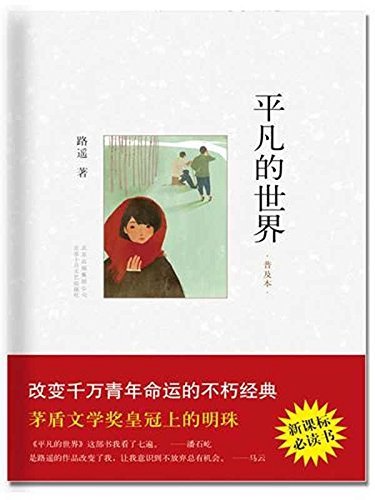
《平凡的世界(普及本)》堪称茅盾文学奖皇冠上的明珠,被翻拍成同名电视剧!全景式地表现中国当代城乡社会生活。作者在近十年间广阔背景上,通过复杂的矛盾纠葛,刻画了社会各阶层众多普通人的形象。劳动与爱情,挫折与追求,痛苦与欢乐,日常生活与巨大社会冲突,纷繁地交织在一起,深刻地展示了普通人在大时代历史进程中所走过的艰难曲折的道路。 Ordinary World can be honored as the crown jewel of Mao Dun Literary Prize which was made into TV play of the same title. The book panoramically presents modern Chinese life both in urban and rural areas. In the time span of a decade, the writer depicts the ordinary image of different layers through complex entanglements. Work and love, setbacks and pursuits, sorrow and joy, daily life and great social conflicts are interwoven together which deeply present the twists and turns of ordinary people during the course of history in such a great time.
Lu Yao (Chinese: 路遥), born Wang Weiguo (Chinese: 王卫国), was a Chinese writer. He was born on 3 December 1949 in Qingjian County, Shaanxi Province, and died on 17 November 1992. He had six siblings and grew up in a very poor family. He began writing novels when he was a college student, and graduated from Chinese Department of Yan'an University in 1973. After graduation, he became an editor of Yanhe magazine. In 1982, Lu Yao published his novella "Life", which was made into a film in 1984. It was at this time that he started to become well-known across China. In 1991, Lu Yao finished his most famous work, Ordinary World, which won the Mao Dun Literature Prize. His writing was closely related to his own life and experiences, and focused mostly on young people from his native Shanbei striving to change their lives.
After more than 5 months, I am finally done with this book. Reading this book has been exhausting, and it's entirely unclear whether that's been because of the amount of time it's taken me to finish it, the fact that Chinese is my less comfortable native language or something else. Despite this, Lu Yao's book describes what its title proclaims - the ordinary, the day-to-day of life, and how beautiful it can all be. While the story is set in rural China of the 1970s and 80s, a context that is not super familiar or relatable to me, the connections between characters, the emotions that arise from life events, happy or sad, and the ideals and struggles and tragedies and dreams... all of that, capped with elegant writing and breathless imagery, has made me feel some type of way about myself, my life and how I fit into the world around me. The world that Lu Yao creates is ordinary but full of meaning and wonder, and by reading his words, I find that I am coming to understand the beauty in the life I'm living, however ordinary, today.
If you ask what kind of spirit Chinese people have that makes themselves out of poverty in the 1980s and has earned them respect ever since, this book has the answer. I cried over the stories where this generation of people, no matter how much pains they suffer, never lose the hope, always stay positive, and ultimately create a better country. This is how steels are tampered. This is the wealth of China.
I read it long time ago when I was a teenager. Actually I don’t like the whole story about a rural family. Their fates are too legendary. The name of the novel should be changed to the dramatic world.