

What do you think?

The Silent Traveller In Edinburgh
Exiled from China in 1933 and separated from his wife and children, Chiang Yee spent over 40 years away from his homeland. Adopting the name The Silent Traveller, he threw himself into his passions—writing, painting and poetry—and produced some of the most evocative, unique and enduring travel books ever written. Chiang Yee was, in his own words, 'dazzled' by the Scottish capital. From the Meadows to Princes Street, from Arthur's Seat to Calton Hill and Edinburgh Castle, he paints an unforgettable picture of Edinburgh and its people in the 1940s. Writing with wry humor, he broadens our perspective of familiar sights and customs, introduces us to Confucian philosophy and Chinese poetry, corrects cultural misconceptions and encourages us to appreciate life. Illustrated throughout with Chiang Yee's exquisite paintings, sketches and Chinese calligraphy, this edition—the first for over 50 years—has a new foreword by Da Zheng, Associate Professor of English at Suffolk University, Massachusetts.
245 pages, Paperback
First published September 1, 1948
About the author
Chiang Yee
44 books18 followersChiang Yee (simplified Chinese: 蒋彝; traditional Chinese: 蔣彝; pinyin: Jiǎng Yí; Wade–Giles: Chiang I; 19 May 1903 – 26 October 1977), self-styled as "The Silent Traveller" (哑行者), was a Chinese poet, author, painter and calligrapher.
The success of The Silent Traveller in London (1938) was followed by a series of books in the same vein, all of which he illustrated himself.
The success of The Silent Traveller in London (1938) was followed by a series of books in the same vein, all of which he illustrated himself.
Ratings & Reviews
Friends & Following
Create a free account to discover what your friends think of this book!
Community Reviews
Displaying 1 - 21 of 21 reviews

August 19, 2022
Chiang Yee takes us on a rather personal and very poetic journey through Edinburgh and its surrounding areas. I cannot say if I learned more about Edinburgh or Chinese culture because it reads like a reflective story of similarities and differences between the Eastern and Western civilizations. I can only call it a travel blog from the 1940s filled with hand-drawn images, poems, and everyday musings of one man. In a different lifetime, it would be interesting to retrace his steps. In this one, the biggest merit of the book is its beautiful language and slow immersion in the Scottish landscape.
October 22, 2023
The chances of me ever needing a travel guide to Edinburgh from 1940s war time are slim, but this would do the job. There's a really disturbing chapter about eating seagulls and I'm fairly certain that the writer had a crush on Mary Queen of Scots, but it's all round good. Also, picking up on casual racism that the writer didn't catch became an unexpected feature.

July 4, 2012
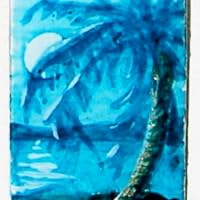
Sweet and charming in many places, but rather slight. The author wanders around Edinburgh and tells various anecdotes of his visit there, interspersed with poetry (both traditional and of his own writing), folk tales (local and from his home), and his own art. I enjoyed the book when I was reading it, but it wasn't all that compelling. The author is hopeful about the future, worried about the present, but mostly seems to be having a pleasant vacation. The little line drawings were adorable, but I would've liked the watercolor landscapes much better if they were in color, like on the cover of the book. The black and white reproductions give the impression that he walked through Edinburgh in a constant gray drizzle, and according to the book that was only some of the time.

February 8, 2020
I love the city of Edinburgh. It was wonderful to read about the city from someone else in a completely different time period, and to see how little this old, eternal city can change. It is a travel journey from the 1940s, and after a time, its focus shifts from observations of the city to observations of a Chinese national in world where Eastern and Western thought are beginning to modernize and meet more and more. It's interesting to read someone's perspective on this confluence now, in the year 2020, and to see how much and how little some of Chiang Yee's musing have come to pass, or not, depending. Either way, it was a pleasure to read.
January 9, 2023
Many people wrote that this book is charming, and I also would use that word. His starting point is Edinburgh, the strolling around the city, the people and Scottish folk tales. On top of this I liked how this book, written in 1943 in the midst of the war (which is pretty much present in the background) and nationalisms goes around the topic of how fictitious nationalisms are. He does this without sounding patronizing at all, but rather in a calm and judgmental way, and this seemed to me one of the biggest merits of the book. The author wouldn’t mind being provecho wrong about anything of what he’s saying.

August 27, 2009
It was fun reading this while in Edinburgh -- I got to have that moment of recognition both while reading ("hey, I've been there!") and while walking around and looking at things ("hey, I've read about that!"). Chiang Yee is, as ever, a most amiable travelling companion. And Arthur's Seat totally looks like an elephant.
December 26, 2013
This is a very subjective piece of travel writing. It won't help you understand what Edinburgh looks like, really, but I loved the writing, and the fact that his experience of Edinburgh was so different from mine. Makes you realize that traveling is a very personal experience. I read this book after spending a few years in Edinburgh, and while reading it I re-discovered this city.
July 19, 2022
This was pleasant to read, but I think it is showing it's age: it was very twee. The author explored Edinburgh and reflected on his experiences, the differences and similarities between Scotland and China (and their respective people). Some of it was very whimsical: for example, he argued that Robbie Burns was Chinese by birth. Except I don't think he meant that literally (although I am not sure, sometimes it seemed he did mean it literally, other times that he did not). It seemed more that Robbie Burns had a very Chinese, or Confucian outlook on life. I thought the evidence he produced for this was very scant and unconvincing, not to mention that China's population in world war 2 (when this book was written) was around 500 million people. I suspect they had more than one way to view the world, so this argument just seemed bizarre to me. I have no idea what he was trying to do by making it.
Some of the Chinese folk tales and snippets of Chinese history he told during the book were interesting, but I won't be searching out any of the other books in this series.
Some of the Chinese folk tales and snippets of Chinese history he told during the book were interesting, but I won't be searching out any of the other books in this series.

May 30, 2020
After taking this book on a trip to China, leaving it there unknowingly, and then retrieving it over a year later, there was perhaps a bit of built-up expectation for this novel. It is by all means a sweet book, filled with cute observations about nature, the Scottish ethos, watercolours, the gloomy atmosphere of Edinburgh, meditations on WWII, and Chinese folk tales. Chiang Yee can speak at length about the playful nature of seagulls or the boyhood of Sir Walter Scott with natural ease, and while nice to read does give the book a very airy and slight feel, and the experiences feel much more ethereal than those described in his London book. Thankfully, just as in the London book, the paintings he has within the text are lovely to behold along with the famous poems he writes with masterful calligraphic brushstrokes.

May 9, 2023
Sweet and sometimes sentimental reminiscences of a Chinese exile in wartime Edinburgh, illustrated with drawings and paintings that echo the style of his homeland and punctuated with quotations from Chinese poetry that arose from associations he found with the Scottish landscape and people.

December 26, 2019
An enjoyable read

June 12, 2021
A beautiful evocative ramble through Edinburgh. The authors drawings are also a gorgeous addition to the book.
April 30, 2023
Unfinished but I’ve had enough.

May 10, 2026
Enjoyable wee book. Loved the sketches. As for silent traveller in Edinburgh, was more like silent traveller on the royal mile but still good
October 16, 2020
Though this book was published back in 1948, familiar environments of Edinburgh are still projected (still some places might be demolished or gone). He had quite cheerful-writing style even in this grey city. The comparison game of East and West through his view was really strong - that makes this travel book becomes more interesting. There are lot of translated-to-English poems, which I took those art forms for granted. Still, I would recommended to any who looks for storytelling-style (not so informative) travel book to Edinburgh.

March 4, 2012
This was a lovely book which took me on a tour of a city I know fairly well, but had never seen quite like this before. Chiang Yee has a gentle and insightful way of looking at things which rubs off when you read his prose and poetry and look at his drawings. His outlook on life, perspective on places and his way of seeing is one I would like to foster in myself.

June 14, 2023
This was the first of Chiang's books for me - bought for me by my mother. And it began my fascination with his style and insights as well as enjoyment of his art and drawings. Beinga hardcover it does havethe paintings in colour. Edinborough is a place Ihave visited andstayed in too over 6 decades and so his essaysresonate.

May 11, 2010
It sounds patronising, but this book is genuinely sweet. Like a little tender love song to Edinburgh, which clearly has not really changed too much since WWII.
July 22, 2010
Great series, I love this book.
June 10, 2012
A chinese man in scotland

August 4, 2011
Yee wanders the streets of Edinburgh with an artist's eye.
Displaying 1 - 21 of 21 reviews