

What do you think?

The Declaration of Independent Filmmaking: An Insider's Guide To Making Movies Outside of Hollywood
Less than a decade since they began working in the movies, Mark and Michael Polish have established themselves as critically acclaimed, award-winning independent filmmakers. Their innovative approach to art direction, use of digital photography, and ability to attract stellar talent to their modestly budgeted films sprang from necessity; now these aesthetics have become admired trademarks of their work.
Infused with this same balance of artistic integrity and popular appeal, The Declaration of Independent Filmmaking is a practical guide to writing, shooting, editing, scoring, promoting, and distributing short and feature films. Mark and Michael have packed this book with star-studded, often hilarious tales from their own experiences--as well as helpful insider photos. This is an indispensable resource for anyone interested in filmmaking, whether a high school student with a $500 budget or a serious filmmaker looking for a fresh approach.
A Harvest Original
Infused with this same balance of artistic integrity and popular appeal, The Declaration of Independent Filmmaking is a practical guide to writing, shooting, editing, scoring, promoting, and distributing short and feature films. Mark and Michael have packed this book with star-studded, often hilarious tales from their own experiences--as well as helpful insider photos. This is an indispensable resource for anyone interested in filmmaking, whether a high school student with a $500 budget or a serious filmmaker looking for a fresh approach.
A Harvest Original
- GenresFilmNonfiction
310 pages, Paperback
First published October 17, 2005
Ratings & Reviews
Friends & Following
Create a free account to discover what your friends think of this book!
Community Reviews
Displaying 1 - 5 of 5 reviews

September 10, 2012
"An independent film succeeds or fails on the choices of its creators. There is no safety net."
The Polish Brothers are my kind of filmmakers and this guide is my kind of beginners guide to making films. Honest, enthusiastic and filled with helpful tips.

As a first year film student we were prescribed The Guerrilla Filmmaker's Handbook as THE resource for making movies with next to no budget, even now it is a prescribed text at the university I am working at infact, but whilst that series is hip and trendy it misses out information that young people really need to know when contemplating how to proceed in their fledgling career as a filmmaker. The Polish Brothers Declaration of Independence should replace that text or at the very least work in conjunction with it. These guys have been there, fought the battle to make their dreams a reality, seen the horrors involved and gone back for more time and again and now their experience can be learned from thanks to this book.
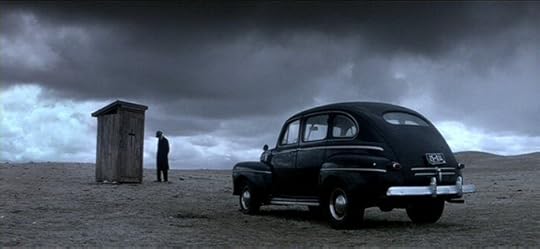
Using examples from their first three productions, Twin Falls Idaho, Jackpot and Northfork, you are taken on a journey from concept to distribution that incorporates technical filmmaking advice with details of how a deal is made and encouragement to keep going through even the toughest of times. They have their own unique way of working and they readily admit that this book isn't foolproof but they are more than happy to share their working practices and help others achieve their dreams. If you want to be the next Michael Bay this guide might not be for you but if you have a desire to tell a heartfelt story and possibly go bankrupt then I recommend this book and the films of these brothers wholeheartedly.

I read it cover to cover because I had a real interest in what they had to say on the subject of filmmaking not because I am currently planning on making a movie. Some sections are incredibly dry and not necessary for casual readers but happily a glossary will make referring back to these lessons much easier in future when I have my technical head on. At other times it read like a production journal with fascinating and entertaining insights in to the goings on of a working movie production including how they came to get Nick Nolte involved in Northfork or how they made James Woods cry for example. Throughout I was reminded just how much I enjoy their work and now I appreciate it even more for the hardships that they endured in the name of their art.
And remember next time Zach Braff complains about creative control and being a true artist that to make a real independent film where the filmmaker is in charge creatively, one must sacrifice personal, financial, and physical well-being not just beg their fans for money via the internet or sell 15 second voicemail recordings for $150 a go.
The Polish Brothers are my kind of filmmakers and this guide is my kind of beginners guide to making films. Honest, enthusiastic and filled with helpful tips.
As a first year film student we were prescribed The Guerrilla Filmmaker's Handbook as THE resource for making movies with next to no budget, even now it is a prescribed text at the university I am working at infact, but whilst that series is hip and trendy it misses out information that young people really need to know when contemplating how to proceed in their fledgling career as a filmmaker. The Polish Brothers Declaration of Independence should replace that text or at the very least work in conjunction with it. These guys have been there, fought the battle to make their dreams a reality, seen the horrors involved and gone back for more time and again and now their experience can be learned from thanks to this book.
Using examples from their first three productions, Twin Falls Idaho, Jackpot and Northfork, you are taken on a journey from concept to distribution that incorporates technical filmmaking advice with details of how a deal is made and encouragement to keep going through even the toughest of times. They have their own unique way of working and they readily admit that this book isn't foolproof but they are more than happy to share their working practices and help others achieve their dreams. If you want to be the next Michael Bay this guide might not be for you but if you have a desire to tell a heartfelt story and possibly go bankrupt then I recommend this book and the films of these brothers wholeheartedly.
I read it cover to cover because I had a real interest in what they had to say on the subject of filmmaking not because I am currently planning on making a movie. Some sections are incredibly dry and not necessary for casual readers but happily a glossary will make referring back to these lessons much easier in future when I have my technical head on. At other times it read like a production journal with fascinating and entertaining insights in to the goings on of a working movie production including how they came to get Nick Nolte involved in Northfork or how they made James Woods cry for example. Throughout I was reminded just how much I enjoy their work and now I appreciate it even more for the hardships that they endured in the name of their art.
And remember next time Zach Braff complains about creative control and being a true artist that to make a real independent film where the filmmaker is in charge creatively, one must sacrifice personal, financial, and physical well-being not just beg their fans for money via the internet or sell 15 second voicemail recordings for $150 a go.

September 23, 2008
So-so. A few interesting tidbits, a wonderful sense of invitation from the author-filmmakers, but not enough impact on me, in the end. Perhaps because the book is geared slightly toward more of a newcomer to film production -- and for them, probably, it would be a much more interesting read. But, I suspect, it would be 3 stars for them, not 4 or 5.
I like that the brothers who authored this (with a colleague) have put things out pretty straightforwardly. They give some good names, some truthful anecdotes. These are the best parts of the book -- to hear how James Woods actually responded to their pitch, or how they got Nick Nolte on board. Etc. But, in the end, I'm afraid it's not enough for me to recommend it to someone who's not new to the industry. But if you are new, then I would say you'll be in safe hands reading this book -- and maybe you should read this before you read some of the others.
I like that the brothers who authored this (with a colleague) have put things out pretty straightforwardly. They give some good names, some truthful anecdotes. These are the best parts of the book -- to hear how James Woods actually responded to their pitch, or how they got Nick Nolte on board. Etc. But, in the end, I'm afraid it's not enough for me to recommend it to someone who's not new to the industry. But if you are new, then I would say you'll be in safe hands reading this book -- and maybe you should read this before you read some of the others.

July 3, 2011
A tip I found out too late: the footnotes are all listed at the back of the book. You can indulge in the chapters where the described experience is useful, then skip the ones that are less so.
In some chapters, particularly ones where the Polish brothers relate interpersonal dealings, the stories are greatly beneficial, and one can't get enough of them, but there are others where the footnotes are all one wants. The storytelling stays mechanical because it is trying to remain instructional, and becomes unninteresting and unnessesary. Read a la paragraph one, and this will be a useful and enjoyable book.
In some chapters, particularly ones where the Polish brothers relate interpersonal dealings, the stories are greatly beneficial, and one can't get enough of them, but there are others where the footnotes are all one wants. The storytelling stays mechanical because it is trying to remain instructional, and becomes unninteresting and unnessesary. Read a la paragraph one, and this will be a useful and enjoyable book.

March 5, 2013
This book is great for the filmmaker trying to figure out how to get started and without a lot of money. The authors take you through how they raised money, used their personally-acquired skills for projects, negotiating, the actor and casting, and also the politics of it all when using the major Hollywood-way of getting a move made. I enjoyed the process of this book. It is outdated, with the current times, but I do see why UCLA Extension is using this book for their Film-making curriculum. I read the book instead of paying all the money for the one class. I will also be buying it as a reference book. Time is everything...

November 10, 2011
This is a solid beginner's guide to making an independent feature. The writing is straight-forward but also very interesting.
Displaying 1 - 5 of 5 reviews