

What do you think?

The Dreamfields
[Back Cover]
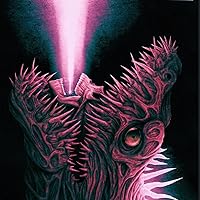
"What is Operation Dreamwatch? Why is a group of severely disturbed teenagers kept in a comatose state in a heavily guarded and isolated military base? The official explanation given to Ralph Metric and his fellow dream watchers is that these children are undergoing psychotherapy through the control and observation of their dreams. But Ralph begins to suspect a more sinister purpose. Gradually, he discovers the horrifying truth and understands the deadly purpose for his own nightly vigil in -The Dreamfields-."
"What is Operation Dreamwatch? Why is a group of severely disturbed teenagers kept in a comatose state in a heavily guarded and isolated military base? The official explanation given to Ralph Metric and his fellow dream watchers is that these children are undergoing psychotherapy through the control and observation of their dreams. But Ralph begins to suspect a more sinister purpose. Gradually, he discovers the horrifying truth and understands the deadly purpose for his own nightly vigil in -The Dreamfields-."
- GenresScience Fiction
192 pages, Mass Market Paperback
First published June 1, 1976
About the author
K.W. Jeter
112 books375 followersKevin Wayne Jeter (born 1950) is an American science fiction and horror author known for his literary writing style, dark themes, and paranoid, unsympathetic characters. He is also credited with the coining of the term "Steampunk." K. W. has written novels set in the Star Trek and Star Wars universe, and has written three (to date) sequels to Blade Runner.
Series:
* Doctor Adder
Series contributed to:
* Star Trek: Deep Space Nine
* Alien Nation
* Blade Runner
* Star Wars: The Bounty Hunter Wars
* The Mammoth Book of Best New Horror
* The Year's Best Fantasy and Horror
Series:
* Doctor Adder
Series contributed to:
* Star Trek: Deep Space Nine
* Alien Nation
* Blade Runner
* Star Wars: The Bounty Hunter Wars
* The Mammoth Book of Best New Horror
* The Year's Best Fantasy and Horror
Ratings & Reviews
Friends & Following
Create a free account to discover what your friends think of this book!
Community Reviews
Displaying 1 - 3 of 3 reviews

May 2, 2011
This early K.W.Jeter from the mid 70s is a largely forgotten sci-fi novel. And I guess Jeter will be happy for it to remain forgotten. It starts off quite intriguing with a sort of dreamlike, paranoiac, surreal quality established even before the Dreamwatch Ops enter the Dreamfield but he only manages to maintain it for the first chapter or so. He has the initial idea summed up by a secondary character called Stimmitz:
"Now, when you were recruited for Operation Dreamwatch, how did they explain it to you? Therapy program, right? A hundred hard-core recidivist juvenile delinquents, already been through every correctional program in the state, and they've got 'em all over there at the Thronsen Home now. And the therapists in charge of the program put the kids into a common, shared dream state every night and that creates this dreamfield, right? The therapists control the settings, control everything that happens to the kids when they're dreaming - all the different sequences, which are designed to get to the kids' psychological problems when their psychic defenses are lowest, catharsize their traumas and everything. And over here at the base, the watchers -us- are projected into the field through the line shack, so we can observe and report on the kids' reactions to the dream sequences."
So far so good. Makes you question who is being tested - the kids or the ops. But then Jeter drops all that in favour of starting off a massive cover up, piled on top of conspiracy theories and layers of blinds, all of which seem to be added, discarded, added to again, discarded again etc. The main character Ralph Metric, heads off to L.A. for a very dull interlude trying to investigate the cover up, gets bored of that, gets chased about lots. One odd scene has Metric drinking cans and cans of beer with one of the other Dreamwatch Ops in his truck. He gets showed a C.B. Radio and Metric uses it to ask the ether, "What the Hell is going on?" He doesn't know, we don't know and if we did know we'd probably die laughing. Eventually he decides to wrap it all up by crow-barring what's left of the plot (or one of the plots) around the original dreamfield concept. Now I like some of Jeter's other work, I really like his Bladerunner sequels, but this one should have stayed in the shoe box. Serves me right, I suppose, for being lured by the pulpy cover. It's a short read though and I guess it might amuse some folks who are impressed by high levels of guff, just for the sheer chutzpah of the author for getting it past the editor, pulp or not.
"Now, when you were recruited for Operation Dreamwatch, how did they explain it to you? Therapy program, right? A hundred hard-core recidivist juvenile delinquents, already been through every correctional program in the state, and they've got 'em all over there at the Thronsen Home now. And the therapists in charge of the program put the kids into a common, shared dream state every night and that creates this dreamfield, right? The therapists control the settings, control everything that happens to the kids when they're dreaming - all the different sequences, which are designed to get to the kids' psychological problems when their psychic defenses are lowest, catharsize their traumas and everything. And over here at the base, the watchers -us- are projected into the field through the line shack, so we can observe and report on the kids' reactions to the dream sequences."
So far so good. Makes you question who is being tested - the kids or the ops. But then Jeter drops all that in favour of starting off a massive cover up, piled on top of conspiracy theories and layers of blinds, all of which seem to be added, discarded, added to again, discarded again etc. The main character Ralph Metric, heads off to L.A. for a very dull interlude trying to investigate the cover up, gets bored of that, gets chased about lots. One odd scene has Metric drinking cans and cans of beer with one of the other Dreamwatch Ops in his truck. He gets showed a C.B. Radio and Metric uses it to ask the ether, "What the Hell is going on?" He doesn't know, we don't know and if we did know we'd probably die laughing. Eventually he decides to wrap it all up by crow-barring what's left of the plot (or one of the plots) around the original dreamfield concept. Now I like some of Jeter's other work, I really like his Bladerunner sequels, but this one should have stayed in the shoe box. Serves me right, I suppose, for being lured by the pulpy cover. It's a short read though and I guess it might amuse some folks who are impressed by high levels of guff, just for the sheer chutzpah of the author for getting it past the editor, pulp or not.
July 31, 2025
An intriguing beginning with some neat concepts, but sadly it didn't last long. It got dull after the initial chapters, even silly at times. The cover is the highlight of the book.

May 22, 2015
The book is surprisingly good and it's shame it wasn't reprinted for 40 years. I can't say that it must read but it definitely worth reading. If you like early Ph. K. Dick you might like this one, since the guy was Dick's pal during this time and worked in similar style (until he got James G. Ballard decease and started to write much sicker stuff - but that's the whole other story).
But this early book is good old plot-driven what-is-real-and-who-to-trust action that might make a great movie one day and already makes a good one evening reading.
But this early book is good old plot-driven what-is-real-and-who-to-trust action that might make a great movie one day and already makes a good one evening reading.
Displaying 1 - 3 of 3 reviews