

What do you think?

Va, vis et deviens
Un grand roman écrit à quatre mains à partir de l'histoire du film de Radu Mihaileanu (Prix du Meilleur Scénario en 2004) 1984. Des milliers d'Africains de vingt-six pays frappés par la famine se retrouvent dans des camps, au Soudan. A l'initiative d'Israël et des Etats-Unis, une vaste action (opération Moïse) est menée pour emmener des milliers de Juifs Ethiopiens (Falashas) vers Israël. Une mère chrétienne pousse son fils de 9 ans à se déclarer juif, pour le sauver de la famine et de la mort. L'enfant arrive en Terre Sainte. Déclaré orphelin, il est adopté par une famille française sépharade vivant à Tel-Aviv. Il grandit avec la peur que l'on ne découvre son double secret-mensonge : ni juif, ni orphelin, seulement noir. Il découvrira l'amour, la culture occidentale, la judaïté, mais aussi le racisme et la guerre dans les territoires occupés. Il deviendra tout à la fois juif - Israëlien - Français - Tunisien..., une vraie tour de Babel. Mais jamais il n'oubliera sa vraie mère, restée dans le camp, et que secrètement et obstinément, il rêve de retrouver un jour...
- GenresFiction
306 pages, Paperback
First published April 6, 2005
Ratings & Reviews
Friends & Following
Create a free account to discover what your friends think of this book!
Community Reviews
Displaying 1 - 9 of 9 reviews

July 10, 2012
VIVI E DIVENTA
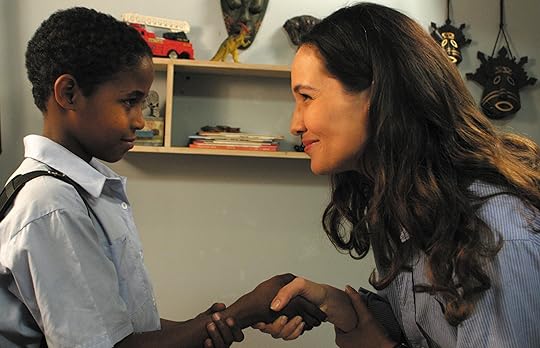
Yaël Abecassis brilla di luce propria.
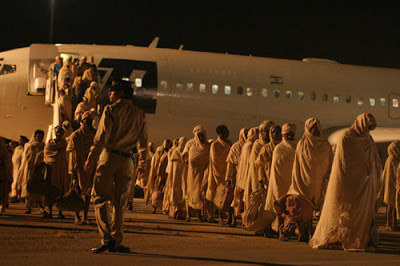
Radu ‘Train-de-vie’ Mihaileanu ha diretto e scritto un film magistrale, su un tema molto interessante e molto poco noto, l’operazione Mosè, organizzata dai servizi segreti israeliani per portare segretamente otto mila falasha, ebrei neri etiopi, in Israele e salvarli dalla povertà e dalle epidemie.
A piedi dalle montagne dell’Etiopia nei campi profughi del Ciad e infine l’approdo in Israele.
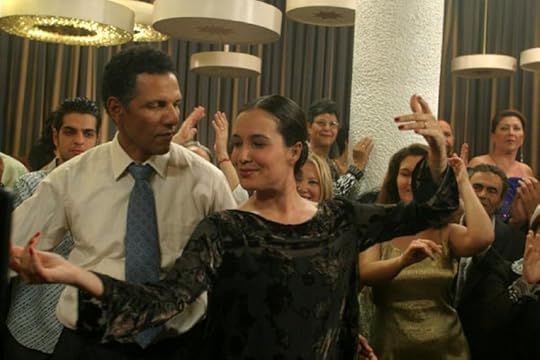
Yaël Abecassis e Roschdy Zem, madre e padre del bambino adottato.
Solo che il bambino che dall’Etiopia approda in terra d’Israele non è ebreo come si crede, bensì cristiano, e sempre malauguratamente nero: ha preso il posto di un coetaneo morto, si è spacciato per quel che non è, si porta dentro un segreto più grande di lui.
Riuscirà a trovare il coraggio per confessarlo solo una volta diventato adulto.
Una splendida storia di diversità e integrazione.
E non solo.
Il film vale tutte le stelle.
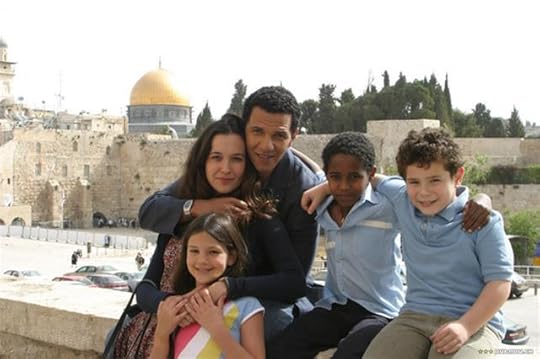
Il libro è una strana operazione poco riuscita: non mi pare un romanzo scritto contemporaneamente allo sviluppo del progetto cinematografico - mi sembra piuttosto la 'novelization' della sceneggiatura, ma non ha neanche un decimo dell'impatto del film.
Forse Radu, dovresti lasciar perdere, non puoi fare tutti i mestieri, sei un bravo regista, non cercare di essere anche un mediocre scrittore.
Yaël Abecassis brilla di luce propria.
Radu ‘Train-de-vie’ Mihaileanu ha diretto e scritto un film magistrale, su un tema molto interessante e molto poco noto, l’operazione Mosè, organizzata dai servizi segreti israeliani per portare segretamente otto mila falasha, ebrei neri etiopi, in Israele e salvarli dalla povertà e dalle epidemie.
A piedi dalle montagne dell’Etiopia nei campi profughi del Ciad e infine l’approdo in Israele.
Yaël Abecassis e Roschdy Zem, madre e padre del bambino adottato.
Solo che il bambino che dall’Etiopia approda in terra d’Israele non è ebreo come si crede, bensì cristiano, e sempre malauguratamente nero: ha preso il posto di un coetaneo morto, si è spacciato per quel che non è, si porta dentro un segreto più grande di lui.
Riuscirà a trovare il coraggio per confessarlo solo una volta diventato adulto.
Una splendida storia di diversità e integrazione.
E non solo.
Il film vale tutte le stelle.
Il libro è una strana operazione poco riuscita: non mi pare un romanzo scritto contemporaneamente allo sviluppo del progetto cinematografico - mi sembra piuttosto la 'novelization' della sceneggiatura, ma non ha neanche un decimo dell'impatto del film.
Forse Radu, dovresti lasciar perdere, non puoi fare tutti i mestieri, sei un bravo regista, non cercare di essere anche un mediocre scrittore.

September 2, 2014
La vera storia di un episodio poco conosciuto, la diaspora degli unici ebrei neri d'africa, dall'Etiopa alla Terra Promessa. Appassionante e commovente, da non perdere!

August 3, 2017
Il testo è una sceneggiatura o poco più.
Far diventare libro un film ancora una volta si rivela un procedimento innaturale. Una scrittura così sciatta può solo banalizzare e mortificare una storia che è invece potenzialmente molto coinvolgente.
Far diventare libro un film ancora una volta si rivela un procedimento innaturale. Una scrittura così sciatta può solo banalizzare e mortificare una storia che è invece potenzialmente molto coinvolgente.
August 6, 2024
un libro corto ma estremamente profondo. Una storia d'amore che nasce nell' adolescenza di un bambino rovinato dai traumi, sfocia nel lieto fine migliore di sempre. Se non avessi dovuto leggerlo per scuola, non mi avrebbe mai incuriosito, e invece sono rimasta piacevolmente stupita

February 3, 2010
touching, meaningful... beautiful!

Read
February 21, 2024I'm not going to rate this book because I feel like I shouldn't rate stories based on true events. Mihaileanu literally starts the book with "J'ai rencontré un juif éthiopien dans le cadre d'un Festival du Film à Los Angeles," and he talks about how it was this story about the journey of Ethiopian Jews (which is not frequently talked about) that moved him to ultimately write this book and then turn it into a movie (which is almost exactly the same as the book, btw—not a bad or a good thing, just a comment, lol).
For me, this book really shed light on moments in history that I didn't know about (which, any time I have the opportunity to learn about history through a story as opposed to a textbook, I will take it). The characters were hard to empathize with though. The only character I really liked is the protagonist, Schlomo, and I also guess I liked his mom (Yael) as well. However, I wasn't really attached to any of the characters.
I also hated Dany and I really didn't like Sarah. My hatred of some characters far outweighed my love for others.
Sarah was quite manipulative of Schlomo; every time she called him, it was with the intention of making him jealous (mind you, he did not give one flying fuck who she was with because THEY WERE NEVER TOGETHER IN THE FIRST PLACE). This is a good segue into my opinion of the ending, in which, out of the blue, Schlomo marries Sarah because Yael(?) tells Schlomo while he is IN THE HOSPITAL ROOM that he has to tell Sarah that he loves her because "she's been waiting for 10 years".
SARAH NEVER MADE AN EFFORT IN THE FIRST PLACE. IF IT WAS ACTUALLY HEALTHY FOR THEM TO BE TOGETHER AND IF THEY WERE ACTUALLY IN LOVE + COMPATIBLE WITH EACH OTHER, SHE WOULDN'T HAVE HAD TO PLAY GAMES, DAMN IT.
The ending really just felt like Mihaileanu didn't know how to end the story, honestly. Feels like that deadline was approaching so he just sat down and came up with something.
On that note, I thought that Sarah's character was supposed to represent the idea of 'good stereotypes'. In other words, her character was supposed to DISPROVE the idea that there are 'good stereotypes' (aka, all stereotypes are bad) because Sarah fetishizes Schlomo, as he is the only Black kid in her class. However, the fact that Sarah and Schlomo get married and have a kid at the end completely takes away from that message. At least she stops with the micro (and at times, macro) aggressions when they get married, but still....
There's a whole conversation we can have about the power dynamics that come to play in relationships where there is a white woman and a Black man, but this book refuses to get into that. I think that if one of the main relationships in your book is between a Black man and a white woman AND the white woman VERY CLEARLY fetishizes the Black man, you have to ask your audience some probing questions. You can't just have the characters get married and call it a day. That just reinforces/allows or even ENCOURAGES some nasty shit.
And it's not like Mihaileanu doesn't know how to write complex characters. In fact, he very much proves that he can write a complex character/relationship and ask an audience probing questions with the character Yoram and his family dynamic.
In all honesty, I was expecting this story to be very cheesy/white saviorism when I read that the white left-wing family was about to adopt the Ethiopian boy (cough cough so that they could feel better about themselves + feel 'more left-wing') but the author didn't shy away from portraying the family as imperfect. In fact, Yoram's character is a VERY clear example of a white performative activist. I wasn't expecting to have to think critically about performative activism in this book, but Yoram's character gave me the opportunity to do so. (Again, why didn't Mihaileanu write Sarah as well as he wrote Yoram????)
Going back to something I didn't like about this book, I think the controverse thing came up out of nowhere and was very unrealistic (because why was Schlomo getting a standing ovation all of a sudden?) I get that the purpose of the controverse was to represent the people around Schlomo (or Israel in general) becoming more conscious of race, but I think the whole situation at the immigration center (with the circumcisions) was a whole lot more effective in achieving this. I hold the same criticism for the second intifada thing in chapter 20; one day Schlomo was in France and the next he was volunteering to help injured soldiers during the second intifada?
Mind you, take all these comments with a grain of salt; French is not my first language and I read this for a class my senior year, so I was very unmotivated to give this reading my all. Also, I know I've critiqued a lot of things here, but I'd much rather read a book that makes me feel something (even if that something is not great) than to read a book that makes me feel nothing.
For me, this book really shed light on moments in history that I didn't know about (which, any time I have the opportunity to learn about history through a story as opposed to a textbook, I will take it). The characters were hard to empathize with though. The only character I really liked is the protagonist, Schlomo, and I also guess I liked his mom (Yael) as well. However, I wasn't really attached to any of the characters.
I also hated Dany and I really didn't like Sarah. My hatred of some characters far outweighed my love for others.
Sarah was quite manipulative of Schlomo; every time she called him, it was with the intention of making him jealous (mind you, he did not give one flying fuck who she was with because THEY WERE NEVER TOGETHER IN THE FIRST PLACE). This is a good segue into my opinion of the ending, in which, out of the blue, Schlomo marries Sarah because Yael(?) tells Schlomo while he is IN THE HOSPITAL ROOM that he has to tell Sarah that he loves her because "she's been waiting for 10 years".
SARAH NEVER MADE AN EFFORT IN THE FIRST PLACE. IF IT WAS ACTUALLY HEALTHY FOR THEM TO BE TOGETHER AND IF THEY WERE ACTUALLY IN LOVE + COMPATIBLE WITH EACH OTHER, SHE WOULDN'T HAVE HAD TO PLAY GAMES, DAMN IT.
The ending really just felt like Mihaileanu didn't know how to end the story, honestly. Feels like that deadline was approaching so he just sat down and came up with something.
On that note, I thought that Sarah's character was supposed to represent the idea of 'good stereotypes'. In other words, her character was supposed to DISPROVE the idea that there are 'good stereotypes' (aka, all stereotypes are bad) because Sarah fetishizes Schlomo, as he is the only Black kid in her class. However, the fact that Sarah and Schlomo get married and have a kid at the end completely takes away from that message. At least she stops with the micro (and at times, macro) aggressions when they get married, but still....
There's a whole conversation we can have about the power dynamics that come to play in relationships where there is a white woman and a Black man, but this book refuses to get into that. I think that if one of the main relationships in your book is between a Black man and a white woman AND the white woman VERY CLEARLY fetishizes the Black man, you have to ask your audience some probing questions. You can't just have the characters get married and call it a day. That just reinforces/allows or even ENCOURAGES some nasty shit.
And it's not like Mihaileanu doesn't know how to write complex characters. In fact, he very much proves that he can write a complex character/relationship and ask an audience probing questions with the character Yoram and his family dynamic.
In all honesty, I was expecting this story to be very cheesy/white saviorism when I read that the white left-wing family was about to adopt the Ethiopian boy (cough cough so that they could feel better about themselves + feel 'more left-wing') but the author didn't shy away from portraying the family as imperfect. In fact, Yoram's character is a VERY clear example of a white performative activist. I wasn't expecting to have to think critically about performative activism in this book, but Yoram's character gave me the opportunity to do so. (Again, why didn't Mihaileanu write Sarah as well as he wrote Yoram????)
Going back to something I didn't like about this book, I think the controverse thing came up out of nowhere and was very unrealistic (because why was Schlomo getting a standing ovation all of a sudden?) I get that the purpose of the controverse was to represent the people around Schlomo (or Israel in general) becoming more conscious of race, but I think the whole situation at the immigration center (with the circumcisions) was a whole lot more effective in achieving this. I hold the same criticism for the second intifada thing in chapter 20; one day Schlomo was in France and the next he was volunteering to help injured soldiers during the second intifada?
Mind you, take all these comments with a grain of salt; French is not my first language and I read this for a class my senior year, so I was very unmotivated to give this reading my all. Also, I know I've critiqued a lot of things here, but I'd much rather read a book that makes me feel something (even if that something is not great) than to read a book that makes me feel nothing.
This entire review has been hidden because of spoilers.

August 14, 2017
Questo romanzo racconta la storia dei falasha, gli ebrei neri,e del loro epico viaggio verso Gerusalemme. La storia di un bambino cristiano che, fatto passare per figlio di una madre falasha, arriva nella città santa e deve cominciare a vivere, a diventar grande sapendo che non è ebreo, che non è un orfano, che non è ancora nulla. Ma che vuole diventare un uomo. E' un bel libro, che si legge facilmente e che tocca molti temi importanti, tra cui diversità ed integrazione. Tuttavia non posso dare 5 stelline poiché il libro, nato dopo il film (che per altro non ho ancora visto), si presenta più come una sorta di sceneggiatura che come propriamente una storia romanzata..
June 12, 2021
noioso

August 30, 2026
La fine è veramente stupenda💞
Displaying 1 - 9 of 9 reviews