

What do you think?
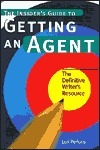
The Insider's Guide to Getting an Agent
A literary agent provides advice for authors seeking representation and discusses such topics as what is expected of an agent, how to build a good working relationship, and the protocol for handling book deals
- GenresNonfiction
244 pages, Paperback
First published September 1, 1999
About the author
Lori Perkins
67 books216 followersPublisher of Riverdale Avenue Books and founder of L. Perkins Agency. Author of the #MeToo anthology, Fifty Writers on Fifty Shades of Grey as well as Hungry for Your Love, and 30 other erotic romance anthologies.
Riverdale Avenue Books is an award winning, innovative hybrid publisher at the leading edge of the changes in the publishing industry. We publish e-books, print, and audio books under 12 imprints: Desire, an erotica/erotic romance imprint; Riverdale/Magnus the award-winning imprint of LGBT titles; Pop featuring pop culture titles; Afraid, a horror line; SFF, a science fiction fantasy line; Truth, an erotic memoir line; Dagger, a mystery thriller imprint; Sports and Gaming featuring sports and gaming titles; VerVe featuring lifestyle titles; Hera featuring both the true and fictional lives and loves of women aged 35 and up; and 120 Days, an LGBT pulp fiction line. Started in 2011 by industry veteran Lori Perkins, Riverdale is a full service publisher, with a foreign rights and film agency department. Visit us at www.RiverdaleAveBooks.com.
Riverdale Avenue Books is an award winning, innovative hybrid publisher at the leading edge of the changes in the publishing industry. We publish e-books, print, and audio books under 12 imprints: Desire, an erotica/erotic romance imprint; Riverdale/Magnus the award-winning imprint of LGBT titles; Pop featuring pop culture titles; Afraid, a horror line; SFF, a science fiction fantasy line; Truth, an erotic memoir line; Dagger, a mystery thriller imprint; Sports and Gaming featuring sports and gaming titles; VerVe featuring lifestyle titles; Hera featuring both the true and fictional lives and loves of women aged 35 and up; and 120 Days, an LGBT pulp fiction line. Started in 2011 by industry veteran Lori Perkins, Riverdale is a full service publisher, with a foreign rights and film agency department. Visit us at www.RiverdaleAveBooks.com.
Ratings & Reviews
Friends & Following
Create a free account to discover what your friends think of this book!
Community Reviews
Displaying 1 - 5 of 5 reviews
March 1, 2026
Lori represented Ed and Lorraine Warren until she left St. Martin's press. We needed Bishop Robert Mckenna to conduct 2 exorcisms to rid our home of evil. Years later I wrote a 10 chapter book about the haunting and Ed Warren said since I was the principle and the writer I would get two thirds of the money while the Warrens would get one third. I agreed to this amount, although Ed had a heart attack at the time of our haunting and the Warren's were of little help and only appeared in few pages. Ed then said he wanted 2 thirds of the money and I said no because the book would reduce the value of our home. I gave Ed until the following Friday noon time to honor our original agreement. Exactly at noon Friday a light bulb blew up next to my husband in the library and we knew what Ed's answer. Next I contacted Lori Perkins who submitted the book to 16 publishers which led to a meeting with a movie/book publisher for a luncheon. Lori, who hadn't signed a contract with me yet, didn't invite me, needless to say the luncheon didn't go well and she was accused of representing an untrue story. We still live in our 1809 Federal Colonial which has increased 12 times in value since we bought it, we also did 2 videos, without payment, as a thank you to Bishop Mckenna that are still watched to day, go to YouTube a haunting darkside and Ed and Lorraine Warren haunted bed and breakfast. Enjoy.

July 9, 2019
I would say the title of the book is misleading. The book is not a how-to “get an agent” guide, which is what I accepted, but an overall, what you should expect from the publishing world, and what your agent should be doing for you. I found the sections to be very brief and anecdotal instead of having applicable information for the general debuting novelist. Although I do not regret reading the book as it offered me some valuable insights of the publishing world, I found myself wishing it had more information about how to actually get an agent. It also jumped ahead in time and started to talk about multiple-book deals and plans that a debut writer looking for an agent doesn’t have on their mind. This review may be harsh, but I find myself needing to find another book on getting a literary agent. It was also published in 1999, and therefore a lot of the “trends” in publishing mentioned are outdated and are replaced by other genres. I would not recommend other new writers to rely on this for information.

April 17, 2024
This is mostly an overview of the publishing business. It gives little information about how to find and get an agent. Some of this information is dated as the book was published in the 1990s.

July 9, 2010
Although this book was written in 1999 it is still a very useful book on the role an agent plays in the life of a writer. Perkins is very honest in her portrayal of her job, her position as advocate to the writer and the life of an agent. She includes many, brief stories as cautionary tales for writers to illustrate what to expect and what not to expect from an agent.
I would like to see an updated edition to this book to gauge how the publishing industry has changed in the past decade. (She refers to fax machines more often than email and web sites, for instance. Also, publishing trends have changed, with horror -- her genre -- having made a big comeback)
Well worth the read.
I would like to see an updated edition to this book to gauge how the publishing industry has changed in the past decade. (She refers to fax machines more often than email and web sites, for instance. Also, publishing trends have changed, with horror -- her genre -- having made a big comeback)
Well worth the read.

August 11, 2009
This is still a really good over view of what a literary agent does and how she does it. I have a blog now too, agentinthemiddle.blogspot.com
Displaying 1 - 5 of 5 reviews