

What do you think?
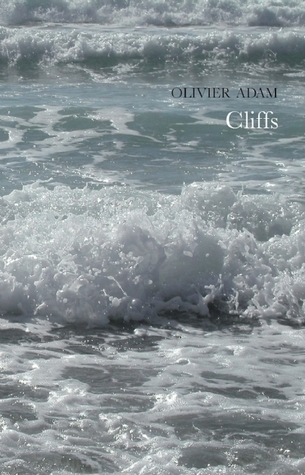
Cliffs
Etretat, Normandy. On the balcony of a hotel room, a man is keeping watch. His gaze is fixed on the cliffs from which his mother jumped to her death twenty years earlier. During the course of a single night, the narrator reflects on his life, searching for traces of his mother, his childhood, his lost youth, his brutal father, his runaway brother and his years in Paris. He reflects on his memories, sensations and loss—and, above all, the love that has saved his own soul from despair.
152 pages, Paperback
First published January 1, 2007
About the author
Olivier Adam
62 books109 followersRomancier de renom, Olivier Adam connaît un succès populaire et critique indéniable qui le place parmi les écrivains les plus connus de sa génération. Ancien étudiant en gestion des entreprises culturelles, il participe à la création du festival littéraire 'Les Correspondances de Manosque' et travaille comme directeur de collection aux éditions du Rouergue. C'est son premier roman paru en 2000, 'Je vais bien, ne t'en fais pas' qui lui permet d'accéder à la notoriété. Lauréat du prix Goncourt de la nouvelle en 2004 pour 'Passer l'hiver', l'auteur poursuit néanmoins dans la veine romanesque avec 'Falaises' ou 'À l'abri de rien'. Des histoires plein la tête, Olivier Adam sort coup sur coup 'Des vents contraires' (2009) et 'Le coeur régulier' (2010), tout en écrivant des ouvrages jeunesse, 'Les Boulzoreilles', avec Euriel Dumait (2010) ou 'Personne ne bouge' (2011).
Parmi les auteurs français les plus adaptés au cinéma, il collabore dès 2006 avec Philippe Lioret, au scénario de l'adaptation de son premier roman 'Je vais bien, ne t'en fais pas'. Il retrouve ensuite le réalisateur pour l'écriture du script de 'Welcome'. Il participe également aux scénarios de 'Poids léger' et 'Maman est folle (d' après 'À l'abri de rien') de Jean-Pierre Améris, et à celui de l'adaptation par Jalil Lespert de son roman 'Des vents contraires', sorti en décembre 2011.
http://www.evene.fr/celebre/biographi...
Parmi les auteurs français les plus adaptés au cinéma, il collabore dès 2006 avec Philippe Lioret, au scénario de l'adaptation de son premier roman 'Je vais bien, ne t'en fais pas'. Il retrouve ensuite le réalisateur pour l'écriture du script de 'Welcome'. Il participe également aux scénarios de 'Poids léger' et 'Maman est folle (d' après 'À l'abri de rien') de Jean-Pierre Améris, et à celui de l'adaptation par Jalil Lespert de son roman 'Des vents contraires', sorti en décembre 2011.
http://www.evene.fr/celebre/biographi...
Ratings & Reviews
Friends & Following
Create a free account to discover what your friends think of this book!
Community Reviews
Displaying 1 - 21 of 21 reviews

April 28, 2016
"le nostre vite si dibattono, gridano nel buio, urlano e tremano paura. siamo eternamente in cerca di un rifugio. un luogo dove il vento soffi meno forte. un luogo dove andare. e questo rifugio è un volto, e questo volto ci basta."

July 29, 2011
Le douloureux parcours d'un homme sans enfance.
Dans cet ouvrage grandement autobiographique, on découvre toute l'âpreté d'une jeunesse perdue, déclenchée par la disparation de la mère. S'enchaînent alors des expériences malheureuses, entre malaise d'adolescence, alcool et défaitisme qui se poursuivent par une misérable survie. Chaque personnage marque le parcours du héros avec son lot de souffrances. Et pourtant, cela reste simple sans aucun misérabilisme, d'autant plus que le style, très pur, consacre la noirceur du récit.
Un très beau livre, douloureux et poétique à la fois.
Dans cet ouvrage grandement autobiographique, on découvre toute l'âpreté d'une jeunesse perdue, déclenchée par la disparation de la mère. S'enchaînent alors des expériences malheureuses, entre malaise d'adolescence, alcool et défaitisme qui se poursuivent par une misérable survie. Chaque personnage marque le parcours du héros avec son lot de souffrances. Et pourtant, cela reste simple sans aucun misérabilisme, d'autant plus que le style, très pur, consacre la noirceur du récit.
Un très beau livre, douloureux et poétique à la fois.
July 9, 2009
Traurig vom Anfang bis zum Ende. Adam schafft mit einer sehr ausschmückenden Sprache den Leser auf die deprimierende Reise des Erzählers mitzunehmen. Der Schmerz kann gefühlt werden und löst sich auch nicht in der Bruderliebe auf. Wenn man glaubt es geht nicht mehr schlimmer, kommt noch etwas nach (Chloe). Ein bewegender Roman.
December 27, 2022
Triste. Horriblement triste. Achevez-moi

June 5, 2017
Olivier Adam is considered as one of the new important French writers. His books are numerous and highly praised, and Falaises was indeed a success. It is hard to say if this book (whose title means Cliffs) is a disguised autobiography, a novel, or both at the same time. And maybe it doesn’t matter. Anchored in the realm of a very grim and oppressive reality, it is a dark and sad book, where life itself is a suffocating, sometimes intolerable, ordeal for people who are prisoners of their familial and social conditions. It focuses on the relentlessly tormented life of Olivier, the narrator, whose mother kills herself when he is a little boy. Olivier and his brother barely survive the trauma of their mom’s suicide, are subsequently abused by their violent father, and grow up in a state of quasi delinquency. Olivier, as a young man and as an adult, drinks so much that he’s slowly killing himself. His life is miserable, and many of the lost people he meets end up dying (suicide is a leitmotiv in this book). Only the love of a strong woman and the birth of a child seem to save Olivier. I found Falaises to be a strangely uneven book. It can be emotionally quite powerful and striking, especially when it tries to dissect the legacy of a harrowing family tragedy and the unraveling of one’s mind. Olivier’s pain is palpable, and the relationship between the two brothers is beautifully rendered. Yet, Adam’s prose can often be overwrought, is burdened by what sometimes comes across as mediocre lyricism, and is oozing of self-indulgence. The gloominess and, in some parts, the sordidness, of the story are told in ways that feel hammered. Even if it’s a very different book, I could not help but think of Edouard Louis’ book “The End of Eddy”, recently translated in English, which, in opinion, is infinitely more compelling, formidable and persuasive when dealing with the shocking misery (social and psychological) of a certain French population. Louis' style is simply superior. The bitter taste I was left with, after finishing Adam’s book, is obviously intended by the writer, whose view of humanity is drenched in unhappiness and even morbidity. In that sense, he may have succeeded. The problem is that, as heartbreaking as the fate of Olivier is, I only felt that heartbreak intermittently. I also did have the impression of being slightly manipulated by the writing, as if Adam was trying very hard – too hard – to make me feel sorry for his narrator. Or for him. There is no doubts that the book has impressed me in parts, but it hasn’t truly convinced me.
December 14, 2018
Een somber boek. Ik hoop voor de schrijver dat het niet helemaal autobiografisch is. Wel heel goed geschreven. Een moeder pleegt na een opname wegens zware depressie alsnog zelfmoord door van hoge rotsen langs de zee (de kliffen van de titel) te springen. Twee broertjes blijven achter met een vader, die plots verandert in een humeurige tiran. Ze zoeken hun heil op straat, in drank, in drugs en seks. De jongste broer schrijft dit verhaal en dus zijn herinneringen, tijdens zijn jaarlijkse bezoek aan de plek waar de moeder zelfmoord pleegde. Inmiddels heeft hij een vrouw en een dochtertje. Hij neemt zich voor dit dochtertje nooit in de steek te laten zoals zijn ouders deden. Of hij dat waar zal kunnen maken?

July 10, 2018
Een man kan zich pas losmaken van de spoken uit zijn verleden door de liefde die hij voelt voor zijn vrouw en pasgeboren dochtertje. Heel knap hoe hij kan liefhebben als verwaarloosd kind. Die spoken: De zelfmoord van zijn psychisch zieke moeder, de kille hardvochtige manier waarop zijn vader vervolgens omgaat met hem en zijn broer, een adolescentie met vrienden uit dezelfde thuissituaties waarmee hij hangt op straat omdat ze nergens echt welkom zijn (drank, drugs, zwarte kleding, jaren 90 muziek). Vervolgens: kleine baantjes, een chambre de bonne, overal verdrietige getraumatiseerde mensen. Dan: de eerste manuscripten, kunnen terugkijken op, afscheid nemen van.

November 22, 2021
A volte mi ritrovo tra gli scaffali, a seguito di acquisti compulsivi, delle piccole perle come questa. Era un'offerta, lo ricordo; lo scelsi alla cieca, probabilmente per l'ambientazione in Normandia.
È breve, ma l'ho dovuto finire al più presto, sono caduta nel vortice della narrazione di una vita difficile, ripercorsa attraverso i ricordi dolorosi. Non è un libro gioioso, è permeato di sofferenza e dolore, eppure è leggero, scivola in volo sopra l'orrore, con un potere descrittivo meritevole.
"Un'opera matura, un romanzo intenso e toccante".
È breve, ma l'ho dovuto finire al più presto, sono caduta nel vortice della narrazione di una vita difficile, ripercorsa attraverso i ricordi dolorosi. Non è un libro gioioso, è permeato di sofferenza e dolore, eppure è leggero, scivola in volo sopra l'orrore, con un potere descrittivo meritevole.
"Un'opera matura, un romanzo intenso e toccante".

December 5, 2024
L'auteur nous communique si bien les malheurs de son personnage que la lecture en est si éprouvante, étouffante et suffocante.
Comment le sort peut-il s'acharner avec cette cruauté sur cet être, le condamnant à vie à la douleur ?
Un moment de lecture très pénible, ce qui démontre bien le talent de l'auteur.
Comment le sort peut-il s'acharner avec cette cruauté sur cet être, le condamnant à vie à la douleur ?
Un moment de lecture très pénible, ce qui démontre bien le talent de l'auteur.

February 2, 2024
Rien d’autre qu’un homme qui noie son chagrin dans l’alcool et sa solitude dans le sexe sale avec des femmes qui n’en ont visiblement pas réellement envie, et qui fait le deuil de sa mère en prenant de drogue et en la voyant à chaque coin de rue.

August 2, 2024
Très très très touchant
Read
August 20, 2024I would read these half-baked passages and think to myself: this is probably quite beautiful in french... why didn't I listen better in class

September 25, 2025
Het meest deprimerende nummer uit 'Pornography' van The Cure zou bij dit boekje de perfecte soundtrack zijn. Soms fascinerend, soms ook wat veel.

March 6, 2014
Olivier sitzt spät nachts rauchend auf dem Balkon eines Hotels in Étretat, blickt auf die angestrahlten Felsklippen und lässt sein bisheriges Leben Revue passieren, während seine Frau und seine Tochter drinnen schlafen. Die beiden sind der einzige Fixpunkt, den er jemals so richtig hatte.
Als er elf war, stürzte sich seine Mutter von eben jenen Klippen, auf die er jetzt schaut, kurz nach ihrer Entlassung aus einer psychiatrischen Klinik. Der Vater war mit der Situation völlig überfordert - alles, was seine beiden Söhne von ihm bekamen, waren Schläge und harte Worte. Eine Zeitlang fing der Freundeskreis die beiden auf, doch der Trost, den diese Gemeinschaft bot, bestand im wesentlichen aus Alkohol, Sex und Drogen. Noch im Erwachsenenalter taumelte Olivier ziel- und orientierungslos durchs Leben, bis er Claire kennenlernte, die schließlich die Mutter seiner Tochter wurde ...
Olivier Adam serviert hier ziemlich harte Kost. In ungekünstelten Worten, die oft so rauh und schroff sind wie die Felswände von Étretat, zeichnet er den schwierigen Lebensweg seines Protagonisten nach, bei dem ich mich gefragt habe, ob die Vornamensgleichheit Zufall oder Absicht ist. Olivier ist ständig auf der Suche nach Liebe und Geborgenheit, die er nie wirklich erfahren hat, sucht Halt an Stellen, wo er ihn sicher nicht finden wird, und fragt sich immer wieder, wie es dazu kommen konnte, dass sein Vater so abgestumpft ist und seine Mutter immer mehr in ihre eigene Welt abgedriftet ist.
"Klippen" ist sicherlich kein Wohlfühlbuch, trotz des beliebten Ferienortes am Meer, in dem es teilweise spielt, doch trotz aller Härte auch nicht gänzlich ohne Hoffnung, dass sich die Dinge zum Guten wenden können. Ich fand dieses schmale Buch ziemlich eindrucksvoll.
Als er elf war, stürzte sich seine Mutter von eben jenen Klippen, auf die er jetzt schaut, kurz nach ihrer Entlassung aus einer psychiatrischen Klinik. Der Vater war mit der Situation völlig überfordert - alles, was seine beiden Söhne von ihm bekamen, waren Schläge und harte Worte. Eine Zeitlang fing der Freundeskreis die beiden auf, doch der Trost, den diese Gemeinschaft bot, bestand im wesentlichen aus Alkohol, Sex und Drogen. Noch im Erwachsenenalter taumelte Olivier ziel- und orientierungslos durchs Leben, bis er Claire kennenlernte, die schließlich die Mutter seiner Tochter wurde ...
Olivier Adam serviert hier ziemlich harte Kost. In ungekünstelten Worten, die oft so rauh und schroff sind wie die Felswände von Étretat, zeichnet er den schwierigen Lebensweg seines Protagonisten nach, bei dem ich mich gefragt habe, ob die Vornamensgleichheit Zufall oder Absicht ist. Olivier ist ständig auf der Suche nach Liebe und Geborgenheit, die er nie wirklich erfahren hat, sucht Halt an Stellen, wo er ihn sicher nicht finden wird, und fragt sich immer wieder, wie es dazu kommen konnte, dass sein Vater so abgestumpft ist und seine Mutter immer mehr in ihre eigene Welt abgedriftet ist.
"Klippen" ist sicherlich kein Wohlfühlbuch, trotz des beliebten Ferienortes am Meer, in dem es teilweise spielt, doch trotz aller Härte auch nicht gänzlich ohne Hoffnung, dass sich die Dinge zum Guten wenden können. Ich fand dieses schmale Buch ziemlich eindrucksvoll.

September 22, 2012
Dies ist ein Buch, was mich zutiefst berührt hat! Die Stimmung im gesamten Buch ist sinnlich und melancholisch, schon nach den ersten Seiten wurde ich in diesen Strudel der Gefühle tief hineingezogen. Einfühlsam und ehrlich erzählt Olivier von seiner Kindheit und Jugend, geprägt vor allem durch den Freitod seiner Mutter und die Wut und den Jähzorn seines Vaters. Es resultiert eine traurige und leere Zeit, in der Alkohol und Drogenexzesse im Vordergrund stehen, sich die Jugendlichen mit Sex und Zärtlichkeiten versuchen zu trösten. Menschen und Freunde kommen und gehen, erst durch seine Frau Claire und die gemeinsame Tochter Chloé lernt Olivier, dass das Leben nicht nur aus Tristesse besteht. Ein fantastisches Buch!

December 6, 2012
non sono mai entrata in sintonia con questo libro dove il dolore è sbandierato, protagonista assoluto, sbattuto in faccia a chi legge. in cui non c'è il minimo pudore, il minimo respiro- per non parlare della minima speranza. non è una questione di scrittura- perché la prosa di adam è abile e corretta, ma io non ho mai provato la minima empatia, la minima tenerezza e compassione per le tristissime vicende narrate.

May 10, 2014
Not sure what I was expecting from this book, didn't really say much about it on the back and I don't like just reading books because the back of the book looks good. I'd never heard of this author before and thought I'd give it a go. The story is told like a true story, whether it is or not I don't actually know, the person telling the story has the same name as the author of the book so not sure. It was definitely a good story that makes you think about yourself and family.
November 15, 2016
Dull, but mercifully short. Narrator loses his mum, feels jolly sad about it. Then he drinks, takes painkillers, feels numb, and has a terrible relationship with his father, who hits him and is an alcoholic naturally. Sleeps with lots of doomed, tragic women on the way. Added nothing to my life, but the cover is lovely.

January 30, 2013
When I found out that Adam Olivier had written other books besides "Je vais bien, ne t'en fais pas", I dove into this one.
While the "unresolved" theme hanging in his masterpiece is present in this book as well, the story lacks that something special to justify it.
While the "unresolved" theme hanging in his masterpiece is present in this book as well, the story lacks that something special to justify it.

July 24, 2011
Das beste Buch, dass ich in diesem Jahr gelesen habe.

March 16, 2012
Langatmig
Displaying 1 - 21 of 21 reviews