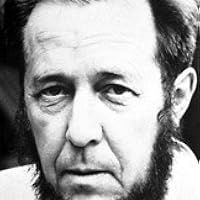
In recent decades, Oliver Wendell Holmes has been praised as "the only great American legal thinker" and "the most illustrious figure in the history of American law." But in Albert Alschuler's critique of both Justice Holmes and contemporary legal scholarship, a darker portrait is painted—that of a man who, among other things, espoused Social Darwinism, favored eugenics, and, as he himself acknowledged, came "devilish near to believing that might makes right."
Free of the turgidity that marks a surprising amount of Holmes's prose, this takedown is as much of modern American legal theory as it is the man himself. In the end, Alschuler is effective in showing that realism did not replace formalism in American law, but rather natural law theory. And this replacement in the end was no true replacement at all, as realism has proven incapable of finding a coherent account of itself. Holmes may have taken "law without values" as a compliment, but that is precisely the point: he could not recognize that phrase's essential self-contradiction, and, now, neither can we.
It’s been a long time since I’ve read a book whose title so succinctly summarizes the contents within, but Albert Alschuler’s Law Without Values accomplishes just that. Although the majority of the book explores the life, philosophy, and legal arguments of Supreme Court Justice Oliver Wendell Holmes, Alschuler also casts an examining eye on the legal and moral skepticism that Holmes inspired in much of today’s legal academics and practitioners. It is this introspective view of the law that holds the most value for the casual reader, though many may be astonished to know the depth and breadth with which Justice Holmes influenced not only the American legal field but other areas of society as well.
With a vast resource of quotes from Holmes’s admirers, biographers, and the man himself, Alschuler deftly portrays Holmes as a Civil War veteran who crossed over the ethical boundary line one time too many and was left with nothing but an “adolescent" (p. 194) might-makes-right view of life. Yet despite disagreeing with many about Holmes’s views, Alschuler stops short of anti-Holmes iconoclasm. He cares more about re-characterizing Holmes’s judicial philosophy in a more proper light than tearing down the man’s legacy. And by so often citing the justice himself, the author does an excellent job.
With so many direct quotations from case opinions and biographies of Holmes, as well as law review articles and other weighty materials, the book can be quite dense and difficult to get through at times. Yet what is so ironic is that Alschuler simply let’s the words speak for themselves, letting the reader draw the conclusion that Holmes really was a man with no moral compass. What is even more shocking is how many of Holmes’s fans acknowledge as much and simply write the man off as a “Jekyll-Holmes, Hyde-Holmes” (ch. 2, p. 15). Rather than risk casting off his legacy as the convoluted and contradictory mess that it was, Holmes’s hagiographers instead carve out exceptions for when something Holmes said should be praised and when it can be ignored. And Alschuler calls them out caustically at times for it.
Chapter 6’s “Judging the Common Law” is a wonderful foray into many of Holmes’s judicial opinions, as well as his legal theories on everything from contracts to torts and criminal law to First Amendment jurisprudence. However, it is in Chapter 7’s “The Descending Trail: Holmes’s Path of the Law” that Alschuler is at his best. The chapter can get quite heady at times, but a careful reader will glean a wonderful exposition on not only what “the law” is, but what it “ought to be”.
Overall, this book will definitely have a niche audience, but those who are attracted to either Justice Holmes’s legacy, his jurisprudence or prose, or American law generally will find a treasure trove of legal analysis within.
Prof. Alschuler has written an engaging and informative analysis of Holmes' jurisprudence, with some trenchant well-taken observations and criticisms. However, the critique suffers here and there from failing to recon with some of its own un-examined first principles on the ground floor while at the same time criticizing Holmes for where his arguments lead. Much of this work has been done by other philosophers of the law and by current thinkers and writers like Deneen, Douthat, and Vermeule. That said I appreciated the references to Blackstone and Lincoln, and would have liked to have seen some of those views developed to a greater degree. Alschuler is correct that there are some silly overstatements of praise for Holmes by various parties, such as his status as a godlike figure in American law of greater stature than the Founders or their writings. Alschuler is correct in his implied argument that much of the praise is simply motivated reasoning for praising a figure in the law that has come to be seen as a proxy for certain ideas or ideological commitments. Where Alschuler also misses for me (while at the same time scoring points) is in his arguments about Holmes' sort of "bad man" views of the law and his deference to legislatures in giving the majority what it wants. I feel that these approaches are fair ways to look at legal questions as part of a mix of views, but not standing alone. Alschuler doesn't persuade that any deficiency exists other than that these are incomplete ways to approach legal problems, and that standing alone they lead to unpleasant places. Agreed. But... At the end of the day, four stars for well-written work collating many sources discussing difficult subject matter.
Yeah! Really interesting treatment of the legal history that felt not dissimilar from a lot of the criticism of anthro formalism I’ve read?? Vis a vis tendency of formalist frameworks towards eugenics/social darwinism….obvi #notallformalists but in Holmes’ case yes. What a weird guy, even excluding buck v bell!
Justice Holmes is one of the most influential Supreme Court Justices in American history. Understanding him and his influence is key to understanding the history of law in America.
He is mostly idolized. He got some important things right (freedom of speech) but he also got some important things very wrong (eugenics, power and moral absolutes).
This books is best approached by serious students of the law or jurisprudence. While the author addresses his subject well he approaches it in a way that would probably best communicate to law students or lawyers. Since the information was originally used as lecture materials for college level classes this makes sense. There is still a niche out there for an easily read biography that makes some of these same points but with less focus on law and jurisprudence.
Alschuler has written a lively biography of the controversial Supreme Court Justice but he falters when he attempts to take on Holmes' theory of the Bad Man. Alschuler tries to undermine the theory by showing how it doesn't fit into a functioning system if one takes into account our values and goals, but Holmes' may never have intended to take those goals and values into consideration. Ultimately, one is left with the feeling that Alschuler thought Holmes would be insulted by the title "Law Without Values" when, quite possibly, Holmes may have been flattered.