

What do you think?

The Poems of Adelaide a Procter
Excerpt from The Poems of Adelaide a Procter
In the spring of the year 1853, I observed, as conductor of the weekly journal, Household Words, a short poem among the proffered contributions, very different, as I thought, from the shoal of verses perpetually setting through the office of such a periodical, and possessing much more merit. Its authoress was quite unknown to me. She was one Miss Mary Berwick, whom I had never heard of; and she was to be addressed by letter, if addressed at all, at a circulating library in the western district of London. Through this channel, Miss Berwick was informed that her poem was accepted, and was invited to send another. She complied, and became a regular and frequent contributor. Many letters passed between the journal and Miss Berwick, but Miss Berwick herself was never seen.
How we came gradually to establish, at the office of Household Words, that we knew all about Miss Berwick, I have never discovered. But, we settled somehow, to our complete satisfaction, that she was governess in a family; that she went to Italy in that capacity, and returned; and that she had long been in the same family. We really knew nothing whatever of her, except that she was re markably business-like, punctual, self-reliant, and reliable: so I suppose we insensibly invented the rest. For myself, my moth er was not a more real person age to me, than Miss Berwick the governess became.
This went on until December. 1854, when the Christmas number, entitled The Seven Pool Travellers, was sent to press.
About the Publisher
Forgotten Books publishes hundreds of thousands of rare and classic books. Find more at www.forgottenbooks.com
This book is a reproduction of an important historical work. Forgotten Books uses state-of-the-art technology to digitally reconstruct the work, preserving the original format whilst repairing imperfections present in the aged copy. In rare cases, an imperfection in the original, such as a blemish or missing page, may be replicated in our edition. We do, however, repair the vast majority of imperfections successfully; any imperfections that remain are intentionally left to preserve the state of such historical works.
In the spring of the year 1853, I observed, as conductor of the weekly journal, Household Words, a short poem among the proffered contributions, very different, as I thought, from the shoal of verses perpetually setting through the office of such a periodical, and possessing much more merit. Its authoress was quite unknown to me. She was one Miss Mary Berwick, whom I had never heard of; and she was to be addressed by letter, if addressed at all, at a circulating library in the western district of London. Through this channel, Miss Berwick was informed that her poem was accepted, and was invited to send another. She complied, and became a regular and frequent contributor. Many letters passed between the journal and Miss Berwick, but Miss Berwick herself was never seen.
How we came gradually to establish, at the office of Household Words, that we knew all about Miss Berwick, I have never discovered. But, we settled somehow, to our complete satisfaction, that she was governess in a family; that she went to Italy in that capacity, and returned; and that she had long been in the same family. We really knew nothing whatever of her, except that she was re markably business-like, punctual, self-reliant, and reliable: so I suppose we insensibly invented the rest. For myself, my moth er was not a more real person age to me, than Miss Berwick the governess became.
This went on until December. 1854, when the Christmas number, entitled The Seven Pool Travellers, was sent to press.
About the Publisher
Forgotten Books publishes hundreds of thousands of rare and classic books. Find more at www.forgottenbooks.com
This book is a reproduction of an important historical work. Forgotten Books uses state-of-the-art technology to digitally reconstruct the work, preserving the original format whilst repairing imperfections present in the aged copy. In rare cases, an imperfection in the original, such as a blemish or missing page, may be replicated in our edition. We do, however, repair the vast majority of imperfections successfully; any imperfections that remain are intentionally left to preserve the state of such historical works.
- GenresPoetry
287 pages, Paperback
First published January 1, 1858
Ratings & Reviews
Friends & Following
Create a free account to discover what your friends think of this book!
Community Reviews
Displaying 1 - 5 of 5 reviews

April 22, 2013
Saint Jerome thought that the Bible was written in both a vulgar manner and tongue. He was a learned man who loved the stylistic manner of Latin, its words, its sounds. He loved the complexity of Greek thought and verse. If you compare those with the simplistic (but still meaningful) verses in psalms, it’s easy to see why he thought it was barbaric. Still, feeling that this was another way for Satan to tempt him from reading the Bible, he swore off all worldly works of literature.
Proctor’s poetry could easily and happily replace Song of Solomon or Psalms. I’m not a religious person, spiritual yes, but I don’t believe in Church. Still, I find such beauty and solace in her poetry, it evokes the loving heart, its lessons are good, and its presentation flawless.
This book contains some of the most comforting poems and images regarding Death, and I can only imagine that during the Industrial Revolution when the death of the young was much more frequent, or of mother’s in childbirth, that her poetry lent some amount of commiseration to those in need.
Take for instance, this stanza
Beautiful and succinct, a whole poem talking about the Angel of Death. It is not creepy, it is not foreboding, as I find so many sermons about Heaven, it is simply soothing and reassuring.
Other poems like The Angel and the Sailor Boy, literally moved me to tears. Consider for a moment how forceful a poem is, how thoroughly it must touch the soul, that after more than a hundred years it can still evoke a powerful physical reaction. I had a weight in my chest, a terrible lump in my throat, and tears trickling down my cheeks- and just a few words did that.
Proctor’s poetry books are likely to be the kind that I continue to revisit over the years. The stanzas roll easily off of the tongue, the rhyming scheme simple- considering Tennyson was her contemporary, but they do not bore, and her imagery is evocative. Simply beautiful, always.
Proctor’s poetry could easily and happily replace Song of Solomon or Psalms. I’m not a religious person, spiritual yes, but I don’t believe in Church. Still, I find such beauty and solace in her poetry, it evokes the loving heart, its lessons are good, and its presentation flawless.
This book contains some of the most comforting poems and images regarding Death, and I can only imagine that during the Industrial Revolution when the death of the young was much more frequent, or of mother’s in childbirth, that her poetry lent some amount of commiseration to those in need.
Take for instance, this stanza
“He will give back what neither time, nor might,
Nor passionate prayer, nor longing hope restore.
(Dear as to long blind eyes recovered sight,)
He will give back those who are gone before.”
Beautiful and succinct, a whole poem talking about the Angel of Death. It is not creepy, it is not foreboding, as I find so many sermons about Heaven, it is simply soothing and reassuring.
Other poems like The Angel and the Sailor Boy, literally moved me to tears. Consider for a moment how forceful a poem is, how thoroughly it must touch the soul, that after more than a hundred years it can still evoke a powerful physical reaction. I had a weight in my chest, a terrible lump in my throat, and tears trickling down my cheeks- and just a few words did that.
Proctor’s poetry books are likely to be the kind that I continue to revisit over the years. The stanzas roll easily off of the tongue, the rhyming scheme simple- considering Tennyson was her contemporary, but they do not bore, and her imagery is evocative. Simply beautiful, always.
January 3, 2026
I'm not much of a poetry person, but I really enjoyed these – particularly the verses with detailed nature imagery.
June 16, 2012
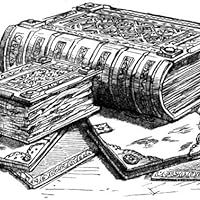
This was my very first "collectible" book I bought. 24k gold lined pages, and ornate cover. It was also a good book of poems, but its more sentimental than anything

June 19, 2022
Wonderful collection by the great Victorian poet, Adelaide Anne Procter. A large amount of poems on social justice.
Favorite poems: "A Student," "Homeward Bound," "A First Sorrow," "Castle in the Sky," "Recollections," "Hours," "Envy," "Never Again," "Dream Life"
"No shade has come between / Thee and the sun / Like some long childish dream / Thy life has run."
Favorite poems: "A Student," "Homeward Bound," "A First Sorrow," "Castle in the Sky," "Recollections," "Hours," "Envy," "Never Again," "Dream Life"
"No shade has come between / Thee and the sun / Like some long childish dream / Thy life has run."

February 5, 2008
Lyrical and visual.
Displaying 1 - 5 of 5 reviews