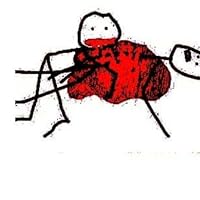
Fiction. In occupied France, an adolescent boy, pushed into a closet as his family is taken by Nazi soldiers, accidentally escapes the death camps. As an adult, "Federman," at once the novelist himself and a literary character, wonders what it means to re-tell this experience, if it can be re-told, or if the reduction of one's story or life to a single moment isn't the greatest of all horrors. Since its initial publication in 1979, THE VOICE IN THE CLOSEThas been hailed as one of the great experiments of prose ficiton: a single sentence, concrete recit of wrenching emotional impact. The new bilingual edition of the text features French and English versions newly revised by the author, with an introduction by Gerard Bucher and an end note by Theodore Pelton.
Raymond Federman was a French–American novelist and academic, known also for poetry, essays, translations, and criticism. He held positions at the University at Buffalo from 1973 to 1999, when he was appointed Distinguished Emeritus Professor. Federman was a writer in the experimental style, one that sought to deconstruct traditional prose. This type of writing is quite prevalent in his book Double or Nothing, in which the linear narrative of the story has been broken down and restructured so as to be nearly incoherent. Words are also often arranged on pages to resemble images or to suggest repetitious themes.
"futility of telling experimenting with the peripatetic search for love sex self or is it real people america aside from what is said there is nothing silence sam again what takes place in the closet is not said irrelevant here if it were to be known one would know it my life began in a closet a symbolic rebirth in retrospect as he shoves me in his stories whines his radical laughter up and down pulverized pages with his balls mad fizzling punctuation question of changing one's perspective view the self from the inside from the point of view of its capacity its will power federman achieve the vocation of your name beyond all forms of anthropologism a positive child anthropomorphism rather than the sad off-spring of a family giggling they pushed me into the closet among empty skins and dusty hats my mother my father the soldiers they cut little boys' hands old wife's tale send him into his life cut me now from your voice not that I be what I was machine but what I will be mother father quick downstairs already the boots same old problem he tried oh how he tried of course imagining that the self must be made remade unmade caught from some retroactive present apprehended reinstated I presume looking back how naive into the past my life began not again whereas in fact my mother was crying softly as the door closes"
I am back again in the actuality of my fragile predicament backtracked into false ambiguities smelling my hands by reflex out of the closet now to affirm the certainty of how it was annul the hypothesis of my excessiveness on which he postulates his babblings his unqualifiable design as I register the final absence of my mother crying softly in the night my father coughing his blood down the staircase they threw sand in their eyes struck their back kicked them to exterminate them his calculations yes explanations yes the whole story crossed out my whole family parenthetically xxxx into typographic symbols while I endure my survival from its implausible beginning to its unthinkable end yes false balls all balls ejaculating on his machine reducing my life to the verbal rehearsals of a little boy half naked trying to extricate himself as he goes on formulating yet another paradox
“and the virtual being federman pretends to invent in his excremental packages of delusions a survivor who dissolves in verbal articulations unable to do what I had to do admit that his fictions can no longer match the reality of my past”
——
Is this Federman’s masterpiece? I wouldn’t argue that it isn’t.
fenomenalne — jeśli mogę tak nazwać coś, co ledwo zrozumiałem, ale chyba nie o zrozumienie tu chodziło, a o uderzenie czytelnika w twarz formą i przebijającym się przez nie pytaniem: czy mogę opowiedzieć o tym, co przeżyłem, jeśli fakt przeżycia odcisnął się na przyszłości tak mocno, że wciąż wracam i wracam do jednego momentu, jakbym kręcił się wokół własnej osi i rozdwajał czy troił się po drodze?
federman rozmawia z federmanem, kłóci się ze sobą o to, czy opowiedzenie o przeżyciu, które wiązało się z utratą całej rodziny, może zaistnieć; całość dzieje się na przestrzeni jednego zdania pozbawionego interpunkcji; strony tekstu przeplatają się z powstającym na naszych oczach rysunkiem — możemy tylko domyślać się, że obserwujemy, jak rośnie przed nami głębia szafy, w której siedział chłopiec i w pewnym sensie nigdy z niej nie wyszedł; opowieść o traumie zmienia się w dziwny masturbacyjny akt, jałowe dzieło kreacji (chłop naprawdę dużo mówi o masturbacji, więc zinterpretowałem to sobie tak)
świetna książka na zapoznanie się z federmanem, bo całość zajmuje tylko dwadzieścia stron i przez brak interpunkcji czyta się tak wartko, że nie zauważyłem, kiedy skończyłem — bo i koniec nie może w takiej opowieści nastąpić; zamiast domknięcia otrzymujemy widok rozdrapanej rany
A concentrated strike of pure language and what it means to put yourself to paper. The precision and lyricism with which this is executed is impeccable.
I'm sure I'll be revisiting these 20 pages frequently as I work my way through Federman and have more to say about it.
Books about the holocaust in any form, but especially those written by Jewish victims, are difficult to assess in public because if the assessor says anything even slightly negative about the book, he or she will be vehemently branded as an antisemite at the very least if not a full-on nazi. There seems to be a requirement to heap on overwhelming effusive praise, as Gerard Bucher does in his introduction to "The Voice in the Clost" and Theodore Pelton does in his publisher's note. Yet, to assess a book like this properly, one should set aside the emotions evoked by the subject and look at the writing. In doing so, I am not as convinced of Raymond Federman's talents and stature in literature as are the two men I just mentioned. So, let us look at what we actually have with this little volume.
"The Voice in the Closet" is an excerpt from Federman's novel "The Twofold Vibration." The publisher of that novel deemed a 20-page section "unreadable" and had Federman remove the offending part. This part was a stream-of-consciousness memoir written without punctuation or other syntactical marking, just a flow of words that the reader must struggle to put together into sentences and phrases. Federman was one of the most praised writers of the metafiction craze of the 1960s and 1970s, and to understand what Federman is up to, one should note where his writing inspiration comes from, since it is somewhat different from many other writers of metafiction. A reader will note the deep connection to Samuel Beckett, about whom Federman wrote two books. With its pauseless flow of words from a mind talking to itself, the book reads as very similar to Beckett's "Malone Dies." In Federman's technique of returning several times to key small events and images, there is also a strong link to Alain Robbe-Grillet. And in its strongly autobiographical subject and oblique way of rendering it, there is another strong connection to Edmund Jabes.
Given that, what we have here is a piece of concentrated memory focused on the events of July 16, 1942. On that night in Nazi occupied France, there was a mass roundup of Jews for deportation. A 12-year-old boy identified in the story only as Federman survives the roundup when his father shoves him naked into a closet. The soldiers take away Federman's family, his father, mother, and two sisters, but miss the boy. Alone in the closet, the boy defecates on some newspaper he finds, wraps up the "package" and leaves the closet to find that his family has been completely taken away and their yellow star badges burned in the fireplace. There are strong suggestions that the boy himself will later be taken away, turned into authorities by one of his neighbors, but will never see his family again. The narrative of this event is mostly autobiographical, but one should be cautious about how far to take that. For instance, the boy in the story is 12, yet Raymond Federman would have been 14 at the time. The difference between memory and artifice, and the question of whether there is much difference, is one of the important components of the story. The story concentrates on certain key images, turning them into symbols then questioning their validity. Along with the "package," another important image is the idea of the closet as a womb, an image linked to a picture with a statuette of the Statue of Liberty. The burning yellow stars are imagined as yellow feathers, leading to some punning on the name "Federman" (feather man). The feather image leads to ideas about birds. The closet-womb metaphor seems to be of greatest importance, with the naked child emerging as a naked baby does. In a sense, the story suggests, this moment is when "Federman" is born.
What makes me hold back from the effusive praise that the front and back pieces give for the story is the manner of its telling. The spirit of Beckett does not just haunt the narrative, it overwhelms it. I have never been convinced that Beckett is the great genius he is made out to be. His writing makes the reader work very hard for very little. "The Voice in the Closet" does much the same. Having run through its cycle of images and memory connections, the story just keeps going, running it through three or so more times and not offering much new each time. The web of images and relations is certainly interesting. The way that the narrative is disengaged from the emotions of the events gives the reader much to think about in terms of how a person might reflect on traumatic events of his/her own distant past. It is just that each retelling, or recycling, does not provide a novel look at the events and images, at least not novel enough to warrant going over again. For me, there is just a little too much of the idea that the purpose of this story is not really the experience of a memory, but more an occasion for the reader to admire the style. Too much "look how clever I am" detracts from the impact the story itself could have.
A short excerpt from an earlier novel. More desperation than other Federman works but constellating many of the motifs from other worshippers. Especially worth comparing to SHHH.