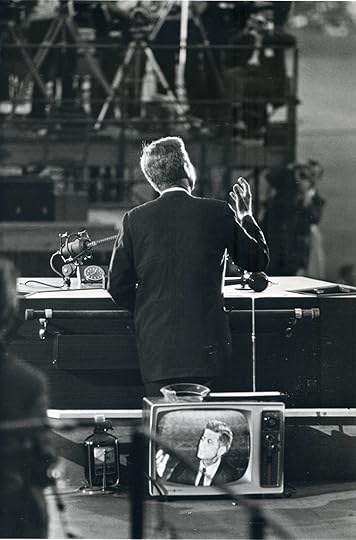
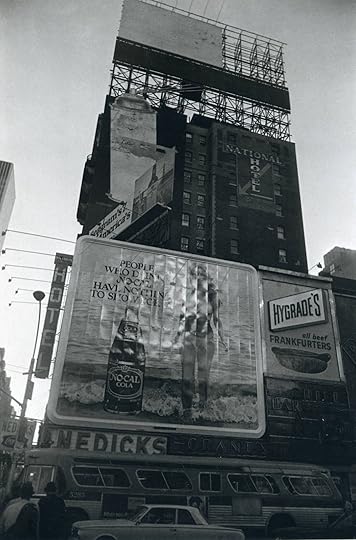
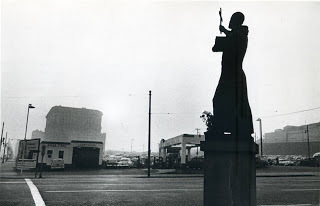
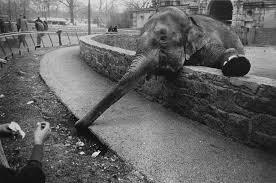
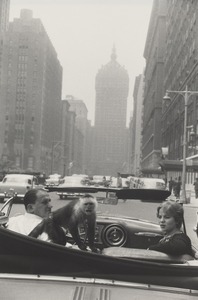
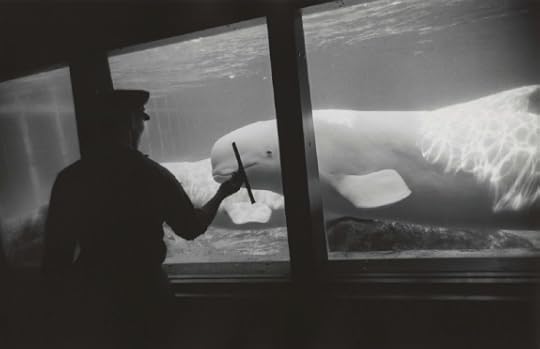
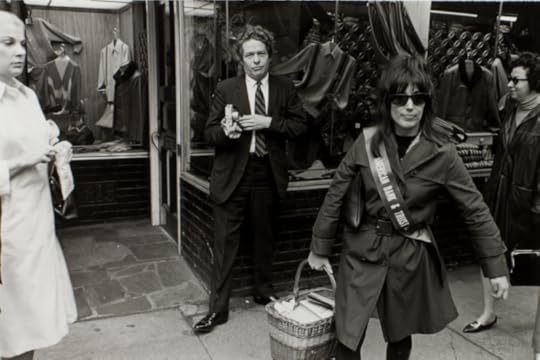
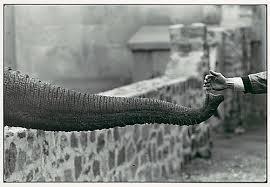
This book, published to accompany a retrospective exhibition at The Museum of Modern Art, is the first comprehensive overview of the work of Garry Winogrand. It contains an eloquent and important essay on the life and work of the photographer by John Szarkowski and a lavish plate section presenting the photographs thematically under the following titles: Eisenhower Years, The Street, Women, The Zoo, On the Road, The Sixties, Etc., The Fort Worth Fat Stock Show and Rodeo, Airport, and Unfinished Work. Many of the 179 plates are works that have never before been published; and the last section includes twenty-five pictures chosen from the enormous body of work that Winogrand left unedited at the time of his death in 1984.
John Szarkowski was an American photographer and curator best known for his role as the director of the Museum of Modern Art’s Photography Department from 1962 through 1991. “Photography is the easiest thing in the world if one is willing to accept pictures that are flaccid, limp, bland, banal, indiscriminately informative, and pointless,” he once explained. “But if one insists in a photograph that is both complex and vigorous it is almost impossible.”
Born Thaddeus John Szarkowski on December 18, 1925 in Ashland, WI, he went on receive a degree in art history from the University of Wisconsin, Madison in 1948. After working as a museum photographer at the Walker Art Center in Minneapolis, he moved to Buffalo to teach photography. The artist then relocated to Chicago, where he worked on his photobook The Idea of Louis Sullivan (1956). After his appointment at MoMA in 1962, Szkarowski would help launch the careers of Diane Arbus, Lee Friedlander, and William Eggleston, among several others during his tenure. He also published acclaimed books on the history of photography, including The Photographer’s Eye (1966) and Looking at Photographs: 100 Pictures from the Collection of The Museum of Modern Art (1973).
After retiring from the museum in 1991, Szarkowski resumed his own career in photography. He died on July 7, 2007 in Pittsfield, MA. Today, the artist’s works are held in the collections of the Art Institute of Chicago, the Metropolitan Museum of Art in New York, and the Museum of Fine Arts in Boston, among others.
As the title suggests the book is deep dive into the life and works of Gary Winogrand. The book also delves into development of Photojournalism and Photo stories which made photography central to journalism- magazines as well as newspapers and its eventual demise with the coming of Television. So in many ways the book is also a study of development of communication medium and interplay of various mediums.
Sometimes super funny, capturing well the flirt between a man and woman, a fast insight on the 40 to 60s of USA. And that Finn work on the Kennedy airport in New York, I wonder how many photographers have imortalize it...anyway it is as he said, a photographer captures the moment automatically not in a setup mode but as it is in real time.
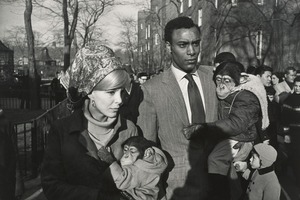
Oddities. Street photography, not posed. People do peculiar things, wear peculiar clothes. Includes zoo photos. There's a very memorable photo of a couple holding chimpanzees dressed in human clothing as if they were the couple's children - and they're visiting the zoo with their chimpanzee child-substitutes.
Al morir Winogrand en 1984, John Szarkowski, como director de la sección de fotografía del MOMA, decide realizar una exposición monográfica póstuma para lo cual visita a la viuda del artista con idea de recopilar todo el trabajo de Winogrand. Con gran sorpresa se encuentra con la siguiente situación: "more than 2500 rolls of exposed film remained undeveloped, which seemed appalling, but the real situation was much worse. An additional 6500 rolls had been developed but not proofed. Contact sheets (first proofs) had been made from some 3000 additional rolls, but only a few of these bear the marks of even desultory editing ... he made more than a third of a million exposures that he never looked at." Esto plantea muchas cuestiones relacionadas con el arte, el artista y su propio trabajo y fue posteriormente llamado el caso Winogrand. Aunque después el trabajo de Winogrand ha sido ampliamente analizado, el artículo de Szarkowski escrito en este magnifico catálogo es uno de los primeros análisis de este artista y no tiene desperdicio.
Panoramica sulla sterminata produzione di un fotografo compulsivo, che ha lasciato una mole di foto grondanti vita e disordine. Diviso in temi che ricalcano alcune sue pubblicazioni: i primi reportage, le donne, la strada, la società degli anni 60, lo zoo, l'opera inedita. Quest'ultima consiste in decine di migliaia di scatti mai provinati o mai sviluppati, che alcuni intrepidi hanno visionato per realizzare una selezione.
Il saggio introduttivo di Szarkowski è come sempre un'ottima lettura, animata dalla biografia piuttosto sorprendente di un autore che ha lasciato il segno.
Da una mostra al MOMA di NY del 1988, replicata alla Mole Antonelliana di Torino nel 1990: l'edizione che ho preso in prestito dalla biblioteca ha un supplemento realizzato benissimo con la traduzione italiana. Bei tempi... e viva la biblioteca.
Garry Winogrand takes great candid people shots... most from the hip it seems, while walking through NYC. He has an interesting eye for composition, and always seems to get people's faces at just the right moment. He also has a dry photographic sense of humor that I enjoy.
This is a big heavy book and the photographs are printed very well.
Peace Demonstration in Central Park, 1968 is one of the most beautiful photographs I've ever seen. The essay at the front wasn't anything to take your breath away, some of the photos didn't kill me, but when he gets it right, he REALLY gets it right.
A grand read so far. I'll take my time with this one, as I have it checked out over the summer from the College for Creative Studies. It seems like a fine estimation of the enormous body of work from an underrated and little-known street photographer (outside the photography world, anyway).
Great overview of Gary Winogrand's work. I read it because I wanted to see the results of his use of the 28mm focal length, wider than most street/documentary photographers use. It was enlightening.