Jump to ratings and reviews
Rate this book

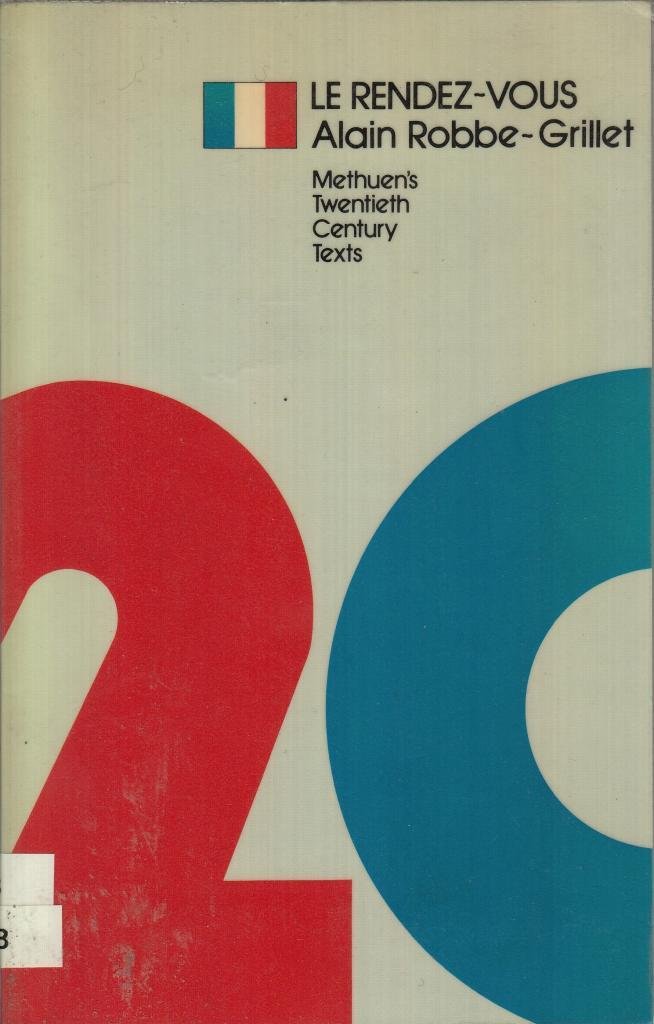
LE RENDEZ-VOUS PB

Rate this book
Originally entitled "Djinn.".

220 pages, Paperback

First published October 1, 1965

Loading...
Loading...

About the author

Ratings & Reviews

What do you think?
Rate this book

Friends & Following

Create a free account to discover what your friends think of this book!

Community Reviews

5 stars
61 (24%)
4 stars
104 (40%)
3 stars
57 (22%)
2 stars
31 (12%)
1 star
1 (<1%)
Displaying 1 - 30 of 35 reviews
Profile Image for Vit Babenco.
1,825 reviews6,098 followers
January 25, 2025
A house of love in Hong Kong… The denizens of the house… Their guests and clients… The tale has a rhythm of a ballroom dance… Of the dance seen in a dream…
The supple body twists from right to left, attempting to free itself from the slender leather thongs which bind ankles and wrists; but to no purpose, of course. The movements this posture permits are, moreover, of very slight scope; torso and limbs obey rules so strict, so constraining, that the dancer now seems quite motionless, merely keeping time with an imperceptible undulation of her hips. And all of a sudden, at a mute command from her partner, she turns around lightly, at once motionless again, or rather, swaying so slowly, so slightly where she stands, that she merely makes the thin fabric ripple over her belly and breasts.

Erotic visions… Erotic reveries… Dreams of crimes… Ampoules of morphine… Mystery… There is a stage… There is a performance…
The Eurasian servant girl takes a step forward. An imperative “Go!”, accompanied by a precise gesture of the left arm pointing toward the belly of the little Japanese girl, indicates to the dog the piece of cloth it must now rip away. And the lights focus once again on the designated spot. Henceforth nothing more can be heard in the silence of the theater but the brief hissing orders of the nearly invisible servant girl, the muffled growls of the black dog, and at moments the victim’s gasping breath. When she is entirely naked, but with a certain pause immediately after the widening of the circle of light cast by the spotlights, there is a spatter of polite applause. The young actress takes three dancing steps toward the footlights, and bows.

Bread and circuses… The more risqué is the show the happier are onlookers.
Profile Image for Alexander Carmele.
510 reviews521 followers
May 3, 2025
Kompositorisch und inhaltlich ein Lesefest, leider mit Mängeln in stupid-bedientem Voyeurismus

Inhalt: 4/5 Sterne (Rotlichtmilieu-Studie, teils flach)
Form: 4/5 Sterne (syntaktisch-fließend)
Erzählstimme: 3/5 Sterne (beliebig, unsituiert, unperspektiviert)
Komposition: 5/5 Sterne (ästhetisch plausibilisierte Inkonsistenz)
Leseerlebnis: 5/5 Sterne (atemlos immersiv)

Im Vergleich zu seinen ersten Werken in den 1950er Jahren, bspw. Die Jalousie oder Der Augenzeuge., beginnt in den 1960er und vor allem mit Die blaue Villa in Hongkong eine radikalisierte Selbstbezüglichkeit des Schreibens bei Alain Robbe-Grillet. Anfänglich konzentrierte er sich auf den Kamerablick, auf die Entpsychologisierung des Erzählvorganges selbst. Hiermit betrat er Neuland, nämlich mit Ich-Erzählungen, die keinen reflektierten Bewusstseinsvorgang mehr beschreiben, sondern nur noch registrieren. Hier gibt es jedoch immer noch einen Vorgang, den er mit Werken wie Die blaue Villa in Hongkong und Project for a Revolution in New York eliminiert:

[…]wenn das Versteck sich im Zimmer selbst befände, dann wäre es schon lange in Sicherheit gebracht worden, hat die Dienerin [Kim oder Lucky] gedacht, denkt Lady Ava, sagt der Erzähler mit dem roten Gesicht, der die Geschichte gerade im Zuschauerraum des kleinen Theaters seinem Nachbarn erzählt. Aber Johnson, der andere Dinge im Kopf hat, hört nur zerstreut auf seine unwahrscheinlichen Reiseberichte aus dem Orient, in denen kupplerische Antiquare, Mädchenhandel, allzugeschickte Hunde, Bordelle für Wahnsinnige, Rauschgifthandel und geheimnisvolle Morde eine Rolle spielen.

Johnson heißt die „Hauptfigur“ dieses atmosphärischen Textes, der in Hongkong unter britischer Herrschaft, also wahrscheinlich in den 1950er Jahren spielt (fehlender Bezug auf den zweiten Weltkrieg, Taiwan existiert bereits, noch stark dekadente Kolonialzeit). Im Brennpunkt der Ereignisse stehen sein überhasteter Versuch, sich nach Macao zu retten, und die Ermordung eines dubiosen Rauschgiftsüchtigen und Geschäftsmannes namens Edouard Manneret. Beide stehen mit einer Lady Ava in Verbindung, die einen Club führt, in welchem alles passiert, was die Herren der Garde sich so wünschen.

Ich nähere mich meinerseits der Hausherrin und verbeuge mich, während sie mir die Spitzen ihrer langen Finger mit den ein wenig zu roten Nägeln zum Kuß reicht. Sie erneuert so die Geste, die sie soeben für meinen Vorgänger vollführte, und ich neige mich zeremoniell genau wie er, und ich nehme ihre Hand um sie zu stützen, während ich sie zart mit den Lippen streife, so daß die ganze Szene sich präzise bis in die kleinsten Details wiederholt.

Das Dekadente, Voyeuristische, auch Makabere, in vielen Büchern von Alain Robbe-Grillet Degradierende, Sexuell-Ausschlachtende, stört auch in Die blaue Villa in Hongkong. Der Text aber bedient diese Interessen mit einer kompositorischen Tour de Force, die es in sich hat. Er inszeniert einen atmosphärischen Großstadtdschungelroman mit Mitteln, die nur in der Literatur möglich sind: nämlich das Ineinandergleiten von Zeit und Raum und von Stillstand und Dynamik in permanenter gegenseitiger Durchdringung, wenn bspw. eine Szene beschrieben wird, und es nicht klar ist, ob ein narratives Ereignis stattfindet oder ein Bild beschrieben wird.

Das Ineinanderübergehen von showing und telling, von Mimesis und Diegesis in Die blaue Villa in Hongkong sucht seinesgleichen. Hieraus entsteht eine literarische Spannung, die ohne Plot auskommt, sich nur von Ereignis, Impression, Szene und Möglichkeitsraum speist. Eindrucksvoll. Von der Literarizität her vergleichbar mit Claude Simon Das Gras und Marguerite Duras Der Liebhaber, stofflich verwandt mit Francoise Sagan Bonjour tristesse .

---------------------------------
---------------------------------
Details – ab hier Spoilergefahr (zur Erinnerung für mich):
---------------------------------
---------------------------------
Inhalt:
●Hauptfigur(en):
Edouard Manneret existiert als Figur in einem Theaterstück „Der Tod des Edouard Manneret“ innerhalb der Erzählung und als Figur der Erzählung selbst. Im Theaterstück stirbt er ohne Gewalteinwirkung. Auf der Erzählebene besitzt er ein Büro auf Kowloon, wo sich auch das Hotel Victoria befindet. Er nimmt Drogen und erkennt seinen Gast, Ralph Johnson, nicht. Er steht mit Lady Ava in Verbindung. Er ist der Vater von Lucky und Kim, den Zwillingen, die für Lady Ava arbeiten und als Geld- und Drogenkuriere dienen und auch bei SM-Veranstaltungen mitwirken. Er stirbt durch einen Hund, der ihn in den Nacken beißt und diesen dabei bricht. Er ist also verwickelt in Drogenexperimenten mit Prostituierten, deren Leichen er zum Verzehr verkauft. Er stirbt durch ein vergiftetes Stiletto, und der Mord wird dann als Unfall getarnt, indem ihm ein Champagnerglasstiel in den Hals gesteckt wird, was durch ein Sturz passiert sein hätte können. Er stirbt auch durch fünf Schüsse aus Ralph Johnsons Pistole, und nachher wird gemutmaßt, dass er von Kommunisten ermordet worden wäre.
Ralph Johnson, genannt der Amerikaner, oder Sir Ralph, hat sich in Lauren verliebt. Lady Ava nutzt seine Besessenheit aus und fordert für die Stunden mit Lauren hohe Preise. Er will sie freikaufen. Lauren will erst nicht, nennt dann aber einen enormen Preis, den er bis zum Morgengrauen auftreiben muss. Es gelingt ihm nicht. Manneret rückt nicht mit dem Geld heraus. Er erschießt Manneret und muss nach Macao fliehen, weil er wegen vermeintlichen Drogengeschäften gesucht wird, zuvor geht er aber noch in die blaue Villa, um Lauren zu überzeugen, doch mit ihm zu kommen, obwohl er kein Geld hat. Sie hat ihn aber an die Polizei verraten.
●Zusammenfassung/Inhaltsangabe: Der Club von Lady Ava, Eva Bergmann, wird von Polizisten gestürmt wegen Drogen, Prostitution, und möglicherweise Spionage für die in Süd-Hongkong operierenden Kommunisten. Im Club findet eine Aufführung statt und eine gewisse Lauren spielt mit. Diese Lauren hat ihren Ex-Verlobten verlassen und verdingt sich seitdem als Prostituierte bei Lady Ava. Unklar: inwiefern die Machenschaften ihres Ex-Verlobten Georges Marchat oder Marchant, ein niederländischer Geschäftsmann, eine Rolle spielt, der in dubiose Geschäfte mit Drogen und Menschenexperimenten und -handel unter anderem mit Edouard Manneret und Ralph Johnson verstrickt ist.
●Kurzfassung: Inhaltliche Rekonstruktion: Ralph und Georges haben mit Manneret und Lady Ava dubiose Geschäfte am Laufen, bei denen Politik als Deckmantel eine Rolle spielt, hauptsächlich aber Rauschgift und Prostitution betrieben werden. Zusätzlich gibt es eine Dreiecksgeschichte zwischen Ralph, Georges und Georges Verlobte Lauren, in die Lady Ava zugunsten von Ralph eintritt, um ihn auszunehmen, und Georges den letzten Lebensfunken nimmt, der daraufhin volltrunken durch die Stadt fährt und mit einer geladenen Pistole am Hafen einschläft, und irgendwann tot aufgefunden wird. Ralph muss die Stadt verlassen, weil ihm die Polizei auf den Fersen – das hat mit Rauschgifthandel zu tun, in den Lady Ava, Manneret und er verstrickt sind, unter anderem ist ein Heroinlabor aufgeflogen. Er benötigt aber Geld, um von Lady Ava Lauren freizukaufen. Er schafft es, das Geld aufzutreiben, erschießt Manneret, und tappt in die Falle, die ihn Lauren mit der Polizei zusammenstellt.
●Diskurs: kein wirklicher. Inhaltlich wird nichts verhandelt. Alles Handlung und Kriminalroman. Wenn überhaupt, dann sexuelle Ausbeutung und Menschenhandlung und Rauschgiftprobleme.
… spielt mit Tabus, Perversion, Rotlichtmilieu, erhält dadurch aber, weil es um Mord- und Totschlag und Sex geht, Intensität und verläuft sich nicht. Die Atmosphäre, schwül, dunkel, undurchschaubar transportiert sich, der Regen, die Spaziergänge durch das schwülneblige Kowloon, diese Enge, die Gerüche, das Miefige, Unkontrollierbare der Stadt drückt sich durch. Als Großstadtroman, völlig unübersichtlich gestaltet, mit vielen fehlenden Verbindungen, erzeugt es einen überzeugenden Flickenteppich
… erinnert an Claude Simon, aber noch klarer als Simon, der in der Erinnerungsstruktur allein verbleibt, vermag Robbe-Grillet eine Eigenschaft der Literatur zu nutzen, die in anderen Medien nicht möglich ist: Beispiel ist eine Szene ein Bild oder eine Begebenheit, findet die Szene dargestellt auf einem Ring statt, oder ist sie eine Gravur, betrachte ich ein Bild, oder handelt es sich um Skulpturen, oder um ein Theaterstück, oder um ein narratives Folgeereignis? Wegen dummer voyeuristischer Szene (die uneingebunden und unmotiviert bleiben: bspw. Hund zerreißt vor johlenden Männern einem Mädchen die Kleidung) ein Stern Abzug.
--> 5-1 Sterne

Form:
●Wortschatz: einfach, aber nicht langweilig, wohlkomponiert, ideenreich, nicht poetisch, aber eindringlich, schriftsprachlich
●Satzstrukturen: aufwendig, interessant, rhythmisiert, nicht vorhersehbar, variable Länge, niemals abgedroschen, rund und flüssig, interessant
●Innovation: keine wirklich in der Form, also in der Sprachverwendung. Hier: eher konservativ
--> 4 Sterne

Erzählstimme:
●Reflektiert: ja, Erzählstimme selbst reflektiert Wissen und Nichtwissen und stellt es in Frage, auch im Rückblick, in der Unwägbarkeit
●Situiert: nein, die Erzählerfigur existiert nur als freischwebendes Etwas
●Perspektiviert: nein, es gibt Präsenserzählung, personales Präteritum, und aus dem Ich-Erzähler wird plötzlich eine Er-Figur, keinerlei Konsistenz
… von der Erzählperspektive her handelt sich bei dem Text um die Inkonsistenz per se, nicht nur korrigiert sich der Erzähler selbst, nicht nur wird aus der Ich-Erzählung plötzlich eine Er-Zählung. Beispiel: Johnson wird aus der dritten Perspektive berichtet, aber das Buch beginnt mit einer Episode in der Ich-Erzählung, die nachher von Johnson selbst stammt. D.h. die Er- und Ich-Perspektive werden inkohärent gemischt. Es ist einfach nicht klar, wer was erzählt. Es handelt sich um einen Mischmach aus Stimmen und Zeitebenen.
--> 3 Sterne

Komposition:
●Lose Versatzstücke: Ja, die Szene mit Kito, mit dem Hund, der Kito die Kleidung vom Leib reißt, überhaupt die Dienstmädchenzwillinge Lucky und Kim erscheinen völlig überflüssig, sowohl inhaltlich wie kompositorisch. Das ist ein klarer Mangel, auch Tschang, der Menschenhändler, erscheint unnötig. Es reichen Georges, Lady Ava, Manneret, Lauren und Ralph. Lucky, Kim und Kito dienen nur einem gewissen, sehr billigen Voyeurismus. Auch: die politischen Anspielungen erscheinen als völlig überflüssig, der Spionageteil, der gar keine Rolle spielt, der nur konstruiert wirkt und dem Text überhaupt keine eigene Dimension verleiht.
… aber: kompositorisch, von der Schwäche der losen Versatzstücke abgesehen, bleibt das Buch atmosphärisch, dicht, ein Puzzle, alles im Dienste der Undurchschaubarkeit des Lebens in diesem Milieu, alles auf Messers Schneide, alles ständig in Gefahr, Drogen, Menschenhandel, Amüsement, Gewalt, Mord, Vergiftung.
… kompositorisch eindrucksvoll: die Wiederaufnahme der Motive (Gang durch die Stadt, das Etuikleid, die Sandalen, der Mord an Manneret), nahezu exakte Rückbezüglichkeiten auf den Text, der als windschief konzipiertes Ganzes atmosphärisch als Rotlichtmilieu-Darstellung Hongkongs überzeugt. Spannend, verwirrend, aber aus der Sache selbst, aus der Inkohärenz der handelnden, lügenden Figuren. Die Inkonsistenz im Inhalt (mehrere mögliche Todesarten von Manneret) und die Inkonsistenz in der Erzählperspektive (der Wechsel in Sachen Johnsons vom Ich- zum Er und zu einer freischwebenden Kamera) schließen konsistent in der Komposition sinnstiftend zusammen: nämlich die Unzuverlässigkeit der Realität in einem solchen Milieu überhaupt, was Wahn, was Wahrheit ist; was gespielt, was gefühlt, was gewollt, was erzwungen ist. All das freischwebend, inkonsistent, unsystemisch, hier aber als Text so, dass die Komposition, die Wiederholung, die Motive, die einzelnen Einstellungen, die immer wiederkehrenden Themen, das Kreisen dem Text Einheit verleihen – durch Wiederholung, Insistenz. Deshalb (trotz dumm-voyeuristischer Versatzstücke):
--> 4+1 Sterne

Leseerlebnis:
●Gelangweilt: nein.
●Geärgert: nein.
●Amüsiert: nein.
… spannend, atmosphärisch, nebulös, fast dokumentarisch, filmisch immersiv
--> 5 Sterne
Profile Image for Nate D.
1,681 reviews1,268 followers
April 20, 2014
A vast multiplication of narrative possibilities. Robbe-Grillet has written many versions of this kind constant reconfiguration of pulp tropes over the years, but probably never so completely as here. This story of drug-running, mysterious bordellos, and murder isn't just sequentially reframed to modify reader understanding, but constantly broken apart down to a few archetypal characters and events that can be infinitely rearranged and reinterpreted until ever possibility has been exhausted. Any one scene connects (seamlessly, in the highly refined R-G manner) rationally to those that precede and follow, but will completely be at odds with nearly anything else we're told outside of that window. In this way, this could be look at the internal revision process of forming a plotline (like its immediate predecessor In The Labyrinth, or perhaps, given its further point along Robbe-Grillet's move towards post-modern erotica, an attempt to to recreate the internal rehearsals of scenes generated only by desire, flickering in and out of existence in the mind like the Salvador Dali fantasy vision contained within The Dedalus Book of Surrealism. Or perhaps it's more like Italo Calvino's "The Burning of the Abominable House", wherein an insurance agent attempts to reconstruct all the possibilities for four people and a list of unseemly acts -- except in R-G's story, all these possibilities exist in dizzying multiverse simultaneity.

And yep, that sleazoid 60s Grove Black Cat cover is actually the one I've got, although in the typical R-G fashion of infinite build-up without true climax, everything here is pretty much suggestion and context, blanks to be filled-in, avoiding anything so literal and obvious as the cover-girl-in-chains there. I bet that one moved some copies though.
Profile Image for S̶e̶a̶n̶.
994 reviews592 followers
May 3, 2020
Mesmeric disorientation as perfected by Robbe-Grillet, a master of unresolvable mysteries.
Profile Image for Sara Jesus.
1,726 reviews126 followers
July 5, 2018
É um romance que nos transporta para o Oriente. Nomeadamente as ruas de Hong Kong, a cultura japonesa e personagens inebriadas de prazer.
Profile Image for Jeff Jackson.
Author 4 books532 followers
September 13, 2018
"It's all stories," she says. "Invented by travelers."
A dazzling and constantly morphing pastiche of fantasies and twice-told tales, handed down from old novels and films about Hong Kong, charging them with something strange and urgent.
4.5 stars
Profile Image for Javier Avilés.
Author 9 books141 followers
June 1, 2018
Fascinante. Empiezo a entender mejor Repetición, su última novela. Y también El año pasado en Marienbad. Esta novela es como una espiral que gira y gira sin avanzar y sin dejar de hacerlo en ningún momento. Una sucesión de escenas que se repiten sin ser siempre iguales y que configuran y no lo hacen, una narración clásica, de género, pero deconstruida y mostrada en forma de escenas representadas en un escenario y que viven a su vez fuera de él.
Este es el tipo de novela que es una experiencia en sí misma.
Profile Image for David.
75 reviews14 followers
July 4, 2012
Confusing, repetitive, shallow, humorless except in conception and execution, fleeting, vertiginous, like recalling a reoccurring nightmare you haven't had yet.
Profile Image for Christina Kalesh.
18 reviews
March 18, 2024
Hans ideer om fremtidens roman, hvor tingene bare skal være tilstede, uden en større mening eller betydning, er jo meget spændende.. føler dog lidt at det bliver en meget uvedkommende læseoplevelse i praksis. Men det er også muligt at jeg er idiot.:(
Profile Image for Rita.
130 reviews
February 7, 2025
For me, this was an addictive read. Very intense, obsessive and dizzying with a sense of urgency and disorientation. I felt a thrill every time the elusive and confused first person narrator entered. Exciting to read. I read it fast and had a nightmare the night I finished it. Not necessarily due to the novel, but who knows what my mind was processing, it was probably reeling.
Profile Image for Jack Gillespie.
52 reviews
September 3, 2023
Fucking awesome. One of the most well-written and intriguing works I’ve ever read. The novel is completely unstructured by time, with scenes often recurring multiple times in different fashions. Characters, locations, and events blend into each other in impossible ways as contradictions abound. But if you think this sounds too complex to be readable, you couldn’t be more wrong. Robbe-Grillet seamlessly navigates these shifting elements so that the reader doesn’t even notice these changes until they’ve already happened. The book feels just as much a slight-of-hand magic routine as it does a novel. I was consistently wowed by Robbe-Grillet’s writing and structure.

This writing style does nothing to hamper the actual plot of the novel, in fact it only enhances it. The story is one of crime, deception, and sex, and the hazy ever-changing world of the novel fits perfectly these elements.

Some of my favorite parts (in addition to the ones mentioned above): characters who die reappear only to be killed again, the narrator is sometimes a character and sometimes not, and the entire story is perhaps only a play within the world of the novel.

Reminds me a lot of Meshes of the Afternoon and several David Lynch films, most notably Lost Highway.

Listen to “The Pink Room” from the Fire Walk With Me soundtrack while reading for added ambiance/to get a sense of what the book feels like.

Instant favorite of mine. Can’t wait to read more Robbe-Grillet.
Profile Image for Christopher.
50 reviews6 followers
January 19, 2010
Highly recommended. I really get into the shifting descriptions of place, and the way that nothing remains certain. Best to read it in french though to get the full effect.
Profile Image for David Rice.
Author 12 books132 followers
October 18, 2018
A highly non-linear deconstruction of pulp fiction and orientalist tropes, and an assault on narrative coherence itself. Easier to admire than to love.
Profile Image for Elena .
30 reviews
Read
September 12, 2017
«Le deux personnages se taisent, chacun paraissant croire qu'il appartient à l'autre de parler le premier: le Chinois parce que c'est lui qu'on dérange, la jeune fille parce qu'elle espère n'avoir rien à demander, du moment qu'elle est attendue et que l'homme avec qui elle a rendez-vous sait évidemment pourquoi elle vient. Malheureusement elle voit que celui-ci ne manifeste aucune intention de prendre la parole, ni de la faire entrer sans explication, ni même de l'inciter par un mot ou par un signe à exposer le but de sa visite, ce qui aurait pourtant facilité son discours. Elle finit donc par se résoudre à dire quelque chose de sa propre initiative. Très vite, elle balbutie une phrase hâtive, assez peu cohérent, demandant si c'est bien là qu'habite l’intermédiaire, si ce monsieur qu'elle a devant elle est celui qu'elle doit y rencontrer, si la marchandise est prête pour qu'elle en prenne livraison, comme il était convenu... Mais aucun son n'a dû sortir de sa bouche, car le petit homme au complet vide continue de la regarder, exactement comme auparavant, attendant toujours qu'elle se décide à parler. Il était en effet impossible qu'elle ait abordé tant de questions en aussi peu de mots (elle ne sait d'ailleurs même pas de quels mots il s'agit). Tout est à recommencer.»

«Elle porte des boas, des voilettes, des grands chapeaux à plumes; ailleurs on la voit tête nue, avec des coiffures à bandeaux, ou des anglaises qui retombent au creux des épaules sur la chair blanche. Il y a aussi des statues dans leurs niches, entre des colonnes de porphyre rouge ou vert, qui la représentent encore dans des poses mouvementées, faisant avec ses bras ronds de grands gestes indécis et tournant de côté, ou bien vers le ciel, son visage inspiré. D'amples étoffes vaporeuses flottent autour de son corps, des écharpes de mousseline, des traînes de tulle, des voiles de bronze et de pierre. Je traverse tout cela sans m'arrêter: j'ai eu cent fois l'occasion de contempler à loisir ces sculptures, ces toiles, ces pastels, dont je connais même les signatures, presque toutes de noms célebres: Édouard Manneret, R. Jonestone, G. Marchand, etc. La vaste pièce est rendue plus impressionnante encore par l'absence de tout personnage vivant, alors que j'ai l'habitude de la voir pleine de monde, d'agitation, de bruit; il n'y a plus cette nuit qu'une innombrable femme muette et immobile, inaccesible, qui multiplie ses poses apprêtées, grandiloquentes, exagérément dramatiques, et qui m'entoure de tous les côtés, Eve, Eva, Eva Bergmann, Lady Ava, Lady Ava, Lady Ava.»
Profile Image for Jim.
3,180 reviews160 followers
December 10, 2021
Though the version I read was differently jacketed, I think the salaciousness of this cover is more apropos to Robbe Grillet's sordid tale, so I am using it instead. Seems Robbe Grillet tired, rather gradually, of his earlier Nouveau roman methods and this novel begin his strident arc into fetishistic erotica-noir, albeit with some of his trademark stylistics.
- colonial stereotypes of racism, sexism, drug use, violence, sex slavery, prostitution
We are presented two prefacing notes, which are contradictory, seemingly on purpose, which is maybe our first clue this novel won't follow his previous "template", though there is the mention of observation and its difference, depending on the viewer, so we have not drifted too far afield. We are presented with plenty of male-dominated/oriented fetish-sex terminology/hallmarks (leashes, dogs, leather, chains, mistress, obedience, high heels, straps, stockings...) all repeated rather unglamorously and heavily laden with the male-misogynistic gaze. Overall, there is the feel/aura of 60’s French film, as many of the details lend themselves to the cinematic medium, of which Robbe Grillet is no stranger.We even get the sense much of what is here is screenwriting and/or editing, a mishmash of deleted scenes or reworked angles. We do still get the same narrative bits from multiple perspectives/viewpoints/levels of detail/points-in-time, a la Nouveau roman. They are less laden with minutiae this time around, though still geometrical or placement focused. Theatrical-minded. There is an unhealthy amount of sexism and racism, but considering the farming of the story that is not surprising, though still no less disturbing and unseemly. The sense of a shift in Robbe Grillet's writing is obvious, and I would guess he simply tired of his Nouveau roman "project" and moved on to something more personally intriguing.
Profile Image for Ehren W.
15 reviews
April 2, 2025
This was my first experience with Robbe-Grillet's novels, after finding four of his works at a local used bookstore. I started with some of his essays in For A New Novel, and ended up diving into this one because his essays made me eager to engage with his fiction. I am thoroughly glad that I did.

Before that encounter at the used bookstore my experience of Robbe-Grillet was limited to his film Trans-Europ-Express and Last Year at Marienbad, which he had written the script for. Even with that limited exposure I knew that his work was circular--a closed, repetitive loop (this is a gross oversimplification, but if you've read/watched, you know what I'm talking about). In this novel, events repeat themselves (or do they?), new light is shed, new details emerge, new clues are uncovered...but do they matter? Any attempt at giving a typical synopsis for this novel betrays the joy of actually reading it. Ostensibly, it's a crime novel. Robbe-Grillet's love of Film Noir is evident in almost all of his works, and that is obviously true here. The aesthetic tropes of that genre pepper Robbe-Grillet's work, but the way those ingredients are put to work are a totally different kind of melange.

This is not a novel to make sense of. This is not a murder-mystery that you can figure out like a puzzle. Works like this are experiential, like staring at a surrealistic painting. "I don't get it." Are you supposed to? Quit trying to. Let go and enjoy the ride. Even in translation, the language is playful, fun, disturbing, sexy, engaging, and endlessly interesting. The language dances.

If you like French lit, experimental work, Noir, mysteries, and subtitled, black & white movies where people chainsmoke... you WILL have fun with this.
125 reviews1 follower
August 18, 2021
Que novela complicada, nose ni por donde arrancar, es tan complicada que hasta definir una calificacion se vuelve dificil, es de esas novelas donde leerla es mas una experiencia y no lo que esta contando. Empieza como un viaje onirico, el primer cuarto del libro no se entiende es realmente confuso, la lectura se siente como intentar ordenar un cubo rubick que cada cuadrado esta mezclado y de muchos colores diversos. En la trama pasan de manera algo constante varios hechos pero todos estos hechos son contados de manera completamente distinta por los diversos personajes, dando una sensacion parecida a ver un espiral que poco a poco se va agrandando, los mismos personajes mueren muchas veces, los hechos se desordenan, los protagonizan otros personajes, el narrador y la focalizacion cambian constantemente.
Parece una pelicula rocambolesca, extraña y confusa, el escritor era director de cine tambien y se nota en la novela planos parecidos a los de una pelicula, esto me hacia recordar mucho a Margarite Duras en "El amante", los personajes en algunos momentos parecian a los de Beckett o hasta los de Camus, el absurdo lidera en la novela. Este libro tambien tiene una dificultad agregada y es que es una novela corta que no esta dividida en capitulos, el autor pertenecia al movimiento de la "nueva novela" y los principios de esta movimiento se ven completamente presentes en la novela.
Me quedo con esta frase «Las cosas nunca están definitivamente en orden.»
331 reviews
September 15, 2024
Variações labirínticas sobre um tema quase policial onde já é possível, no entanto, discernir com clareza a propensão erótica sado-masoquista de Robbe-Grillet, a qual se irá converter, no final da sua vida, numa verdadeira e assumida obsessão neurótica. Um romance com uma estrutura muito complexa mas inteligível e sempre relativamente coerente O rigor da escrita é notável. Boa tradução não obstante algumas opções discutíveis.
Profile Image for Dylan.
152 reviews
Read
March 27, 2025
Mystifying, incantatory, mazelike. As you read it, you begin to understand what is happening, and then you realize you don’t. The same images and phrases repeated over and over again. Connections you might make between them. How much is genre, how much is fantasy, how much is experimental theater? Every reader will have their own answer. As you approach the end of the novel, you begin to wonder whether there will be a key that forces it all into clarity. There isn’t one—naturally.
Profile Image for Realistanocturna08.
386 reviews4 followers
January 23, 2025
Un libro del que mientras lees independientemente de que acabes de empezar o estés finalizando su historia no terminas de entender por qué cambian nombres a mismos personajes varias veces y trama varía sin ningún sentido cada pocas páginas para confundir a quien lo lea pero por alguna razón quieres seguir confuso dentro de trama
Profile Image for Joakino Colinas.
94 reviews
February 27, 2023
"Quiere llevársela, pues, a Macao, instalarla en su casa, en su propio domicilio. Pero ella se niega, naturalmente, como sin duda él temía: «¿Qué motivos tengo para marcharme?», pregunta frunciendo un poco sus párpados pintados de color de humo sobre sus ojos verdes. "
219 reviews
October 1, 2023
Nada es lo que parece en esta sucesión infinita de hechos en torno a una casa y una anfitriona peculiar. Cada vez cambia el narrador, el observado y hasta el hecho, en una matriosca de mil espejos y laberintos. Compleja pero de intensa lectura. Claro ejemplo de la nuveau novel
Profile Image for Melissa.
100 reviews
January 5, 2021
Emotional and lush. Very interestingly arranged prose.
Profile Image for Avel Rudenko.
325 reviews
October 6, 2011
An early 60s mystery novelette taking place in and around Hong Kong. I appreciate the shifting descriptions of place, and the way that nothing remains certain. Best to read it in french though to get the full effect. I've read the English translation transcribed from the French. What I found fascinating about this, is that there aren't any "chapter breaks" so you feel like there's no end in sight, once you start, you cannot stop until you are done with the book completely. "Cubist" novel of sorts also dealt marvelously with the idea of "meta-text" which are stories within stories, each layer reflecting the next. I liken this unto the Russian Matryoshka doll also known as the "Matryoshka principle". In America, the "Onion principle" would be more widely recognized herein, if the outer layer is peeled off an onion, a similar onion exists within. This concept multifariously plays into this mystery novel. Infinite time? Read this!
Profile Image for Hamish.
548 reviews238 followers
July 23, 2016
I'm pretty in awe of Robbe-Grillet. Even though he's used all of these same tricks in his previous books, somehow (five novels in) they still seem fresh and mind-boggling. And if he's used all these tricks before, he emphasizes different ones each time. Here we seem the same scenes over and over, but from different vantage points, or with different causes, or with different outcomes, and often in completely different contexts, until we're uncertain what has actually happened, who it's happened to, why it's happened, and what (if anything) was just part of the play. It's pretty incredible how he lets scenes bleed into each other and how carefully he weaves his repetitions together. He makes nothing explicit and demands your full attention and brainpower as a reader. I admire that.
31 reviews74 followers
September 18, 2014
La Maison de rendez-vous was published a year after In C premiere, and while this is a random fact I needed to start the review, the book has a strikingly similar usage of repetitions and slow changes common in minimalist music. Similarity to music probably looks lazy and standard, but Mr. Robbe-Grillet obviously doesn't go for Toscanini-like brightness of moments and is much more devoted to Adorno-praised interest in the structure of a piece.
145 reviews
May 21, 2022
This is a very original murder mystery, which revisits incidents over and over from subtly different perspectives. Beautifully written, each look at the few incidents evokes a mysterious and exotic atmosphere. Gradually the reader gets a clearer picture of what actually occurred, but at the end is still left with some doubts. A masterpiece of perspective.
Displaying 1 - 30 of 35 reviews