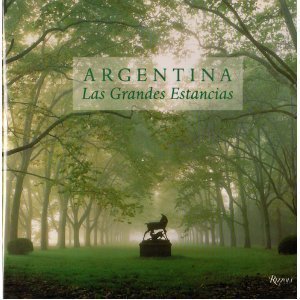
Argentina's magnificent estancias--country estates and working ranches--are guardians of the nation's cultural heritage, from its Spanish-colonial beginnings to the romantic legacy of the gaucho, to the contributions of early-twentieth-century naturalists and entrepreneurs who explored the rugged south. With their historical main residences, picturesque grounds, and beautiful collections of artwork and heirlooms, these estates preserve the genteel traditions cultivated by generations of landowning families. Adventurous settlers and Jesuits established the first estancias in the seventeenth century on vast, remote tracts of land ceded by the Spanish crown. Overcoming a harsh climate, solitude, and sporadic clashes with Indians, these missionaries and European immigrants began to raise cattle, sheep, and grain. By the turn of the century, many of their descendants headed important cattle-ranching and agricultural empires and were counted among an international elite of tastemakers, politicians, philanthropists, and art patrons. In this volume are twenty-two rarely glimpsed estancias, portrayed in rich color photographs with accompanying text that narrates the unique history of each estate and family. The distinctive main houses reflect a wide variety of architectural styles that include "criollo" (creole) mansions, English castles, Palladian villas, French chateaux, and Spanish palaces. The estates are surrounded by breathtaking terrain ranging form the snow-capped Andes bordering Chile to the golden plains of the pampa in the province of Buenos Aires, and south to the crystal waters of subantarctic Patagonia and Tierra del Fuego. Nearly all these estancias are owned today bydescendants of the founding families, and most are published here for the first time. Complementing the photographs are eighteenth and nineteenth-century drawings, portraits, and paintings of life on the estancias, as well as photographs of celebrated guests over the years, including Edward, Prince of Wales (later Duke of Windsor) and Jacqueline Kennedy Onassis. The introduction discusses the early history of the estancias and their pivotal role in Argentine culture, and includes colorful excerpts from the journals of explorers and writers.
César Aira was born in Coronel Pringles, Argentina in 1949, and has lived in Buenos Aires since 1967. He taught at the University of Buenos Aires (about Copi and Rimbaud) and at the University of Rosario (Constructivism and Mallarmé), and has translated and edited books from France, England, Italy, Brazil, Spain, Mexico, and Venezuela. Perhaps one of the most prolific writers in Argentina, and certainly one of the most talked about in Latin America, Aira has published more than eighty books to date in Argentina, Mexico, Colombia, Venezuela, Chile, and Spain, which have been translated for France, Great Britain, Italy, Brazil, Portugal, Greece, Austria, Romania, Russia, and now the United States. One novel, La prueba, has been made into a feature film, and How I Became a Nun was chosen as one of Argentina’s ten best books. Besides essays and novels Aira writes regularly for the Spanish newspaper El País. In 1996 he received a Guggenheim scholarship, in 2002 he was short listed for the Rómulo Gallegos prize, and has been shortlisted for the Man Booker International Prize.